British History on Line (published 1907) reveals a number of facts:
HARESNAPE
A FAMILY HISTORY
ROBERT HARESNAPE and WILLIAM KENNETH WARHURST
The following pages contain extracts from the book “Haresnape A Family History” written and published in 1995 by Robert Haresnape and William Kenneth Warhurst. The authors have carried out further research since 1995, and have also been supplied with information from other persons, and they include the results here with additions and corrections as necessary. It is hoped that this will be an ongoing process.
UPDATED 24th January 2025
The original book has a copyright and this copyright applies to the extracts.
Narrative and historical background research: Robert Haresnape
Main U.K. research: William Kenneth Warhurst
Additional U.K. research: Stephen William Haresnape, Dr. John Norman Haresnape, and Robert Haresnape
New Zealand research: William Raymond McDonald Haresnape
Hairsnape research: Peter Hairsnape, Simon Hairsnape
Acknowledgements:
Thanks are given to all others who have provided information for this book including Mrs. Dorothy Haresnape who donated all of her husband's research material, Brian Haresnape and Pat Haresnape for general assistance, Robert E. Haresnape, Debra Sue Knight and Glen Haresnape who provided all of the information on the U.S.A. families, and Helen E. Stone for all of the information on the Haresnapes in South Africa. Finally, it was the initial contacts with Stephen William Haresnape that led to the idea of the writing of this book and special thanks to him are hereby recorded. The photographs of Kendal in 1900 have been reproduced by kind permission of the Margaret Duff Collection.
Disclaimer
The dates and descriptions connected with individuals given in this web site should not be regarded as totally accurate. While a great amount of effort has been expended in researching and recording the information, care should be exercised in relying on the data. If in doubt, the original records should always be consulted.
INTRODUCTION
A number of individuals have, in the past made efforts to research the Haresnape family history. These may have consisted of a trace along their own particular lineage. The results of their work may have been lost or perhaps stored on pieces of paper but never compiled into a work that could have been of benefit to the Haresnapes in general.
This account aims to present all that is known about the family history to date and will provide a basis for future research. It is hoped that the contents will survive the passing years and may be read by Haresnapes yet to be born. TO PROTECT PRIVACY OF INDIVIDUALS AND TO COMPLY WITH DATA PROTECTION REGULATIONS WE ARE LIMITING THE INFORMATION HERE TO EXCLUDE DETAILED INFORMATION ON PERSONS BORN POST 1924
There are limitations to the extent of the data, the contents largely relying on information given by relatives and also by the fact that originally a time limit of one year was applied to the preparation of the book. We have also imposed the limitation that the research would be restricted to the male Haresnape lineage only. We are aware of the fact that if we regress through 10 generations to say William Haresnape and Alice Chatburn who were married in 1688, there are in theory some 1022 other persons in that generation who do not bear the Haresnape name (no doubt some of them noteworthy people) from whom each of the tenth generation is equally descended. We have little idea who these ancestors were. Similarly the same William and Alice are direct ancestors (through the male and female lines) of perhaps some 10,000 living individuals.
As we enter the new millennium it is a time for looking forward. But we should also remember our past and our origins. At the very least our surname is a useful tool in helping us to do so.
Robert Haresnape and William Kenneth Warhurst
May 1995, with additions 2001 onwards.
WHAT'S IN A NAME?
In England, surnames began to appear in the 12th century and were used as a means of improving identification. There were a variety of systems. A person may have been named after his trade, and today for example we have Tom Baker, John Carpenter, Margaret Thatcher. These trades were clearly in existence at that time (there are no Astronaut surnames about!). Sometimes colours were used e.g. Karen Black, Gordon Brown, Graham Greene. Looking for inspiration our ancestors took animal's names e.g. Christopher Wren, Michael J. Fox, Michael Fish. Father's Christian names were employed giving us Emma Thompson, Richard Nixon, Richard Wilson. Place names were often used and the names Susannah York, Abraham Lincoln and Judith Durham spring to mind. Of course these towns would have had to exist in the 12th century. The localities may have been quite small and very small landmarks sometimes feature e.g. Graham Hill, Rupert Brooke, and Winston Churchill. As about 50% of Lancashire surnames were named after places, it is thought that our surname may well fit into this last category.
The spelling of words has changed over the centuries and is continuing today. This change applies to surnames as much as to other English words. However, this poses few problems for identifying many of the above surnames, even though the spelling has changed. With a name like ours, however it is more difficult. Each of us must have plenty of experience in trying to get others to understand our name and often we have to carefully spell Haresnape out. Can you imagine trying to do that in the 16th century when you possibly couldn't spell anyway? The clergyman at a ceremony would have to use his own interpretation of what he heard, and bearing in mind the variations in accents, we may have been given a good variety of appendages. This may also have inadvertently produced new surnames; for example Hasnip which exists today could be a corruption of our name. There are many possible variations of the surname, and examples include Hasnip, Harsnip, Asnip, Harslop, Hyrasnip, Haysnepp, Hearsnep. All of these could have a common root back in medieval times. There is no true spelling of Haresnape.
If we examine the earliest parish records in Lancashire from 1540 onwards and ignore the branch of the family that headed to the north of the county and then on to Westmoreland, we find that about 95% of the names from 1540 to 1830 began with the Har sound rather than the Hare or Hair sound. This suggests that the original sound of the name was of the Har form. Again looking at the second syllable, Snep or Snap was more common than the sound Snape or Snaip. There is today a natural tendency to associate Haresnape with the more common surnames Hare and Snape. There is no possibility of a Mr. Hare marrying a Miss Snape and combining the two, as this practice (using hyphening) only became popular in the 19th century.
The word Snape itself is an old term once used in the north of England for an inferior pasture, or a winter pasture and is probably derived from the old Norse word "snap" for scanty grass, or poor grazing. This explanation is fairly well founded. However the syllable "Har" used in some place names is open to some doubt. It may well be from "hara", Old English for the animal hare, or is perhaps "har" again OE meaning old, grey or hoary the syllable being used as an adjective to describe an object that was naturally gray. An example of the use of the latter is in Hoarstone which is a grey lichen covered stone, these stones apparently being used as simple boundary markers. The Concise Oxford Dictionary of Place Names states that it is unlikely that "har" itself meant a boundary. It also seems unlikely that a pasture could be described as grey, so we must examine other possibilities. The dictionary also says that another version to consider is the word "Haer", again old English. This word is related to a Swedish word "har" for stony ground, a Low German "har" for ridge or height and a usage in Ireland for a stone cairn. Although the exact meaning of the old English version is unknown it may be for stone or stony ground.
Taking "Haer" or "Har" with "Snape" the name may describe either:
1. A poor old pasture
2. A poor pasture where hares live
3. A poor stony pasture
Take your pick!
Looking again at the Lancashire parishes, we find that the Har version of our name continued in use in the south of the county (spreading east and being recorded in many towns as far as Manchester) up to about 1830.
After that date the version seems to have disappeared, along with those branches of the family (although continuing along female lines). However, we are almost certainly descended from the ancestor who left and moved north to Cockerham in about 1610. This person used the Hare sound for his surname and this Cockerham version grew more dominant as the years progressed. The snape sound in the name became progressively more used and by about 1820 the spellings had firmed down to the two versions that we see today, i.e. Haresnape and Hairsnape. This date probably coincides with the general improvement in standards of education.
The two different sounding forms of the surname i.e. "har" and "hare or hair" can themselves be useful in identifying to which branch of the family a particular person belonged
To elaborate further, I propose that all the many variants of the surname come from one unique family (or a few!). The earliest parish records from 1540 or so show just two families groupings, one at Aughton and one at Croston in South West Lancashire. These villages are about 10 miles apart. It is obvious that the surname was created some years before then (say 200 years or so). The place of the origin of the name has not been identified. Owing to the time lapse, the surname in 1540 cannot be regarded as in the initial form. However, (with some exceptions) the form over the years is consistent in containing the letters H S N and P. The vowels used were generally A or E. Also there was often an R in the sequence. We may take HA**SN*P* as a general form or framework of the surname.
As explained many times, our ancestors were in general illiterate, i.e. they could not read or write. This was common until the mid 19th century. The surname was guessed at by the local clergyman, whenever the family had a marriage, death or christening. This would not have been too much of a problem if the family stayed in one place e.g. Aughton. The continuance of having services at one church would have created some stability in the spelling of the surname. There would have been some variation with the coming and going of clergymen, but it would have been easier to track through family records.
However, people being people, the young men left home to seek pastures new. Some got married elsewhere. They couldn`t spell their name, so new varieties of the name were created by the local clergyman. The further the HA*SN*P* s travelled, the more numerous the variations became. What is important though, is that gradually people became more literate and would be able to spell their name. The form that was eventually taken would depend upon the accepted version at that location at that time. The date of this may have depended on matters such as the educational background or even the people the family mixed with. Thus, the Haresnape form was more or less established by 1650, at Cockerham, with a Hairsnape side-line developing from this at Lancaster/Blackburn in 1800. The version Hearsnep did not "settle down" until about 1800. There appear to have been other lines leading off the surname mixture e.g. Harsnip appearing in the county of Lincolnshire in 1685 about 150 miles away from the Aughton area . This created a lineage of Harsnips.
Footnotes
1. Place names in Denmark have the spelling Horsnab and (Horsnaes?).
2. Recently noted is another village in Denmark(on the island of Fynan/Fyn at 55N.10E) with the name of Hersnap. This is quite similar to the early forms of the surname. On the island there is a unique Viking Longboat burial site. Is it possible that the Danish Vikings brought the name over with them when they settled in the Danelaw area of South West Lancashire, or is this again a coincidence?
3. It has been known for some time that a strong Viking presence existed in the Liverpool, South Lancashire and Wirral area. The associations are strong with place names such as Kirkby, Skelmersdale, Aigburth, Formby, Crosby, Croxteth, Toxteth, and West Derby. The latter may have been the largest Viking settlement in the area. Recent research on men with "local" surnames which existed before the industrial revolution, show their DNA has many similarities to those of the Norse population. Also that these surnames were linked to place names in Scandinavia. Note that in 2021 a DNA sample was provided by a Hairsnape family member to a family history research company. This showed a “subsidiary gene pool” in Norway and possibly Iceland. No evidence shown for gene links to Denmark, though such a link cannot be totally dicounted. In fact by late 2023, the DNA results from the same company was suggesting more of a Danish heritage. Further research in this field is to be expected in future years.
Thus, as the Haresnapes certainly were an "original" local family, and there is a place today in Denmark with a similar name, there is a chance that we Haresnapes are descended from Vikings.
4. There is also a mention of a “Hare-snaps” location in the Quantock Hills of Somerset. This featured in a the Sportsman Gazette newspaper for 1841. Perhaps one of the family had moved to this area and settled.
FAMILY ORIGINS
It is possible only to trace the origin of the family back to the first use of the surname. As mentioned previously, the name seems to have been taken from a place viz. a pasture. This pasture could have been anywhere but we find in today's maps that there are places in England that have names associated with the OE for poor pasture i.e. Snape. There is a Snape town in Suffolk, and a Snape village in North Yorkshire. Similarly there is a Blacksnape near Darwen in Lancashire and also a Fairsnape Fell near Garstang, also in that county. Incidentally, the Snape village in Yorkshire does contain several families with the surname Hare, but this is probably a coincidence and we have no evidence to support the theory that the family originated in that village.
More significantly, less than 10 miles from both Croston and Aughton in Lancashire there is a very small place with the name Snape Green. Ken Warhurst visited this spot in 1994 and was rather surprised to find that opposite the road sign for Snape Green was a similar sign for Hares Lane. It now (2010) seems certain that Snape/Snape Green is closely connected with the origin of the Haresnape surname. Snape nor Snape Green are listed in the 1086 Doomsday Book, but apparently very minor localities were not recorded individually. Its earliest known reference concerns a right of way in 1577, and given the lack of development in those years, it would seem plausible that Snape Green existed when our surname was first used.
2010, Recent evidence:
Regarding
Snape, it now seems as though this place was merely a collection of
perhaps several dozen fields, with an occasional farm. At least that
was the case in 1847, according to Old Maps co.uk which shows Snape
as an area, nominally a subdivision of Scarisbrick. On the map, Snape
Green is at the northern edge of this area, with Scarisbrick at the
southern edge. Modern maps show an area of perhaps 1 mile by 2 miles
in area, bounded by the Black Brook to the West and Sandy Brook to
the East.
In
the 1847 map, Hares Lane runs from Carrs Cross itself (would be an
old cross there) and it is a short walk to Snape Green, where there
is a building called Snape House. Snape Green today is very small,
and is really a road with that name. Hares Lane runs off it, and the
road to Snape House Farm is called Snape Green.
Section
of map (attribution Old Maps co.uk.):
British
History on Line (published 1907) reveals a number of facts:
(British
History on Line Scarisbrick)
"Snape
has some notice under Halsall. It was held by the Scarisbricks of the
Halsalls, as the inquisitions show, (fn. 151) and parochially its
position was uncertain. It is now, however, reckoned as a hamlet of
Scarisbrick and within the parish of Ormskirk. It gave its name to a
local family of whom there are some traces. (fn. 152)
Richard
de Snape occurs about 1260. Scarisbrick D. n. 31. Simon, son of Alan
de Snape, had a messuage and land in the place in 1292, and Thomas,
son of Alan de Snape, occurs as plaintiff or defendant in suits of
ten years later; Assize R. 408, m. 70; also Assize R. 1321, m. 3;
418, m. 6a, 11d.
Snape was mentioned in a court at
Lancaster in 1489, as "Snape next Scaresbrek."
Also
in 1535-6 Duchy of Lancaster, the tithes for Snape were 66
shillings.
Also Snape hamlet mentioned in a bequest of
1732, and also one in 1816. The name Snape per
se does
not seem to have been recorded (as far as I know) much later than
this.
Snape Green is first mentioned in 1577 in British
History on line:
"Thomas
Gorsuch was succeeded about 1560 (fn. 133) by his son James, who in
1577 secured from Edward Scarisbrick a right of way from Gorsuch to
Carr Cross in Snape, to Snape Green, thence to Wood moss, near Long
Wyke, to Baldmony Hooks in North Meols, with right to carry hay, &c.,
in carts or on horseback. (fn. 134) "
This route can be
traced today on good maps. Gorsuch Hall itself was ransacked in
the English Civil Wars, but it may have been rebuilt as a farmhouse
in 1760 and a fine three storey house with that name still stands
today off Gorsuch Lane. This is just over 1 mile south west of Snape
Green. Carr Cross is right by Snape Green (short walk) also Wood Moss
and through to North Meols can be seen. Apart from the west-east
route from Carrs Cross to Snape Green, the right of way follows
present roads in a northerly route.
At present therefore, although we do not have definite proof, it seems that in the 12th or 13th century at this place in South West Lancashire, an ancestor of ours lived there and took his name from a poor pasture which was either old or stony in nature or perhaps where hares were seen.
The Research
In England and Wales, the General Register Office in London holds the Indexes for births marriages and deaths of individuals since 1837. The indexes are arranged in alphabetical order and copies are now available in many public libraries on microfiche. The early years provide limited information e.g. births in the 1850s do not give the parents' Christian names and a John Brown born in say 1860 in Lancaster with no parental details would be difficult to place on a family tree. Similarly before about 1915 the marriage indexes do not contain data on the wife's surname at marriage, making identification of a couple somewhat tedious. It is possible to find the missing information but it can be time consuming and costly. The modern indexes are more informative e.g. from 1916 the birth indexes give mother's maiden names and generally the details make for easier identification of individuals. All of these indexes are a summary of a particular event and if further information is desirable e.g. exact place (house) of a birth or death or the cause of the latter, or perhaps who was a witness at a marriage, it is necessary to apply for the appropriate certificate from the Registrar concerned. The cost of each of these being over 5 pounds it is obviously not economic to obtain these for all the Haresnapes concerned.
Censa have been carried out in this country since 1801 (1790 in the USA), and are very useful once an area has been identified. A census gives the details of the head of the household including his employment, and lists the persons who reside in that house at that time, including their ages. These facts can be valuable for building up a picture of a family, confirming birth-dates and other children etc. and possible connections with other family branches. As expected the early censa contain less detail than the more recent ones. The latest census released for public viewing was for 1911 and so restricts our knowledge of recent households. If a home has been identified by name or street number we may find that the property exists today and we may visit or photograph the home of our ancestors.
If the property cannot be identified or is just a ruin, an old tithe map may be of help to locate the position of the original building where our ancestors lived. Tithe maps were produced around 1840.
Prior to 1837 it is necessary to turn to Parish Records. Copies of these are held in some main branch libraries, but often a visit to the Public Record Office in London or a County Record Office is required. There is an index of parish records which have been compiled by the Church of the Latter Day Saints and again these (the International Genealogical Indexes) are viewable on microfiche in libraries. Unfortunately the index is incomplete and does not include listings of burials. However even its present form the index is a valuable aid in providing an instant identification of the source counties and it will also give the name of parishes where a more detailed research can be pursued.
The Parish records commenced in 1540 by an act of Parliament under the order of King Henry the Eighth. This followed the King's break with Rome and his establishment as head of the new Anglican Church. Early records were haphazard, some illegible, some missing or destroyed and much depended upon the diligence of the church official. Baptisms do not appear to have been regularly recorded before about 1580. It was a command of Queen Elizabeth the First that put further pressure upon the clergy to improve records. The religious structure of the country was based upon a "middle road" Protestant faith and it is unknown exactly what effect this would have had upon the baptisms, marriages and burials of the families that had kept to the old Catholic tradition, or indeed those that followed a more extreme puritanical faith. The drastic events of the English Civil Wars in the 1640s and the plagues may have also put a strain upon the adequate recording of ceremonies. In the case of the Haresnapes, by careful examination of records, there is now some confidence that from about 1600 there is an identified unbroken line of ancestry down to modern times.
The examination of wills can be rewarding, the contents providing knowledge that is difficult to otherwise obtain. A will of say 1750 giving bequests of 10 cows or a plough would indicate that the deceased was a farmer. This data would perhaps not have been available elsewhere.
Prior to 1540, Parish Records were apparently not kept and it is largely a matter of luck to come across any reference to an ancestor. Wills again may be a source of information or sometimes Manorial Records may be of value. However not everyone drew up a will and land ownership was only for the richer members of society. Therefore unless a family was of a higher status we are unlikely to find an ancestor prior to 1540, and even if we do it would be very difficult to link through to the later lineages.
Various other sources can be tapped for information, e.g. military and university records and other listings but these are not detailed here. It is hoped that the above will give an appreciation of the research methods used and how much time can be spent in gathering data.
The research back along the male lineage follows the normal European traditions of genealogy and the usual passing of title and surname down through male heirs. There is no reason other than the increased difficulty for not using a female lineage for research. At the very least we are fortunate in having Haresnape as a surname to use as a valuable tool in accessing our past.
In the future, given the quantity of information that is now stored, and its rapid means of retrieval, we may perhaps in the comfort of our own homes call up a display on our television screens which will give an instant listing of all our fifth cousins, or perhaps we may find quickly how exactly we are related to the President of the United States.
Footnote: In the five years or so since this was written (1995), the use of the internet for family history research has increased, and the number of individuals actively conducting such research will provide even more information than currently available. The use of this web site will assist in the gathering and recording of data.
January 2001
Footnote: It is now 2022 and the internet is aiding research in many ways. It is possible (in the UK at least) to use Google Streetview to use a computer to "visit" a location. Perhaps to track down a street to check if a house that was listed in an old census still exists, or has been replaced by recent developments. This is a useful method to inspect a location without physically going there.
It has been announced recently that for the next Census for England and Wales, that a new method of collecting the data will be obtained. The filling in of paper forms will be no more, and instead other resources will be used.
Summarised FAMILY HISTORY with some contemporary historical background
1400-1500
In 1403 in the reign of Henry the Fourth, the Island of Mann was given to John Stanley for life, and the Stanleys ruled as Kings of Mann for 350 years. John Stanley's grandson later became Earl of Derby, and this title still exists today, the seat being situated at Knowsley near Liverpool. John Stanley's son appointed local Lancashire men as various officers, and in 1417 under the first Governor, Michael Blundell, he appointed two commissioners one of these having the name of Roger de Haysnap. See
These commissioners were responsible for looking after affairs on the island. It is clear that this would have been quite an important duty at that time. We cannot be certain but from that spelling, Roger was our earliest known ancestor. Also in 1423 on the Isle of Man, a soldier Thomas of Hasnap was tried for not having a saddle.
Both of these instances support the case for our surname having originated from a place name. The place may have still been in existence in 1423 but no proof as yet.
In 1492 a Thomas Harsnape was recorded as the Rector at Binfield in Berkshire. It seems likely that the surname originated from "our" area of Lancashire.
1500-1600
The first Parish record of our family was on the 24th August in 1542 when Ellen Haresnape married Henry Heskin at Croston in Lancashire. This was closely followed by the marriage of Robert Harsnep to Margaret Tarleton at Croston on 26 August 1542, and the marriage of John Haresnape to Anne Crosse on the 19th November 1548 at Aughton (which is about ten miles south west of Croston). See sketch map of area.
The family seemed to have been fairly static in the 16th century, living in two groups around these small towns. The majority of the population was involved in agriculture (even if this meant being farm labourers or perhaps using a strip of land themselves under the ancient open field system). It is unknown how our ancestors lived at that time but it may be assumed some of the family was similarly involved. This work was probably supplemented with some other occupation during the winter. It was common in northern country areas for weaving of wool to be carried out in rural homes and farmhouses. The weaving was traditionally carried out by the man of the house, the raw wool being spun by the women. In addition to farming there were of course other manual trades e.g. carpenter, thatcher, butcher, baker, wheelwright, miller etc. (in fact many of the occupations that had produced numerous English surnames!).
For the fortunate few, the colleges at Oxford and Cambridge had for centuries provided education for the learned professions, but for the majority of the population education was non existent and most people were illiterate (although no doubt as intelligent as ourselves).
The profit to be made from wool began to change the nature of farming, and the strip system gradually disappeared to allow better grazing, large areas of land becoming enclosed. To avoid too great a loss of land for food production, Henry the Eighth enacted a law in 1534 to limit the size of enclosures and in 1563 Acts were passed by Elizabeth's parliament to try to increase the amount of arable land available. The years 1595 to 1598 saw a succession of poor harvests and a series of localised famines. To alleviate the suffering caused by this and the after affects of the war with Spain, the first Poor Laws were introduced. These placed the responsibility for care of the poor firmly at the door of the parishes. Overseers were appointed in the parishes, and each parishioner had to donate a proportion of his income into the fund for the parish poor. To enable some control of the system, the Law of Settlement of 1601 was enacted to ensure that vagrants did not travel from parish to parish, seeking money from each. At birth, people were allocated to that parish, and if in later years fell on hard times, could be forced to go back to their place of birth (clearly an early form of repatriation!) These 1597 Poor Laws were to form the starting point for subsequent Acts over several hundred years.
Our ancestors in the 16th century in this area of Lancashire most likely lived in wooden framed homes of Cruck construction, the roofs of thatching and the walls of trellis and mud (wattle and daub). Living, cooking and sleeping areas may have been in one room. The room quite possibly had no modern chimney, a central fire venting out through a hole in the roof. The homes may have been self built by the owners with local materials and the wooden frames of the house simply lashed together. If our ancestors were prosperous, they could have paid craftsmen to construct their homes using long lasting English oak and good joints. There are surviving examples of this type of house in various parts of Britain (e.g. Shakespeare's home at Stratford).
Although the majority of those homes may no longer exist, more robust structures of those times remain to be seen today. This is true for many of the churches where our ancestors were christened or married, including the parish churches of Croston and Aughton.
Croston takes its name from a local stone cross and lies on the river Yarrow. Its 15th century church is still there,

as are the almshouses built in 1692 by the Croston family. Aughton has a church mainly constructed in the 15th and 16th centuries, although the spire is from the 1300s. We can perhaps look at the old fonts in these churches and imagine how many Haresnapes were baptised there over the years.
In the final years of the 16th century,a Robert Haresnepe left Croston or Aughton to be married to Jane Battersby at Stalmine just to the north.
1600-1700
In about 1613, George Haresnape 1590 who was born in Stalmine and may have been the son of Robert 1568 arrived in Thurnham with his wife Jennet. He seems to have been the first Haresnape tenant of Haresnape's Farm and presumably gave it the name that exists today. n.b. the number shown following each Christian name is the date of birth for that person.
The farm was featured in a survey taken of Thurnham in 1653. This survey was carried out when the country had no king, Charles had been executed two years earlier, and the country was effectively a republic under Oliver Cromwell. The survey recorded that the farm had been held by indenture from Robert Dalton to Richard Jackson from 1609 and known as Jackson`s tenement . The legal process of passage of tenancy is not clear in the survey, but it seems that this tenancy was passed by assignment from Thomas Jackson, the son of Richard Jackson and wife Isabel on 16 Nov 1621 to George Haresnape (180). The farm was then assigned to George`s son John (190) in February 1640.
The farm consisted of a building with an old bodistead (kitchen/general living room?) three other lower rooms, one upper room. There was also a barn with three small bays and outhutts, 1 garden. The building would have been thatched and single story. The upper room would have been under the thatch and perhaps accessed by a ladder.
The rent for the farm in the first half of that century seems to have been payments of nine shillings twice per year (spring and autumn?). There was also to be given 3 lambs? at Christmas and 3 capons at Easter.
(Note that the surname spellings in the survey have been altered for clarity).
Superstition is common in any period of history and these years proved no exception. Disasters, plagues and misfortunes were often believed to be the result of evil forces rather than natural occurrences. Cottagers may have nailed horseshoes and suchlike over the entrances to their homes to ward away bad luck. Some individuals were singled out as witches who could be blamed for current misfortune. These people could be legally tried and punished for their supposed crimes. At nearby Lancaster castle in 1612, in one infamous event, nineteen men and women were convicted of witchcraft and ten of them were subsequently hanged on Gallows Hill (Witches of Pendle).
Haresnape`s farm in the 1600s was one of several which belonged to the Dalton family who were Lords of the Manor and lived at Thurnham Hall about half a mile from Haresnape`s farm, the Hall having been built in 1556.

Note that the above building has been restored following decay and fire in previous eras.
The Daltons had originated at Dalton, situated fairly close to Croston. There is some evidence that the Haresnapes were leaseholders on the Dalton estate here and moved north from Bispham to Cockerham when the Daltons sold the Croston estate and purchased the Thurnham estate (this was in 1556). Note that a previous owner of the estate was Henry Grey, Duke of Suffolk. Henry was a Protestant and made an attempt to prevent the accession to the English throne by Mary the First a Catholic. Henry had installed his daughter Jane (she did have some legitimate claim to the throne, for she was directly descended from King Henry VII.) However, Lady Jane Grey only held the throne for about 9 days, and she and her father were executed in 1554, the English throne being taken by Queen Mary the First. It is a little ironic perhaps, that the land once owned by the Catholic monks of the Cockersand Abbey, and was lost to the Crown when King Henry VIII dissolved all monasteries in 1536 to 1541 came back to be owned and controlled by Catholics, when King Henry`s daughter Mary became Queen.
The
farm buildings, like many of the cottages in the area were
constructed using stone blocks from the abandoned monastery at
Cockersand on the coast. The abbey had once belonged to the Order of
Premonstarianism (White Canons) but had suffered dissolution in 1536
- 1539 under the changes wrought by Henry the Eighth. The land on
which the farm lies may have been monastery property at one time. The
farmhouse itself was of single storey with a thatched roof.
In those years, Thurnham had no church of its own but services were held at the parish church at nearby Cockerham. Plague certainly came to the area for one of the vicars is recorded as burying 11 members of the same family before he himself succumbed. In 1631 at Preston some 15 miles to the south, 1070 of the population (about a third) died from an epidemic. This illustrates that plague was a regular visitation to the population and not confined to the infamous great outbreak of 1665 in London.
The Daltons, as did many of the upper class families, retained their Catholic faith following the Reformation and built priest holes (hiding places) into the walls of their home. For a century the Daltons were buried in the grounds of the old monastery (in the 13th century chapter house) and we can imagine the funeral processions trundling down the lane and past the farm, where our ancestors would have stood in respect. Note that Robert Dalton was the owner of the monastery in 1727.
Further to this it has been observed that the Haresnapes at the farm at the end of the 16th century were Catholics too, being listed as “convicted recusants”. It is possible that their Catholic faith had survived continuously from before the Reformation, and was to continue into the next century (at least 150 years). The close association with the Daltons and later with the Gillows seems to confirm this. This Catholic tradition was not applicable to all the Haresnapes during these years, as can be seen from the fact that in 1674 a Roger Harsnep was incarcerated in Lancaster gaol for about 15 months for not paying his tithes (taxes to the Anglican church). He was also to be fined eight shillings in 1679 for attending a meeting at the house of Richard Cubban in Bickerstaff. Roger lived in the Aughton area and seems to have been an early Quaker.
The whole area is low-lying and at one time was regularly flooded by the sea. Although the area is now dyked and drained, the land in the 1600s may not have been suitable for crops and the farm used as a source of moss fuel. However there is evidence that the Haresnapes had shearing rights, and therefore sheep were probably kept on the land.
In 1641, the first raw cotton to arrive in Lancashire from America was unloaded from a sailing ship at Sunderland Point. This should have been visible from the farm, but it would have been impossible for the Haresnapes (John 1614 and his wife Ales) to have known what a tremendous change this heralded for the lives of the people of Lancashire, and indeed the future Haresnapes.
1642-52 encompassed the years of the English Civil Wars. Again, we do not know how this affected our ancestors, but perhaps everyone in the country was somehow touched by this dramatic period. Certainly the Daltons played their part and were Royalists supporting King Charles. Thomas Dalton was killed in the Battle of Newbury (Berkshire) in 1643. It has been said by historians that tenants would have followed the allegiances of their landlords, so we might speculate that the Haresnapes were Royalists too (even if passive ones). Civil War action in the area included the current Lord Derby (Royalist) trying to siege the castle walls at Lancaster, some five miles to the north, in 1643. He failed in his attempt and perhaps in frustration his army set fire to the thatched roofs of the town and these burnt fiercely. It took several years for the town to recover. Eight years later Derby was to be publicly beheaded at Bolton. In 1648, there was a major battle at the town of Preston, which had changed hands several times in the war. Oliver Cromwell and his battle - seasoned army put to route a far larger group of untrained Scots under the command of the Duke of Hamilton. There is a tradition at Cockerham that at this time Cromwell and his army crossed a stile here on their way to remove a band of Royalists from the church at Cockerham. (I wonder if any of these were Haresnapes). The stile is still referred to as Oliver`s stile.
Following the defeat of King Charles, the English Commonwealth Period lasted from 1649 to 1660. We need not go into this period in detail but although civil registration did apply during these years, it somehow produced either a lack of church records or the loss of many of them. Because of this many family lineages are broken at this point.
Whatever our ancestors` allegiances were during these years, they had to continue with everyday life. There appear to have been at least three generations of Haresnapes running the farm until the early 1700s. As well as the farm tenants, other Haresnapes would have lived in the general area, until the name died out there (probably by early 1800s). However by that time, some Haresnape males had moved on and married, the name thus being established in other locations. This would appear to be the general pattern with an unusual name, being recorded in an area for a period (perhaps several hundred years) before disappearing as the males gradually disperse for various reasons.
Footnotes
1. Thurnham today is a collection of farms and cottages.
2. Haresnape`s farm building stayed much the same over the centuries, and a photograph taken in the 1930s showed its single story and the thatched roof.

Although originally a single story stone cottage, Haresnape`s farm was given a second story of brick in about 1938. It was finally demolished in 1993.

3. A lane passing the farm today reaches the ruins of the abbey.
4. Cockerham church dates from the 14th century but only the tower is original, the remainder having been rebuilt in the 19th century. The church is reached by lanes through the fields and gives the impression of being somewhat separated from the village.
1700-1850
This period saw great changes in Britain and both the Agrarian and the Industrial Revolutions influenced the lives of the population.
The development of improved farming techniques necessitated the change from the use of small sections (or strips) of land to larger single areas which were better suited to the application of the first farm machinery (even if horse drawn!). At the same time, the enclosure of land by hedges and walls, which had been proceeding slowly for centuries gathered pace and between 1751 and 1810 about 3000 enclosure acts were passed by Parliament. Many of these were during the Napoleonic wars of 1803-15 when food prices were high. The result of increasing the sizes of the farms and the introduction of mechanical methods was to remove a source of livelihood from the population.
As the Industrial Revolution progressed from around 1750, the means of earning a living changed. Lancashire was as much altered by the industrialisation as any county, and the population increased steadily over the years as the rural poor took up the chances to earn a wage in the new factories. The Irish potato famine of 1845 also created a large immigration from that country. However, not everyone found work and the Poor Laws continued to be applied and altered. As a measure to assist the destitute, workhouses were introduced in each area and these provided accommodation, food and work for the infirm, the elderly and the orphans. At least two of our ancestors were resident in these establishments.
Transport gradually improved. The Jacobite Rebellion of 1745 and the need for rapid movement of troops and armament led to a realisation that British roads did not meet the requirements of the day. The inventiveness of engineers such as Telford and McAdam improved matters, resulting in better communications (e.g. by coach) across the country. However the expansion of industry necessitated the transport of bulk quantities of materials and products. The first way of achieving this was by the use of the canal system built in the years 1750 – 1850, and this extended over several thousand miles. However from about 1830 the railway system developed at a great pace and was well established by 1850.
The preaching of John Wesley throughout Britain from about 1740 –1790 led to the establishment of the Methodist movement. Some Haresnapes were converted, and in later years at least one became a lay minister.
The years 1700 - 1850 take us through Georgian Britain and into the first years of Queen Victoria's reign. The quality of life of the population in the last 50 years of this period has been well described by novelists such as Charles Dickens. Although no doubt exaggerated at times, his books do give a detailed account of the years through which our ancestors lived.
With this as a background, we can continue with the history of our lineage.
This next section may well need some revision in the future.
The first ancestor to leave Thurnham was John Haresnape born 1655. He was a grandson of George 1590 and Jennet. John 1655 married Mary Smith at Cockerham and after the birth of their sixth child in 1693, they packed their belongings together and with the aid of perhaps an ox cart travelled a few miles north over the dirt roads to make their home in or near the ancient city of Lancaster.
That is the romantic view perhaps! There would be an element of such transport as the railways were some years away. The local stagecoach routes would have operated of course but for many, transport was by foot or by horse. Some river transport would have been possible.
It is known that the Haresnapes living in that region were closely associated with the Jackson family for over one hundred years and intermarriages took place. It was the custom that a bride`s possessions would automatically become those of her husbands, so by judicious marriages, a family line could accumulate wealth. This may have been the case with John and Mary, for soon after his marriage, John purchased land in Upper Wyresdale at Long Moor. However, this could work both ways, and a Haresnape line with short-lived males and a lack of male heirs would see any wealth accumulated to be dispersed elsewhere.
The Dalton family owned much of the land and buildings in this area, leased out these properties. The leases were of several types and could be tailored to maintain a steady income stream for the Daltons, but at the same time provide some security to the tenants and their families. In some cases tenants could assign their lease to others, even sell off the right to rent that property from the Dalton landlords, or of course pass down that right to their heirs. This may well have happened to the Haresnapes. John Haresnape left a number of tenements and land in his will, and there is little doubt that the tenements were rented by him, but he described them as freehold.
As an aside, one of the properties (Saltcote) was very close to the sea, and we find that there was an association by the Haresnapes with the shipping trade coming into Lancaster at that time. There is said to be some evidence that one of the Haresnapes became a master of a slave ship (although this has not been verified)
In the Upper Wyresdale home Mary gave birth to a further six children, each baptised at the medieval church of St. Mary's, (see link) just by the castle. Their descendants lived in the parish until at least 1750 and were there when Bonnie Prince Charlie and his army lodged at the castle in 1745. He was on his way to try to regain the throne for Scotland.
Mary may have died for in 1702 we find that John of Upper Wrysdale had married Elizabeth Braithwaite (nee Jackson).
This particular lineage of Haresnapes continued with farming in the Galgate (Ellel) area until at least 1776.
John 1655 had several cousins including Robert born 1655 and his brother William born in 1660. Robert`s trade was as a house carpenter?? at Cockerham and his two of his sons followed that trade. They were all Catholics. As for William, we do not know his trade but the evidence suggests that they were not poor. He married Alice Chatburn form Stoneyhurst in Lancashire. This particular family was probably Catholic, and had associations with the local Dalton and Gillow families. One son George 1701 was an apprentice and later a business partner with Robert Gillow the founder of the furniture manufacturer. It has also been suggested that George was somehow involved in slave trading. The knowledge of wood-working may have later led to the Haresnape`s involvement with bobbin-making, which lasted for up to 200 years.
The eighth child of William 1660 was Robert born 1705. He was probably a great grandson of George 1590. Robert 1705 is in our direct lineage and he married Anne Jackson at Cockerham in 1737. He and his wife and family left Thurnham in 1753 to settle on the coast at Bolton le Sands.
This family must have "moved in the right social circles" for one of the daughters, Sarah was married to Richard Gillow, a cabinetmaker of Clifton Hall, Forton. He seems to have been the son of the Robert Gillow above.
Robert 1705 and his family remained at Bolton le Sands long enough to see daughter Elizabeth marry, but then for some reason decided to move again inland and into the county of Westmoreland, making their home at Heversham. Several of his children were married here. Robert finally died here in 1784 aged about 79. This was in the same year that two of his grandsons drowned in a boating accident. As he is reported to have died out in the snow, we may wonder if perhaps he had continued in the family's farming tradition and was an elderly shepherd looking for a lost sheep.
At this point, the lineage may be considered to have split into two main groups and therefore it is easier to look at these in turn.
a. Firstly, Robert's eldest son William, born in 1738 at Thurnham probably left his parent's home in Heversham in 1763 to marry in the Kendal area to a Jane Nicholson. Robert was a shoemaker, and it is interesting that Kendal town is today well known for shoe manufacture. However, he lived only to the age of 27 dying two years after his marriage at Crossthwaite in the Lake District. William died before the birth of his second son.
However, William and Jane had two sons and the first of these was Richard born in Kendal area in 1764, and from whom all Haresnapes today are descended. The younger son William born 1766 (obviously named after his deceased father) did marry but with apparently no issue.
Richard 1764 settled in Kendal town, marrying at the age of 17 to Isobella Wildman and they lived at least part of the time in Wildman Street. There were seven children born to this union but Isobella died in 1819 at the age of 52. Richard who was perhaps an example of the changing employment of those years was variously described as a farm labourer, weaver and bobbin turner. He was thus the first of a long line of Haresnapes who made their living at the bobbin making trade.
Over the following four generations, this family line lived in Kendal or in the surrounding countryside.
At the time of the 1841 census, there were five small houses in Kendal (mainly grouped around Castle Street/Ann Street) which were occupied by the Haresnapes. Another Haresnape (11 years of age) was a resident in the local workhouse. The Kendal Haresnapes do not appear to be prospering at about this time, as one of Richard 1764`s sons was receiving relief from the parish in 1847.
In the increasingly crowded towns of Britain, it is well known that sanitation was very poor and before about 1830 few towns had underground sewers. Cholera epidemics became a problem but it is hoped that our ancestors living in these smaller towns would not have been affected.
However our ancestors also lived in the villages of Heversham, Witherslack, and Martindale around this period. Most of the Haresnape men in Kendal and Westmoreland were involved in the making of wooden bobbins for the textile trade. Initially they would have had their mills adjacent to streams.
Our ancestors in this period were contemporaries of the Lakeland Poets Wordworth, Southey and Coleridge. It was the attractiveness of the area presented in their poems, and the improved transport that lead to an increase in tourism, and the building of some fine homes by the newly rich mill owners of Lancashire. It was perhaps the realisation of the potential rewards that prompted several of the family men to invest in their own bobbin making businesses. Somehow they managed to raise funds to achieve their aims. This would have been towards the end of this period. As steam power was becoming more popular, the locations for the bobbin manufacture could be sited away from the streams and perhaps nearer the textile factories. This resulted in some of the family drifting away from Kendal and into the neighbouring counties of Lancashire and Yorkshire.
b. Looking back at Heversham and the eleven children of Robert 1705, the only other son known to have produced a male lineage that has continued to the present day, was the eighth child Robert born in 1752 at Thurnham. He married a Jane Audlam from Lancaster in 1777 at Heversham. There were three children all born at Heversham. Of these, the youngest John born in 1783 was married to a Susannah in Lancaster area. John was employed as a twine spinner and the couple had at least four children, the first three christened at Lancaster St. Mary's (again reforming the Haresnape link with this parish). The youngest and fourth child was Edward born 1824. He remained in the Lancaster area, marrying there in 1848 to Mary Ann Young, daughter of a blacksmith. He spelt his name in the Hairsnape form and this version has continued down to the present day with his descendants. It should be noted that the Haresnape/Hairsnape spellings were the result of preferences of the local clergy. The parish records for Heversham in the early 1800s clearly favour Hairsnape, whereas the Kendal records (at least from a certain date) tend to the Haresnape variation. Looking at the number of Hairsnape entries in the parish records in the early 1800s we should expect more of these surnames to be evident today.
Footnotes
1. Two Haresnapes became Benedictine monks in the 18th century. They were not directly in the family line described above but are related to us. They seem to have originated in the Ormskirk area (i.e. near to Aughton). They were Brother Benedict Haresnape who died in 1760, and his nephew Dom Thomas Placid Haresnape. Dom Placid was a more senior person in the Benedictine Order, and was effectively Abbot of Lamspring Abbey in Westphalia. He was never formally given the title, the abbey being dissolved in 1803 at about the time he took charge.
2. In 1714 there is a record of an inn situated at the western end of the churchyard in Sefton Village, Merseyside. It was known as Church Inn but also as Harsnop`s. It is likely that the family had some association with this property.
1850-2000
It is clear that there is to be no attempt here to write the history of this period in a few sentences. Suffice it to say that most of the life style to which we are now accustomed has arisen from developments occurring in the last 150 years. The common man has made the majority of this possible. The Haresnapes, as any other family, have played their part in the making of today, whether they were Lancashire weavers, the farmers of Kansas or soldiers in the battlefield. In the same manner we are today making history for our descendants.
Britain in 1851 was at or near the height of its powers. It had great wealth from its manufacturing and exports and had colonies world-wide. Lancashire and the cotton industry provided a great deal of this prosperity, and the benefits were beginning to be returned to the working man. Education was still haphazard, provided for by a mixture of church, employer subsidised (and apprenticeship), private and state education. The education acts of 1870 were drawn up to try to obtain a common standard and to ensure national literacy.
National holidays were beginning to appear in England, and in Lancashire the seaside towns of Blackpool and Morecambe benefited greatly from the spare money in the pockets of the factory workers. Leisure facilities improved. Professional football teams in England came into fruition and internationally the Olympic Games were re-established towards the end of the 19th century. Two men in the family equipped themselves well in the pursuit of success in both of these areas.
However it is well known there was a darker side to life in Victorian England, and many took advantage of the opportunities being created in the new lands abroad. In the years 1850 - 1910 Haresnapes emigrated to America, New Zealand and South Africa, and have now established permanency in those countries.
The means by which we make our living today are vary varied and could not have been envisaged by our ancestors in 1850, let alone those in 1550! The Haresnape family lines with which we are dealing, were in 1850 generally involved in the manufacture of wooden bobbins, a requisite to the blossoming cotton industry. The Haresnape girls or the wives of the Haresnape men were often employed in the cotton factories as weavers. In the later years of the 19th century owing to the growth in population and its centralisation in the towns, building of new homes for the workforce proceeded apace and some of the family lines became employed in the building trade as joiners, plumbers etc. Eventually, as general education improved and employment diversified owing to new industry and technology, Haresnapes became involved in many aspects of employment including all grades of education, art, literature, science and technology, farming, information technology, medicine and the health service, veterinary practice, banking, clerical work etc. It is clear that this trend is continuing and will continue into the future, as old industries die and new ones are created.
If we now look at the situation in 1850, it would be very difficult for us and confusing to follow here in narrative each individual lineage down to the present. The listings in the later section have been drawn up to give a means of providing a route through, and will also provide details of family lines that have "disappeared".
However, following our own particular lineage we see that in 1850, William 1808 who was a grandson of Richard 1764, left Kendal and went on to live in various towns in Lancashire pursuing his bobbin making trade. His wife Mary died and he was remarried to Jane Nickal of Cable Street in Lancaster. The marriage was at Lancaster St.Mary in 1850. Jane`s father was a painter. William retired and died in the town of Wigan. Of his sons, Thomas 1842 married but his first wife Ellen died in childbirth. Thomas resettled in the town of Derby setting up his own bobbin making business. He remarried and established a family branch there, which still exists. One of Thomas 1842's sons, William 1867 eventually emigrated to South Africa and there are a number of Haresnape descendants there today. William 1808 by his second marriage had a son William Nickal, who as a joiner went to live in the city of Liverpool and thus gave rise to a large Liverpool branch of the family.
Of William 1808's brothers, Richard 1812, Robert 1814 and Thomas 1820 were all by 1851 working as bobbin makers at Catterall in Lancashire, Robert apparently being the owner of the business. Cousin Thomas 1819 was also working for him.
The main reason that the family left Kendal would have been the changing nature of the Cotton Industry. By 1851, the various cotton factories in Lancashire were springing up, and many did not need to be powered by water. Coal in Lancashire had become cheaper and readily available. Kendal, although it had the river Kent for water powered mills, was somewhat isolated from the Lancashire cotton factories, and also from thr raw cotton being shipped into Liverpool.
There seemed to be an opportunity at Catterall, although a village then, to supply a new spinning factory there (that was water powered from the rivers Wyre/Calder) with bobbins. Blackburn with its mills was closer than before, as were other “cotton towns”.
The Haresnape families remained in Catterall for about ten years or so, and I assume were intending to remain there.
Perhaps affected by the cotton famine resulting from the American Civil War, that work came to an end in the early 1860s, and both Robert and Richard retired with their families to the town of Preston where they both died. Family branches from these sons were to continue in both Preston and the nearby cotton town of Blackburn, and there are descendants who still live in these areas.
Thomas 1820, who as a soldier married a Scottish girl in Edinburgh in 1849, returned to Scotland in the early 1860s with his wife and family but was to emigrate to the USA in 1868, finally becoming a farmer in Kansas. Haresnapes still live there but Thomas's descendants are now spread throughout many of the fifty States.
William 1808 had a number of cousins, and these included the brothers William 1815, Richard 1822 and Robert 1826.
William 1815 and his brother Richard 1822 left Kendal town sometime after 1841 and after some years in Westmoreland as bobbin makers, they and their families made their home at Hebblethwaite Hall, a stone built country house in the pleasant countryside near Sedbergh, Yorkshire. (Sedbergh is only about ten miles east of Kendal).

This is as building appears in 2010. (i.e. following some alterations)
See the link in Part2a for the recollections of 90 year old Richard 1822, given to a newspaper in 1911.
Richard was the owner of the bobbin manufacturing business that was set up and the trade was eventually taken over by his sons. In 1901 the trade had come to an end and the Hall was owned by two farming families. Haresnapes no longer live in Sedbergh and the descendants of Richard are now spread throughout many parts of Britain.
William 1815 stayed for only a few years at Sedbergh and then emigrated to New Zealand in the 1860s. There are now a number of Haresnapes living in the Auckland area of that country.
William 1815 and Richard 1822 had a younger brother Robert 1826. In 1841 as a fifteen-year-old he was probably still living with his parents (not in Kendal). In 1853 he left the area of Westmoreland and was married at Chesterfield in the county of Derby. This area, like Lancashire also had its cotton manufacturing and Robert as a bobbin turner presumably supplied the local mills. Some of Robert's descendants still live near Chesterfield, but a branch of the family moved to Derby town and this lineage still exists. If we remember, the cousin of William 1815 (William 1808) had a son Thomas 1842 and he had also established a family line at Derby. Because of this, there are now two distant branches of the Haresnapes living in the same town.
Finally, there are the descendants of Edward Hairsnape and Mary Ann Young. Edward and his wife were in Lancaster in 1850 but moved to Blackburn town shortly afterwards with their son Robert Edward. Hairsnapes lived in Blackburn for many years in the late 1800s and presumably they knew of the Haresnapes also living there. Grandchildren of Robert Edward now live in various parts of Britain.
As we have said before, it has been impossible to go into any great detail of the family tree in this narrative. This has just been an attempt to pull all the family history together, but further information on individuals may be found in the Listing section forming the major part of this booklet.
Lancashire Cotton
The first raw cotton from America came to Lancashire in 1641. At first, it was hand spun and woven together with linen into cloth. The cotton fibre did not have the necessary qualities by itself to give a suitable material. The spinning and manufacture of the cloth was really a continuation of the traditional home based trade for wool, whereby the man of the house did the weaving and his wife and children supported him in his work. There were no factories in Britain in those years.
From about 1750, the inventiveness of man began to make its mark on this trade. How or why the various events arose is unclear - perhaps the introduction of machinery was encouraged by inventions and practices in other areas, but whatever the reason, the result was a fairly steady change from a purely manual tradition to a fully operational powered factory system.
The first moves were made by Hargreaves, Arkwright and finally Crompton who individually perfected the means of spinning many separate lines of cotton thread on the same manually operated machine. (the original spinning wheel produced a single continuous thread). The new methods of spinning also produced a stronger thread allowing a 100 % pure material to be made.
The first large factory for cotton spinning was built in 1771 in Cromford in the county of Derbyshire, by/for Richard Arkwright and his business partners. This factory employed 200 workers. Arkwright had patented his spinning frame only two years earlier. It seems remarkable (viewing from the present 2023) that the confidence was so great to have invested large amounts of money in an unproven venture. It proved a commercial success, and over the next few decades several hundred of these factories were built around the country.This led to a great increase in the amount of cotton available for weaving, and as the latter was still done manually by the men, produced a "golden age of weaving".
However, Edmund Cartwright (a clergyman!) for some reason decided to put his inventive mind to improving weaving methods and with no prior knowledge developed a water - powered loom by 1784. This was not a resounding success at first and the hand weaving traditions continued in competition. It was only a question of time before mass production problems were resolved and by the 1830s the power looms were in the majority. The type of work did not require any heavy manual labour and the nimble fingers of women and children were useful in the factories. Because of the increasing output from the first factories the wages of the hand weavers dropped drastically and they were forced to work very long hours to try to make ends meet. (one of our ancestors Richard 1793 may well have been affected by these developments).
Alongside the introduction of powered looms ran the further development of powered spinning. In both cases waterpower was first adopted and this required the factories to be sited near to fast running streams, the power coming from a water mill. "Mill" was thus to become synonymous with the word for factory. This power source was changed as steam engines came to be used and it was more beneficial to site the mills near a coal supply and where a good transport system could be provided. And so began the birth of the Lancashire cotton towns.
The sixty years after 1780 saw a tremendous growth in the cotton industry both in Lancashire and elsewhere. Unfortunately, this rapid growth also required a similar one in the production of cotton in America, and the increasing number of ships coming over with the fibre meant more empty ones ready to be filled with slaves on the return leg from Africa. Because of this, these years also showed the highest rates of slave transportation.
It is difficult to overemphasise the effect the cotton industry had on Lancashire (and on Britain). In the Victorian years up to half of Britain's income came from the manufacture and export of cotton goods. Over 200 Lancashire towns were eventually involved in some way or other, either spinning or weaving or providing the support industries for the main business. Some of the larger towns had as many as 100 mills and the streets of Blackburn, Burnley, Oldham, Shaw and other Lancashire towns hummed and clattered to the noise of the vast number of machines. Fortunes were made (often by men from poor backgrounds) as the industry expanded. The manufacture of the machinery for spinning and weaving was a great business in itself and by the end of the 19th century, Platt Brothers of Oldham was the largest engineering firm in the world, employing 14,000 workers. Lancashire had been changed from a rural backwater to a major industrial region.
The cotton mills needed other suppliers and the growth of the mining, railways, steel, boiler making and chemical industries was one result. There were many other effects and spin offs (!) from the cotton industry and these cannot be gone into in such a brief discussion.
For example, however, it is claimed that the Toyota Motor Company owed its beginnings partly due to the development of Japanese automatic looms and the competition thus arising with Platt Brothers. Also the German Jewish cotton merchants of Manchester liked their own style of musical entertainment. The result of this was that a Herr Halle from Germany used to play there with his band, eventually forming the now world renowned Halle Orchestra.
The industry, however, was totally dependent upon the supply of raw cotton from the Americas, and the loss of this source during the American Civil War must have been devastating. Many bankruptcies resulted and thousands were thrown out of work and into poverty. This affected our “family” to some extent as many of them were employed in the mills or were suppliers of wooden bobbins to the spinning factories, and the difficulties may have influenced them in their decisions to emigrate. The industry did recover again when the cotton flow was resumed and continued to expand until about 1910. After this date, it gradually declined, partly as a result of the loss of some overseas markets during the First World War, and also due to the increasing competition from foreign manufacture and the introduction of synthetic fibres.
If we consider how great a quantity of cloth must have been produced during these years, and how many wooden bobbins must have been needed to hold the thread, it is not surprising that our ancestors could have been gainfully employed in the making of these bobbins for so many years.
Bobbin Making
The cotton industry required bobbins on which the thread was wound. About half of the many millions made were supplied in the 18th and 19th centuries by the bobbin making factories of the Lake District. There were about sixty of these and were generally sited on fast - flowing streams where waterpower could be obtained. Originally many of these were old fulling mills for the local wool trade, which had suffered a decline. In the Staveley and Hugil area, where our ancestors worked, there were at least six mills on the rivers Kent and Gowan. In the Kendal area there were a similar number on the rivers Kent, Sprint and Mint. There were none in the town itself and this would have meant a walk or ride to work each day. Bobbin mills varied in size from just two workers up to perhaps two hundred in the larger factories.
The wood used was obtained from the local forests by coppicing the trees, rather than felling. This allowed continuous collection of wood over the years. The wood was processed in stages, being cut to short lengths before the later stages of boring and polishing. The manual process of boring a hole through the cylinder was particularly hazardous and the rapidly spinning drill could find its way into the flesh of the operator as well as the bobbin itself. There were no sophisticated safety devices in those days, and the craftsmen (or child) just had to be very careful.
The advent of steam power meant that in later years the bobbin mills could be built elsewhere, and there were some advantages in siting them close to the cotton factories that used them, and this may have been the case for the Haresnape mill at Catterall.
The eventual decline of the cotton industry and the later introduction of plastics led to the demise of this family craft.
There is an operating bobbin mill museum (Stott Park) near Newby Bridge, close to the shores of Lake Windermere, and this effectively illustrates the nature of the work in which many of our ancestors were involved.
HEARSNEPS, HARSNIPS and Others
A few words here about other possible relatives. In Croston and Aughton in the 1500s there were various spellings used for our ancestors. The Haresnapes and Hairsnapes today came about because of one ancestor moving north to Cockerham and eventually Westmoreland. The remainder of our ancestors continued to live in the Croston and Aughton areas well into the 1800s. The surname varied as before but generally the Harsnep sound was favoured.
The descendants from these areas also spread outwards to other towns in Lancashire and the parishes of Melling 1700 - 1780, Warrington 1690 - 1760, Burtonwood 1740 - 1760, and Winwick 1780 - 1810 are examples where many ceremonies were performed.
The "Harsneps" were also attracted to London in the early 1700s and an examination of the records and the spellings suggest that these were also from Croston and Aughton. Interestingly in 1749 and 1778, several ceremonies were performed in the famous church of St. Martins in the Fields. At that time the church may still have been "in the fields" or the countryside, but is now by Trafalgar Square in Westminster. There are apparently no male lineages today from these London Harsneps.
The variations in the surname and some family histories of these may be found in the attached files:
Click on each name to access file
b. hearsnep
c. harsnips.htm
If you do come across someone with a possible variant of our surname, (however odd) you may somehow be related to them. Our surname is rare not only because of its unusual source but also because of the difficulty people have had over the centuries in spelling it!
 click here for outline
family tree
click here for outline
family tree
It would be too difficult to continue with the tree above in this format. However a rough knowledge of relatives` recent ancestry will enable them to trace back their lineage to about 1600.
The following section (Listings) gives more comprehensive details of Haresnape lineages.
Haresnape Family History - Listing Of Haresnapes
Note that the family lineages shown below should not be taken as definitive. As time goes by and more data is accumulated, we may find that the new data supports the arrangement of family connections. In some cases though, the new data does not do so, and it may be I will have to make some revisions. It is not thought that any major revisions will be needed.
If there are two possible scenarios to a family, and I cannot decide which is correct, I may provide an alternative (temporary?) arrangement via a click link.
The purpose of this section is to give details of the "family" which cannot be covered in the preceding summarised history, nor which can adequately be included in a traditional family tree.
The individuals are arranged in order of generations, starting with the "first" generation of those born in about 1520 and ending with the most recent "sixteenth" generation. This does not imply that there were none before the first! In general, for each generation the order reads as though we were scanning across a conventional tree from left to right.
In the first three generations, there is insufficient data to enable a good continuation and we have made suggestions of possible parentage in order to provide linkage. For simplicity, the many Haresnape girls born in these early years have not been included. Some of the various spellings of our surnames in these years are shown here for illustration. They continued to vary well into the 19th century.
The listing may appear at first sight to be somewhat daunting. However, each individual has been given a reference number, and this allows both forward and backward tracing of lineage. With the internet browser, pleas use the edit "find" or "search" option.
Nb. The abbreviations following an individual's reference number and name are:
c = christening/baptism
b = birth
Pre-1538
Records
In
1420/1, Document DDPA/11
refers to "Gift: William de Assheton of Croston to his son
Thomas and Ellen daughter of Thomas de Urswyk and heirs of their
bodies". The gift comprised of "All messuages, lands, rents
and services which Alice de Redeforth, Humphrey Gilibrond, Richard
Sleker, John de Aundernesse, Henry de Maudisley, Alice Mody, Thomas
Haysnap, Alice
Geffraydoghtere, John de Maudisley, Ralph de Worthyngton, John de
Standyssh, Thomas Edmondeson, Thomas de Hesketh and Joan widow of
John Robynson, separately hold or render annually in Croston
and Maudisley: Witn. Sir
William de Haryngton, Sir Robert de Urswyk, Sir Robert Laurence,
Nicholas and Richard Botiller esqs. Mon. before Easter, 8 Hen. V.
Fragment of seal. " Thus we can confirm that Roger
Haysnap, the Isle of Man Commissioner was "one of ours",
and like Thomas he would have come from Croston/Mawdesley.
Thomas
may have gone to live in the Isle of Man with his relative Roger, but
he cam foul of the law there for in 1428 he was listed with others
for drinking where he wasn`t supposed to drink, and also for not
having "a saddell".
As
mentioned before in Section 1, in 1417 a Roger Haysnap was appointed
as Commissioner for the Isle of Man. The Governer was Michael
Blundell, and the whole island was the property of John Stanley, The
abode of Roger was most likely the South West of Lancashire and in
the general area of Aughton or Croston. The link with the local
Stanley family (if indirect) was to re-appear in a later century. The
appointment of Thurstan Tildsley and Roger Haysnap to these posts
seems to have been an effort to establish a legal system on the
Island which was acceptable to Lord Stanley. The Indenture of 1417
click
lists Thurstan
and Roger together with the "original" twenty four
men from the Island who were gradually to take over the running of
the Island`s legal system and governance. These men became the "Keys"
of the Island. The Indenture is recognised as an important step on
the Way to form the Parliament of the Isle of Man.
I
have to ask, why did Roger Haysnap attain this role? He could not
have been an "ordinary farmer". He must have had some
qualities that made him "the right man for the job". Did he
go to University? Or had he in some way served Lord Stanley well? Did
he achieve fame in some military role? I have to note here that in
1417 King Henry the Fifth was the English King, and the Battle of
Agincourt was in 1415. (I have as yet not found his name listed at
Agincourt).
It
is known that is that King Henry the Fourth issued "letters of
protection" in 1405 to a number of men including William
de Stanley and
John
de Tyldesley to
take the Island of Man in the King`s name. click
Here we
see that Stanley and Tyldesley are closely involved in the take-over
of the Island. Roger Haysnap is not listed but perhaps as a soldier
to Stanley/Tyldesley this is how he became to be involved as
commissioner twelve years later. (note John Stanley who became the
Lord of Man was the second son of William Stanley).
Most
of these records below relate to the area of Mawdesley, Bispham, and
Croston which are about 5 miles to the east of Snape Green., but
north of Ormskirk. Mawdesley is about two miles from Croston and they
were often regarded as one and the same place. One document of 1483
(DDM 42/12) relates to Maghull etc. which is south of Ormskirk,
and nearer Aughton. So even at this date, there is evidence of
Haresnapes north and south of Ormskirk.
Importantly,
from 1559 the document DDHE 59/17, Robert Dalton is given as of
Thurnham, where The Haresnapes are recorded from about 1610.
In
1435 a Thomas Haresnape was mentioned in respect of a messuage
(property) at Maudesley, Lancashire. (Document DDB 7/21 Lancashire
Record Office). This seems to have been a property he owned.
In
1475 a document (DDL 419 National Archives) Award of Robert Hesketh,
Alexander Standissh, Henry Banastre of the Bonk and Laurence Longtre,
esq., (i) Thomas Maudisley, Nicholas M., and Robert M., and (ii)
Amery Bammforth, John. B., Hugh B., Adam B., Oliver B., Geffron B.,
William B., and Thomas B., sons of John B., Rauf
Haresnape, Thomas H., Hugh
H., and Laurence H., Henry
Nelson, Richard N., senior and Rauf N., Richard Assheton, Hugh A.,
Amery A., Hugh Haresnape
Jankyn H., senior, Henry H., Richard H.,
and John Croston and Thomas C., -- concerning the death of Thomas
Bammforth. -- Thomas Maudisley and Nicholas M., to pay Amery B., in
Croston Kirke, 12 marks 6/8d.
In
1481 a document (DDHE 26/20) : Lease for life: Richard, son and heir
of Robert Dalton, esq. to Margaret his mother -- properties in
Maudesley in the tenure of Thomas Assheton: a close called the Yate
Filde in the tenure of John
Haresnape; another parcel of
land called the Crabthorne Yorde in the tenure of Henry Wawan --
remainder to John his brother. Witn: James Scaresbrik, esq., Thomas
Bradshagh, of Litherland, Thomas Maudesley and others. Given at
Maudesley Mon. after St. Katherine Virgin, 21 Ed. IV.
In
1483 a document DDM 42/12: Richard Ardern and Thomas
Haresnape, chaplains,
to Lawrence Hulme, esq. -- properties in Maghell, Aspenwall, and
Aynesdale -- remainder to Ellen daughter of Henry Bakansawe, esq. for
life, then to Edmund son and heir of Richard son and heir of L.H.
Witn:
In
1500 a Hugh Haresnape is listed along with others in respect of
properties late in tenure of Thomas Dalton of Bispham. "A grant
for a sum of money for Roger son and heir to Richard Dalton
esquire to Thomas Hesketh esquire." I assume from this that Hugh
was a tenant? The document DDB 13/20 does show some association of
Hesketh and Dalton families, and we can see mention of the Haresnapes
at this point.
Also in 1500
Mortgage:
for £30. 13. 4: Thomas Hesketh, esq., & Roger Dalton, esq.
-- properties in Croston & Mawdesley, late of Margaret wife of
Thomas Ashton, in the tenures of Elis Scharpuls, Hugh
Haresnape, Robert Jamisson,
Robert Hogekinson, William Adamson, Richard Waterward, Gilbart
Nelson, Cristor Rutter, Richard Nelson, Robert Waterward, Issabell
Sonke, Charles Herrison, Robert Woddes, Ottwell Mawdesley, Robert
Nicholasson, Henry Hanworth, Robert Mawdesley, Richard Ashton, Thomas
Ashton, & Issabell widow of John Nelson; & rents from a close
called Burscogh Feld & from lands of William Brodehede; &
properties late in the tenure of William Holme, Thomas Farington, &
John Brethyrton; also lands belonging to Flemynge Hall, with an acre
of meadow in Old Mawdesley which belonged to Thomas Dalton of Bispham
for life. Seal. ,
document DDN 1/41 National Archives.
In
1517, Lease at will: at
2/8 rent: Thomas Hesketh, esq. to William
Haresnape --
"an acre of landes metyn by the Rode of xxiiij fote long, that
is to wete, viii cloth yardes to the Rode," in Peryns Feld in
Mawdesley, late belonging to the house that Thomas Faryngton dwelt
in, and also lately occupied and sown by Thomas Worthington & by
Robert Thomason, and late let to Nicholas
Haresnape, "Which acre
of land hath a dike at the Est side nygh the howse which the said
William now duelleth in, and in the west side is a litill smallbutt
shotyng northward and sowthward which was the halfe of the Balke
lying betwix the said acre and the landes of Richard Dalton,
esquier." -- Bondsmen, Milis Sompner and Thomas Nelson of
Croston. Seals.
This extract
is from the National Archives, (DDHE/26/125) and again confirms the
links between the Heskeths and the Haresnapes.
In 1518, a
document DDHE 26/36
refers to a lease
by Thomas Hesketh to James Haresnape, lands in Mawdisley which had
been in the tenure of William Adamson. Note that bondsmen for this
were James Haresnape and his brother William.
In
1521, A document DDHE
11/63 refers to a life
lease at 33/4 rent by Thomas Hesketh esq to Robert Haresnepe, a mease
in Croston which had been in the tenure of Hugh, Robert`s father.
The
extracts above show that it is more likely that the Haresnapes who
came to Cockerham were originally from Croston rather than from
Aughton. It is thought fairly certain though that they were all from
the same stock which perhaps originated from the Scarisbrick
area (see note in part 1).
The Parish of Croston
originally served the villages of Croston, Chorley, Hoole,
Rufford, Tarleton, Hesketh, Beconsall, Bispham, Bretherton,
Mawdesley, and Ulnes Walton.
The Parish of Aughton near
Ormskirk (south of) perhaps served the villages of Aughton,
Skelmersdale, Downholland, Lydiate. (verication required).
The
Parish of Cockerham originally served the villages of Cockerham,
Forton, Ellel, Shireshead and Dolphinholme.
Using
this more recent data I have revisited the Parish records for Croston
and made some adjustments. I have removed (for now) the data for the
Haresnapes from Aughton.
The Croston Parish was a busy one, as it served a number of townships (villages) in the area. For instance up to 1555 there were as many as seventy baptisms per year. However in 1556 there was only one baptism noted in the church book, none recorded in the years 1556 to 1568 (12 years or so), only three in 1569, none in 1570, one in 1571, none in 1572, one in 1573, none in 1574 to 1577, then back to normal in 1578 onwards.
A similar situation occurred with the weddings, perhaps up to twenty a year as normal then a drop off to none in 1552, and none in the years 1560 to 1569. Then back to normal in 1570 onwards.
Similarly there were normally up to seventy burials per year but none given for the years 1559 to 1600.
The reasons for this missing data is not known. The Catholic Queen Mary the First reigned from 1553 to 1558, and perhaps this somehow produced an effect in the parish. Unless the church was somehow unsuitable for these ceremonies, the baptisms, weddings and burials must have continued as before. Perhaps the vicar/priest kept his own records but had left the entries into the church register book for another time (hardly credible), but it does NOT appear that the book was damaged in some way and the official records removed.
Whatever the case, it means that we have lost a number of family member records which would have filled in the gaps. Where we have a record of a later wedding, I have placed the names of these persons into suitable years for their baptisms.
It should also be noted that it was common for the clergyman to make a note against a child`s name at baptism if it was illegitimate (Bast. or bastard). Hence the priest would need to know if the parents of the child were church married. He would have had to consult records for this, either those for his own church (and he would doubtless know the couple personally), or he would request the information for the marriage from the local bishop (his clerk), or from another diocese. If we can see that the child at baptism is not referred to as illegitimate, we may assume that the child`s parents were married in a church somewhere prior to the baptism.
Early
Generations
Roger
Haysnap alive in 1420/1. (Roger certainly would have been alive
at the time of Agincourt)
Thomas Haresnape alive at
Mawdesley in 1435.
Rauf Haresnape, Thomas Haresnape, Hugh
Haresnape, Laurence Haresnape, Jankyn Haresnape, Henry and Richard
Haresnape alive in 1475.
John Haresnape alive in 1481 at
Mawdesley.
Thomas Haresnape alive in 1483. Area of
Maghull i.e. south of Ormskirk and nearer to Aughton.
Hugh
Haresnape, alive at Mawdesley (and Croston) in 1500.
William
and Nicholas Haresnape alive in 1517 at Mawdesley.
James
Haresnape and his brother William alive in Mawdisley in 1518.
Robert
Harsnepe alive at Croston in 1521. His father was Hugh.
Nicholas
may have died in 1541 and buried at Croston.
First Generation
1. Unknown Parentage
100. Robert Harsnep born say 1520 Croston. No parish record available.
110. Thomas Horsnep born say 1525 Croston. No parish record available.
120. removed
121. James Haresnape unknown birthdate
Robert married in 1542 at Croston to Margaret Tarlton. When he died in 1552 he was buried at Croston.
Thomas married in 1548 at Croston to Alice Mawdsley. He may quite likely be the Thomas recorded in document DDHE 59/17 below.
In 1559, Conveyance by Bargain and Sale:
for £220: Robert Dalton of Thorneham, esq. to William
Stopforthe of Eccleston, gent. -- all his properties in Mawdisley and
Bispeham in the tenure of Thomas Bowker of Bispeham, the widow of
Richarde Mackane alias Patrike of Bispeham, the widow of Jamys
Mawdesley of Mawdesley, and Jamys Bretherton of Mawdesley; also the
4th part of a close of moss or turbarie called the Reeds in Mawdesley
in the tenure of Thomas Haresnape, John Stopforthe, and
Richarde Haresnepe -- Witn: Robert Molyneux, Jamys Borsuche,
Marmaducke Newton, Mathew Traces, John Eatough.
Heraldic Seal.
Document is DDHE 59/17 National Archives.
Also around that time a messuage in Bispham was sold to a James Haresnape. The sale was by Robert Dalton and Anne his wife. There seems to have been some legal dispute over the ownership of some of these properties. Document DD378.
(note also the Ellen Stopforth name below).
Second Generation
2. Children of Robert 1520 / Thomas 1525 (100-110)/James Haresnape (121)
125. Agnes Harsnep c. 1549 Croston.
130. Thomas Harsnep born perhaps 1555 Croston
135. Robert Harsnep c. 1552 Croston
140. removed
150. removed
155. Richard Haresnape born in this locality? perhaps 1555-1577
156. Marjery Harsnep c.1554 Croston.
Parentage of these Harsneps is uncertain. These early parish records do not include the names of the parents. The parish records for those years were incomplete.
For simplicity I am not following the female Haresnape line (sorry, girls!).
Thomas married in 1573 at Croston to Margaret Parke, also possibly married in 1588 at Croston to Agnes Hudson.
A document DDHE/1192 of 1590, possibly referred to this Thomas Hersnep as of Mawdesley and a husbandman, one of many listed in relation to a bargain and sale of ? to these persons from the yoemen Hugh Watkinson of Rufforth, and George Norras of Tarleton,
Robert (135) was baptised in February 1552. Coincidentally, the next baptism at that Croston church was 3 days later for a Margery Whotton (bast.) A Marjery Whatton was later to marry John Harsnep (170) in 1590.
A Robert Harsnappe died and was buried at Croston in April 1552. This could have been the infant Robert (135), or Robert (100) as above.
A
Robert Harsnep married in 1596 at Stalmine to Jane Batersby.
Stalmine is the other side of the river Wyre and towards Cockerham.
They may have had a son George (190). Robert may have died at nearby
Pilling and been buried at Cockerham parish church in 1602 (see
below).
1. Richard Haresnape whose date nor location of birth is positively identified here, married Jane Spencer. (no parish record found). He died at Croston in 1616 (no parish record found), and Jane Haresnape then remarried in 1617 to Robert Hesketh of Rufford Old Hall. It is possible he was the Richarde Haresnepe recorded in document DDHE 59/17 above? There is a parish record at Croston for a burial of "Old Richard Harsnep of Croston" in April 1665. Is this him?
2. Robert Hesketh was Member of
Parliament for Lancashire in 1597 and also a High Sheriff in 1600.
Robert Hesketh had three wives, the second of whom was a Stanley
and daughter of Sir George Stanley, "Marshall in Ireland sister
and heir to Sir Henry Stanley". The title Earl of Derby
was given to the Stanley family in 1485.
The license for the
marriage was granted 6 June 1617. Marriage Act Book Chester (also see
"A History of the County of Lancaster Volume 8" by William
Farrer and J.Brownhill). Apparently Jane bore Robert Hesketh a
son before marriage. The marriage also produced another son,
Cuthbert.
Robert Hesketh died in 1620 She may have lived at the Old Hall but must have left when she was married to Sir Richard Hoghton. Sir Richard Hoghton was knight and baronet of Hoghton Tower near Blackburn. He also possessed other properties and the dower to Jane apparently included the manors of Harwood, Tottlesworth, Mawdesley and Wrightington with various lands.This dower was given to provide Jane with home and income in the event of Sir Richard dying before Jane. Which he did in 1630, and therefore Jane outlived all three of her husbands.
3. At the death of Sir Richard Hoghton, Jane presumably owned a range of properties and land. She was known to be a recusant and the property at Martholme was sequestered by the authorities (this was no doubt in the Commonwealth Period 1649 to 1660 when England was a Republic, and when the government of Oliver Cromwell could be severe in its treatment of Catholics and others). In 1658 following her death there was a discharge of two thirds of (presumably the value) of the property. I assume this discharge was to her heir(s). See DDB 4/5.
4.Perhaps Lady Jane Hoghton returned from Martholme to her old origins near Croston (Mawdesley) for she died in early 1657, and was buried at the parish church of St.Michael and All Angels, Croston, Lancashire.
5. Rufford Old Hall near Preston dates from the 16th century. It is now a National Trust property and is open to the public.
6. Hoghton Tower is open to the
public. See http://www.hoghtontower.co.uk/
7. King James 1 was entertained by Sir Richard Hoghton at Hoghton Tower in 1617 and apparently it almost bankrupted Sir Richard. There is an old tradition that the King, on being delighted by a particularly fine cut of beef knighted it "Sirloin" and the name still exists today. Hoghton Tower was damaged by the Roundheads in the Civil War and was restored in the 1800s. It is situated between Preston and Blackburn and is open to the public. see
8. There was some intermarriage of the Heskeths and the Houghtons, and in 1710 a marriage between the Daltons and the Hoghtons resulted in a Hoghton inheriting the Dalton family seat (Thurnham Hall) and taking the surname of Dalton to continue the family line.
9. The Act "Statute of Wills" was passed in 1540 which allowed a man to determine (prior to his death) who who benefit from his estate. As such it was then possible for his widow to inherit his wealth. It has been claimed this allowed women for the first time to climb up the social ladder through judicious marriages. Was this the case for Jane Spencer?
Editor`s note:. It may be asked how did the Haresnapes become associated with the landed gentry. Well certainly in the early years of the 1400s, at least one of them was employed in an important role by the head of the noble Stanley family. There is some evidence too, of property ownership by one Haresnape, but there is no evidence (so far) of any significant wealth. There is an indirect link in about 1600, of one Haresnape via marriage with the landed gentry i.e. Jane Haresnape as above. There was a connection with the Dalton family at Thurnham (see Haresnape`s farm). There is also evidence of a later marriage into the armorial family of the Whiteheads of Forton Hall in 1772 (see below), and also an important link to the Gillow Family of Lancaster. There was some intermarriage of the Heskeths and the Houghtons, and in 1710 a marriage between the Daltons and the Hoghtons resulted in a Hoghton inheriting the Dalton family seat (Thurnham Hall) and taking the surname of Dalton to continue the family line. The common link between all of these families appears to have been the observance of the Catholic faith. At various times over the centuries from 1530, it was inconvenient or expensive to continue with the practice of the Catholic faith. In some cases it was a death warrant. At times the faithful would, by necessity, have been secretive regarding their beliefs and such a situation would have created bonding and between them. It could have also been beneficial to be a member of such a society, and this may have been the case with some of the Haresnapes. Readers may recognise similarities with certain societies and clubs today. n.b. this is the editor`s opinion - it is not necessarily true. R.H.
Third Generation
3.Children of Thomas 1545 / Robert 1552 (130-135)/another
160. Robert Harsnep born say 1571 Croston.
170. John Harsnep born say 1573 Croston
170a. James Harsnep born say 1573 Croston (see below)
171. Elisabeth Harsnep c. 1580 Croston
172. Joane Harsnep c. 1581 Croston
173. Margaret Harsnep c. 1583 Croston (October)
174. Ellen Harsnep c. 1584 Croston (January)
175. Henry Harsnep c. 1584 Croston (November)
176. John Harsnep c. 1586 Croston (April)
177. Margaret Harsnep c. 1586 Croston (November)
178. Margaret Harsnep c. 1588 Croston (May)
179. Jenett Harsnep c. 1589 Croston (March 6)
179a. Elisabeth Harsnep c. 1590 Croston (March 31)
179b. Thomas Harsnep c. 1592 Croston
179c. Alice Harsnep c. 1595 Croston
179d. Mary Harsnep c. 1599 Croston
etc.
Parentage of these Harsneps uncertain.
As can be seen, some of the baptisms are too close in time for all of these children to be from one set of parents.
Alice Harsnep (179b) was noted as bast. daughter of James Harsnep, so I have included James as above at 170a.
As before, for simplicity I am not following the female Haresnape line.
Robert (160) married in 1599 at Croston to Thomasin Sands.
John (170) married in 1590 at Croston (St.Valentines Day) to Marjery Whatton.(Hatton). A John Harsnep was buried at Croston in 1609. A Marjerie Harsnepe, a widow, was buried at Cockerham in 1630. So this suggests that Marjerie left Croston to settle in the general area of Pilling/Cockerham. John therefore was closely related to Robert (150) above. Note another? John Haresnepp married Ellen Stopforthe at Croston in 1603.
Thomas (179b) perhaps married Marjery Waterworth in 1609 at Croston. They appear to have had 4 chidren baptised at Croston. Possibly Jane in 1612, another Jane in 1613, Ellen in 1616, Henry in 1619 and Thomas in 1623. In 1623 Thomas`s father Thomas was referred to as of Maudesley.
In 1623 a document DDKE/3/55 referred to "Harsneps tenement in Croston" in which a Henry Hesketh, gentleman, was applying to the court for the removal of three men (not Haresnapes) from the property.
In 1638, a document DDL 387 referred to a sale of property, but here a Thomas Hersnepe was a witness only.
A will for a Thomas Harsnepp, Yoeman of Mawdesley, Croston was dated 1658.
n.b.
Jane a daughter of a John
Haresnape died and buried in Cockerham in 1602, this being our
earliest record at Cockerham. Probably a daughter of John (170) and
Margerie nee Whatton. A John Haresnape also died and buried in
Cockerham in 1602/3.
3. Children of Robert 1568 (150)/John(170)
180. George Haresnape born say 1590 Stalmine
We do not have the baptism record for George, so he may even be a brother of Robert (160) and/or John (170), and born say 1571 at Croston. I tend to believe that George was the son of John (170) and Marjerie (Whatton) and he settled in the Stalmine/Cockerham area with his mother and sister Jane.
George married in 1611 at Stalmine to Jennet Lancaster and moved soon to Cockerham (Thurnham) to take up tenantship of Haresnape's Farm by 1614. It had previously been held by the Jackson family and known as Jackson`s Tenement (see below).
In 1628 A George Haresnape, no doubt this one, featured in document DDDA 26a, concerning a half yearly rent. No place name given.
Jennet died in July 1634 and George probably in 1642. (both buried at Cockerham). A will written by him in 1638 referred to "John to have all common rights in two tenements in Thurnham, but John must keep his brother Thomas in meat drink and apparel. William, George and Robert to have one room in the house so long as they were unmarried" etc. This suggests that John was eldest son and took over the farm after his father's death. There were 8 children, (190) from George and Jennet.
Fourth Generation
4.Children of George 1590 and Jennet Lancaster (180)
190. John Haresnape born say 1612 Thurnham.
200. Margreta Harsnape c. 1614 Cockerham
210. William Harsnape c. 1616 Cockerham
220. William Haresnape c. 1618 Cockerham
230. Thomas Harsnep c. 1619 Cockerham
240. George Haresnape c. 1622 Cockerham
250. Thomas Hairesnape c. 1625 Cockerham
260. Robert Haresnape c. 1626/7 Cockerham
261. Elizabeth Haresnape c 1640 Cockerham - see (380) below.
Quite possible at this stage there was only one family at Cockerham, but note the death of Jane here in 1602 (probably the sister of George (180)), and also the marriage of a Milisant Haresnape to a Thomas Pye in 1607 (another sister?). An unidentified Robert Haresnape of Pilling died in 1602 (buried at Cockerham). Pilling is just a few miles from Thurnham/Cockerham but is nearer to Stalmine (see the route of this family above from Croston area). Also an Agnes Haresnape who married Robert Fieldhouse at Cockerham in 1645. The burial of a Margerie Harsnepe, a widow was recorded at Cockerham in 1630. This would be George (1590)`s mother, and widow of John Haresnape (170).
John (190) married in 1639 at Cockerham to Ales Richmond of Saltoakes, 7 children (270). (n.b this may well be Saltcoates near Glasson, which features later for the Haresnapes and Jackson families).
John would presumably have been in charge of the farm, (by now known as Haresnape`s tenement).
The farm was featured in a survey taken of Thurnham in 1653. This survey was carried out when the country had no king. Charles had been executed two years earlier, and the country was effectively a republic under Oliver Cromwell. The survey recorded that the farm had been held by indenture from Robert Dalton to Richard Jackson from 1609 and known as Jackson`s tenement . The legal process of passage of tenancy is not clear in the survey, but it seems that this tenancy was passed by assignment from Thomas Jackson, the son of Richard Jackson and wife Isabel on 16 Nov 1621 to George Haresnape (180). The farm was then assigned to George`s son John (190) in February 1640.
The farm consisted of a building with an old bodistead (kitchen/general living room?) three other lower rooms, and one upper room. The building would have been thatched and single story. The upper room would have been under the thatch and perhaps accessed by a ladder. There was also a barn with three small bays and outhutts, 1 garden.
The rent for the farm in the first half of that century seems to have been payments of nine shillings twice per year (spring and autumn?). There was also to be given three lambs? at Christmas and three capons at Easter.
(Note that the surname spellings in the survey have been altered for clarity).
John (190) was recorded in 1659 when he was an assignee for a Poor Law relief for a Jennet Cortes.
John and William Haresnape, probably John`s younger brother (220), were witnesses in 1660 to a bond arranged between Robert Dalton, on the one hand and two local yoeman viz William Curtis of Saltcote Browes and James Gardner of Thurnham on the other.
John(190) and his son John (320) 1655 were listed in 1678 in a lease document (place unknown) with Edmund Walker. (he would be the son in law). DDDA 22a.
In 1680, inventory of goods taken 1680 from George Jackson, Thomas Greenfield and a John Haresnape. DDDA 21a
A few years later in 1683 John Haresnape (190) may have died aged 71. (probate record). He had a son in law Edmund Walker (per non-cupative will). He was listed as a Yoeman therefore possibly owning property. No burial record.
nb. this type of will would have been not written but given verbally towards the end of life. The farm may have passed to his eldest living brother William 1618.(not proven).
Margreta is believed to have died in 1623 aged about nine and buried at Cockerham.
William (210) 1616 died in infancy in 1618 and buried at Cockerham.
William (220) 1618 probably married Anne, 4 children (340).
In 1679 William (220) does appear to have been a leaseholder from the Daltons for the lives of his two sons Robert and William.
William died in 1682 (administration bond). His wife Anne died in 1686 and her will left all her possessions to Barbary, now married.
Thomas (230) 1619 died in infancy, buried 1623 at Cockerham.
Thomas (250) 1625 died in Thurnham in 1670 (will and inventory). He does not seem to have been married.
n.b. Haresnape`s Farm was one of several in the locality which belonged to The Dalton Family. Thurnham Hall, a half mile from the farm had been built by the Daltons and was their family home for many centuries. It was subjected to a serious fire in 1959. It was then carefully restored and eventually sold and by 1992 was a timeshare property.
Fifth Generation
5.Children of John 1612 and Ales Richmond (190)
270. George Harsenop c. 1641 Lancaster St. Mary (why here?)
280. John Haresnape c. 1643 Cockerham
290. Jennet Haresnape c. 1645 Cockerham
300. Saray Haresnape c. 1647 Cockerham
310. Anne Haresnape c. 1652 Cockerham.
320. John Haresnape c. 1655/6 Cockerham
330. William Hairesnepp c.?
Oliver Cromwell, the Interregnum 1649-1660.
John (280) died aged about five in 1648.(buried at Cockerham)
Jennet
(290) may have been given the name of her grandmother?
An
unnamed child of John and Ales died in 1648/9 (and buried at
Cockerham). Probably Jennet (290) or Saray (300).
Anne
(310) married Edmund Walker in ? at ? They lived in Ellel
and/orThurnham. Edmund Walker (of Ellel) died in 1706? and buried at
Cockerham. Anne died in 1723 aged about 70 and was buried at
Cockerham.
William (330) died in 1656, and buried at Cockerham.
John (320) 1655 married at Lancaster St.Mary in August 1682 to Mary Smith, 12 children (390). It appears that John and his family may have moved from Cockerham parish into Lancaster parish sometime after 1693. Perhaps Mary was from the Lancaster area as they were married there rather than at Cockerham. As perhaps the eldest surviving son of George 1590's eldest son John 1612, he should have assumed tenancy of the farm, but it seems it had passed to his cousin Robert 1655. It is understood though that John had property elsewhere (Upper Wyresdale) so he would not have run two farms.
John, perhaps with money from his marriage to Mary, purchased lands in Upper Wyersdale for the sum of £185 from a Richard Bolton of Thornbury in 1685. Upper Wyersdale is in the parish of Lancaster. The lands would have been Long Moor, which features in the 1765 will of his son Robert. Long Moor or Longmoor has been identified as farmland about a few hundred yards south of Damas Gill (or Ghyll) reservoir. This is a few miles east of Galgate, Lancaster. Note Galgate and Ellel are in the parish of Cockerham.
John`s wife Mary may have died sometime after 1702 for a John Haresnape of Upper Wyresdale, Lancashire (probably John 1655), married Elizabeth Braithwaite of Loanthwaite in November 1706 at Hawkshead parish church (just by Esthwaite Water). Apparently Elizabeth was a widow at the marriage. Her previous husband had been John Braithwaite. One of her nieces, Alice Curtes married John 1655`s son Robert 1699 (480) see below.
The personal status of John was not given. It is understood that Elizabeth`s maiden name was Jackson. Why John was in that remote area of Lancashire at that time is not known. The Haresnapes and the Jackson families were however already close at that date by intermarriage. John and Elizabeth do seem to have returned to the Thurnham location.
As to the exact identity of this John Haresnape, it seems less likely that it was John born 1688 (570) as he would have been aged 18 at the date of the marriage, and only 14 when Ruth Haresnape was born. There is a reference to a John as brother of a William Haresnape (ref?) I had placed this John as ref (375) and born say 1665. he could be an option, but at the moment the identity of the "John" who married Elizabeth Braithwaite is not firmly established.
note that John and Mary were listed in terms of a lease in a Dalton Estate document of 1707, a year after the Hawkshead wedding. There was also another John Haresnape listed.
n.b. Hawkshead is some 40 miles by road from Thurnham area.
5.Children of William 1618 and Anne Someone (220)
340. Barbary Haresnip born Thurnham?
350. Robert Hairesnap born say 1655 Cockerham
360. Thomas Hairesnape born say 1657 Cockerham
370. William Hairesnape born say 1660 Cockerham
375. John ? c. 1665
The difficulty in birth dates partly arises because of the Commonwealth Period (1648-1660). The dates assigned are estimates. If William 1618 or his wife followed the Catholic faith, this also may have caused some difficulty with records.
Barbary (340) married Richard Hodgson. She received her mother's possessions in her will.
Both Robert (350) and William (370) were recorded as “lives” in a Thurnham Lease between their father William (220) and Robert Dalton in 1679.
Another indenture of 1693 between Robert Dalton and Robert Haresnape (350) seems to infer the transfer of lease to Robert (350).
In 1695 a Robert Haresnape was mentioned in an Overseer`s Appointment Court for Daltons DDDA 26a. Could be Robert (350)?
Robert (350) married at Cockerham in about 1697, wife unknown, 4 children (510). In 1716 he was "the holder of 12 acres at Thurnham (presumably the farm) for the lives of himself, his son William (510) and his own brother William (370) from Robert Dalton deceased". Robert Dalton would have been the Lord of the Manor. Robert Hairesnape seems to have been a house carpenter. He also followed the Catholic faith (register of "papists" as a catholic non-juror 1717). n.b. there is a document relating to a Robert Haresnape in 1711, no details as yet.
He died in 1728 at Thurnham and buried at Cockerham (an inventory of his estate is held). It is very likely that his family shared the same faith, (see below his eldest son William (510) who administered the will).
Thomas (360) married at Cockerham in 1684 to Ann Wade, 3 children (550). They lived at Hillam, a mile south of Haresnape's Farm. Thomas died in 1695 aged 38. (inventory of his estate is held).
William (370) married in 1688 at Cockerham to Alice Chatburn (b. Stoneyhurst, Lancs), 9 children (580). They lived in Thurnham. William died in 1720, (probate record), his wife in 1735.
There is a reference (not verified) for a William, brother of John 1665, so I have placed John here (375) as a possible sibling.
5.Children of George 1622 (240)
380. Elizabeth Haresnape c. 1640 Cockerham
Elizabeth`s baptismal date was 21 May 1640.
It is also possible that Elizabeth was a child of George 1590 by a second marriage. (see above)
She may have died around 1726 (probate record).
Sixth Generation
6.Children of John 1655 and Mary Smith (320)
390. Elizabeth c. 1683 Cockerham
400. Mary c. 1685 Cockerham
410. George c. 1686 Cockerham
420. Sarah c. 1689 Cockerham
430. Elizabeth c. 1691 Cockerham
450. John c. 1696 Lancaster St. Mary
460. William c. 1697 L.S.M.
470. Sarah c. 1698 L.S.M.
480. Robert c. 1699 L.S.M.
490. Joseph c. 1700 L.S.M.
500. Ruth c. 1702 L.S.M.
501. Mary?
Elizabeth 1683 and Sarah 1689 presumably died in infancy.
Mary (400) 1685 was recorded in a marriage bond of 1721 to marry a Robert Swardsbrick of Nateby.
Elizabeth (430) 1691 may have married Thomas Wilson at St. Mary's Lancaster in Sep 1716.
John (450) 1696 was bondsman for the marriage of John Williamson of Ashton to Bridget Carous.
William (460) 1697 married in 1723 at Lancaster St. Mary (see link) to Mary Walker, 2 children (670), both christened at Laancaster St.Mary.
William of Thurnham, is thought to have died in 1728/1756?? and Mary also of Thurnham in 1738. Both buried at Cockerham St.Michael.
Also see note against William (510)
Sarah (470) 1698 married in 1741 at L.S.M. to William Sanderson.
Robert (480) 1699 married in 1745 at L.S.M. to Alice Cortes of Saltcoates Brows by marriage bond, 3 children (690). A Dalton document shows that Robert had half the lease of a "Curtes tenement". The other half was leased to Robert Jackson who had married Elizabeth Curtes, Alice`s sister (in June 1728). Thus it appears that the tenement, perhaps a farm was lived in by the two Roberts and their respective wives (both Curteses by birth). These Curtes girls had an aunty Elizabeth who seems to have been the Elizabeth Braithwaite (nee Jackson) listed below and married to John Haresnape (320). Thus it would seem that the "Curtes tenement" would have been passed down to Robert by his father John. Robert died in 1764/5.
n.b. This Curtes tenement is quite probably Saltcoates House, which is referred to as "commonly known as Curteses and previously leased to William Haresnape, house carpenter, deceased " in the later 1784 lease indenture of Robert Dalton to Robert Jackson. This house still stands (see notes below regarding Willam Haresnape 1695 (510)).
In his will of 1763, Robert named his wife as Alice and left her a third of the clear yearly profits from freehold tenements known as Corteses`s and Haresnape's. I assume that these are Saltcotes House and Haresnape`s Farm. Alice was also to receive one third of the annual profits from the estate of land known as Long Moor in Upper Wyersdale.
The will also gave his son John (700) the Long Moor estate of land in Upper Wyresdale. Also John was to be given the tenements of Saltcotes and Haresnapes Farm in Thurnham if he attained the age of 21 and the tenements were still in lease.
It appears that Robert had managed to acquire some (at least) of the freehold of Curteses. It is quite likely that he leased the property out to William Haresnape (510) his cousin, or possibly to William(460) his own brother.
n.b. At the time of the will being written, son John would have only been aged about 15. All of this suggests that Robert (480) had become a man of some wealth. It seems as though at this time (1763) Robert held the freehold properties of Saltcotes House and Haresnapes Farm, plus the land (only?) at Long Moor, which son Robert was to inherit.
n.b. Long Moor Estate could be the same place referred to in the marriage of Elizabeth Braithwaite to John Haresnape (his father?). Long Moor estate (or at least the present day farm known as Longmoor) has now been located. Upper Wryesdale seems to refer to a locality about 6 miles directly East of Thurnham., and Longmoor Farm is a few miles east of Galgate, Lancaster, and just south of Damas Gill reservoir. However, his son Robert in his own will referred to his land in Upper Wyersdale having the name Greenbanks. There is today a farm with that name East of Thurnham and on the road to Abbeystead. This is also close to Longmoor Farm. There is a good possibility that this was the area that they both referred to.
Ruth (500) 1702 married at Stalmine in 1741 to William Thornton. Her stepmother Elizabeth Haresnape (nee Jackson) left Ruth ten shillings in her will of 1724
nb1. Regarding the above children, I noticed when constructing the family that a gap appears between 1691 the last of the Cockerham baptisms and 1697 when the baptisms commence at Lancaster St.Mary. It was assumed that for some reason the family unit moved into the LSM parish. Haresnapes Farm at (Lower)Thurnham was in the Parish of Cockerham whereas Saltcote (Glasson) was in the parish of Lancaster St.Mary. There is another explanation that these later children are the offspring of another John Haresnape and ?
A will dated 1724 by an Elizabeth Haresnape refers to her husband John and her stepdaughter Ruth (who was left 10 shillings). She also left 5 shillings a piece to grandchildren James and John Richmond. It is not known how these grandchildren "fit in" but it is observed that another Richmond (Ales) was the mother of John 1655 (and wife of John (190) 1612 above). It is not unusual that because of a low population in the country areas, and a small number of family units, that intermarriage occurred.
This is evident too with the Haresnapes, Jacksons and the Curtes/Cortes families. (A cousin of John Haresnape a Robert Haresnape (650) b.1705 married Anne Jackson in 1737 at Cockerham-see below). Also see Robert Haresnape`s marriage to Alice Cortes above.
As a further footnote of possible interest, Low Loanthwaite farm was later to be owned by Beatrice Potter.
n.b2. there was also a Joseph Haresnape living in the area during this period. Who he was is not known. Joseph seems to have become the Churchwarden at Thurnham by 1680.
A Mary Hairsnape, of Thurnham? and daughter of John Hairsnape died in 1725 and was buried at Cockerham. I have placed her above as (501).
6.Children of Robert 1655 and ? (350)
510. William born by 1695 Cockerham
520. Robert c. 1698 Cockerham
530. George c. 1701 Cockerham
540. Francis c. 1704 Cockerham
Note (October 2015) R.H.
The data in green comes from the Catholic Records Society Vol 5 which was published in the early 1900s.
The data they relied upon in writing the book, no doubt came from multiple sources including presumably the same ones that we use. They were compiling historical data from numerous areas of Lancashire involving many family lines.The data for William (510) that I have taken from their work is incomplete, and in some resepects at odds with what we now know from contemporary documents of the period. e.g. wills and indentures. William`s birthdate is not given, nor his marriage date nor whom he married.
Did he exist at all? Well certainly a William Haresnape who was a carpenter did live at that time. Also he did lease the property called Curteses. He also had a daughter called Mary who married Robert Davis a mariner. William did die in 1759 and Robert Davis did marry his daughter Mary.The fact that a William Haresnape leased Curteses points us in the direction of William (460) above as he would have been much more closely connected to the Curteses property.
William 1695 was a Catholic and an administrator of his father's will (William signs as Hearsnep). He married in ? at ? to ?, at least one child Anne (christened 1729/30), and Mary. William is also known to have followed his father`s trade as a house carpenter. He remained living at Thurnham, Cockerham but died aged about 64 in 1759.
In 1739 a property known as William Haresnapes was leased by Robert Davis, a mariner. Life Lease. Robert Davis married William`s daughter Mary in 1749. This 1739 lease is revealed in a Dalton note from 1785. (Mary appears to have been born in about 1721 according to her age given in the 1785 Dalton document that recorded contemporary leases and their history. I have not found a record for a Mary Haresnape born to a William around 1721 as yet).
The identity of the property known as William Haresnapes is not certain. It could be Haresnape`s tenements, i.e. part of the estate of Robert Haresnape (480) who had married Alice Cortes.
William died aged about 64 in 1759, but intestate without a will, and the administration document shows that his daughter Mary, was to perform the inventory of his estate. Robert Davis was one of the bondsmen or securitees. (to ensure that the inventory was performed correctly and legally).
In 1783 a John Haresnape rented part of a Curteses Tenement. He could be John 1740 (750) (the son of Robert 1705 and Anne Jackson).
In 1784 , an Indenture was written for the rental of a farmhouse and land (known commonly as Curtises) between Robert Dalton and Robert Jackson. The Indenture states that the property was previously leased to William Haresnape, house carpenter who is now deceased. This property has been positively identified as the present Saltcoates House, an attractive single storey cottage on the outskirts of Glasson, Lancashire. The house has a plaque on one outside wall bearing the date of 1665 (when built?).
The same property (Curtises) was also shared in 1749 (indenture) by the above Robert Jackson, his wife Elizabeth the daughter and heir of the previous lessee William Curtis. The other half of the property was leased to Robert Haresnape (presumably ?) and his wife Alice also the daughter and heir of William Curtis, and the sister of Elizabeth Jackson.
n.b.There is also a reference in CRS vol 5 that a William Haresnape left a daughter Agnes who was the wife of Richard Gillow of Ellel Grange. (also see note against William Haresnape (715) below)
1784 was a time of change in the area for the Glasson Dock was constructed soon after 1779. The canal which allowed ship transport into Lancaster was to follow later. A description of the Glasson Dock area may be seen on line.
For many centuries there had been a tradition of collecting and refining salt from the sea/seafront in the area. The process would be to evaporate the sea water in ponds, and to concentrate the crystals of salt by perhaps boiling in vessels. many locals were employed doing this and there were taxes paid from the proceeds. The pools were called Saltcotes and the people involved were known as salt wellers. A description by a visitor Leland, in 1536 of the saltcotes in Cockerham area is shown here click
Saltcote per se is also referred to as a salt pit or the house where salt was made, see click
Note that while living at Saltcote, Robert Davis would have been quite close to his work as a mariner. if his ship could drop anchor close to the beach, Robert could have rowed to work! He does seem to have been involved in two recorded sinkings. Whether this was par for the course or whether he was a little accident prone is open to discussion!
Robert 1698 is believed to have died in 1722, (buried Christmas Day), and he would have been aged 24. It appears strange that a burial would have been carried out on such a day, but Christmas Day Christenings were not uncommon and obviously customs have changed over the years. There is a possibility (source Catholic Record Society Vol 5) that Robert had a son William (Hearsnepp) (715).
George (530) whose abode was at Ellel died and was buried at Cockerham in 27 Jan 1728. Note that there is a chance that this George was the George Haresnape who became involved in cabinet-manufacture business with Robert Gillow. I have already given this arrangement for first cousin George (630), the son of William (370) as described below. The supporting information for these two Georges is:
1. Either one could have known Robert Gillow when he was living as a boy/young man at Clifton Hall, which is near Cockerham.
2. George (530) was probably a Catholic, as were his father Robert and his own brother William (510). George may have had a a leaning towards being a carpenter because this was the trade of both his father Robert (350) and his brother William (510).
3.
George (530) had a connection with the sea via his brother William`s
(510)`s close association with Robert Davis, a mariner.
4. George (630) had a brother Robert (650). One of Robert`s daughters, Sarah (780) was married in 1761 to Richard Gillow, who was Robert Gillow`s son. Thus Richard Gillow would have been closely related to George (630). George Haresnape the cabinet maker would also have probably been in the Lancaster area around this time (see below). However, a similar brotherly relationship can be seen between George (530) and Robert (520) above.
5. Robert (650) had a son George (760) who was also a house carpenter. This could also be correct if it was Robert (520) who had married Anne Jackson.
An alternative arrangement for George 1701 has been worked through. Click Alternative family links
There is a description here click of the background of Catholic worship in the 17th and 18th century in the locality of Cockerham/Thurnham, in the history of the R.C.Church at Thurnham. This church is where some of the Gillow family are buried.
6.Children of Thomas 1657 and Ann Wade. (360)
550. Ann c. 1685 Cockerham
560. William c. 1686 Cockerham
570. John c. 1688 Cockerham
Ann Haresnape of Thurnham married at
Cockerham in 1706 at Cockerham to Thomas Ball of Lancaster Parish.
Likely to be this Ann (550). Thomas may have died in Thurnham in
1741, buried at Cockerham.
There appears to be a baptism of a Thomas son of Thomas at LSM in Apr 1697. His father should not have been Thomas (360) as he died in 1695?
Anne, a daughter of William Harsnape of Thurnham died in 1730 and buried at Cockerham. Perhaps a daughter of (560)? Also Esther the wife of William Harsnape died in 1732. Mary the daughter of William Harsnape of Thurnham also died in 1730.
6.Children of William 1660 and Alice Chatburn (370)
580. Anne c. 1689 Cockerham
590. John c. 1691 Cockerham
600. Elizabeth c. 1694 Cockerham
610. Elizabeth c. 1696 Cockerham
620. William c. 1699 L.S.M.?
630. George c. 1701 Cockerham
640. Alice c. 1704 Cockerham
650. Robert c. 1705 Cockerham
660. Mary c. 1709 Cockerham
Anne married in 1713 at L.S.M. to James Beaumont
Elizabeth 1694 presumably d.i.i.
Elizabeth 1696 married in 1715 at Cockerham to James Lambe. (This was on St.Valentine`s Day). James was born in 1683 in Pilling. Following the marriage, several members of the Lamb family farmed in the Thurnham area, e.g. Cockersands Abbey Farm, Norbrick farm etc. These would no doubt be tenant farmers who paid rent to the Daltons. In 1830, a Lamb descendent, John, farmer moved to Bolton Le Sands, further north near Lancaster and close to the coast. (See note 6 and 7 below).
George was a Catholic. He became an apprentice in joinery at Lancaster, and in 1727/8 he and four other apprentices, all Catholics became freemen of Lancaster. One of the apprentices was Robert Gillow, who soon entered into a "joint business" with George. This lasted for about five years. Robert Gillow was later to found the world renowned Lancaster furniture manufacturing firm. George married in 1731 by marriage bond at either Lancaster, Preston or Warton to Sarah Coward, 4 children (720). It is likely that this was a Catholic wedding ceremony. George appeared in the 1767 Return of Papists for Lancaster as a cabinetmaker, resident for 40 years together with his two daughters Alice and Elizabeth. This would suggest that his wife Sarah was not a Catholic. Sarah is believed to have died in 1777 and buried at Lancaster St. Mary. George died in 1780 as a Free Burgess of Lancaster. The burial record describes him as a "Gentleman"
It is claimed that George, (like Robert Gillow and his son Richard, nephew of George Haresnape) were involved in the slave trade).
n.b.The Maritime Museum at Liverpool has records of ships and captains for that period. At that date there were only about 15 slave ships operating out of Liverpool. The appropriate sources for that period have been examined and no record of a George Haresnape either as a captain or owner of a slave ship has been found. It is more likely that George Haresnape, although known as a captain at Liverpool was involved in the business of trading goods between the ports of Liverpool and Lancaster, using a sea coastal route. This method of transport in England was widely used before (and indeed following) the construction of inland canals and the railway system.
n.b. The use of the slave ship "triangular" route to import mahogany from the Americas would seem the type of commercial trade that was carried out.
In Dec 1741 a letter to a Captain Haresnape of Liverpool was written by a Benjamin Satterthwaite, the agent for Gillows who indicated that “If I can get employment in your town I intend to settle there.”
Also in 1764, which confirms an association with Richard Gillow, George and William Haresnape using the same account number 66 and the purchase of wood:-April 7, 1764.
Profit and loss recd. Of W. Haresnape On acct. Rd. Gillow to Woodyard (66 [number of acct.]) - £60 May 10, 1764. Profit and loss recd. Of G. Harsnap Acct. of R.G. Junior (66) - £20
Also for Sept 10, 1767. By deal baulks in Cor. Wth Mr. Hairsnape Paid Mr. Barnes for our half thereof Mr. Wright of Sunderland [that is Sunderland Point] - £54
George was a benefactor for the sum of 20 pounds to the Catholic church in Lancaster. This was in aid for the first chapel specifically used for the teaching of the faith. It was apparently a thatched barn, founded in about 1736 and situated in Mason Street. This was no small sum of money for that time and lends support to the idea of George being in business and reasonably affluent.
By 1766 there were about 600 of the faith in Lancaster and it became necessary to to construct a new chapel at Dalton Square. Services at St. Peters began in 1784. Finally this was replaced by the present Cathedral. Thus we can see that George Haresnape played his part in the establishment of the Catholic faith in Lancaster. Note: also refer to his first cousin George (530) above. See Alternative family links
Alice (640) died in infancy in 1704 and buried at Cockerham.
Robert (650) was married by licence in 1737 at Cockerham to Anne Jackson, eleven children (740) born at Cockerham and Bolton le Sands. Robert, Anne and their first children moved in say 1753 to Bolton le Sands, on the coast where the remaining children were born. Most of his adult children were married in the general Lancaster area. Probably after 1760 Robert (and perhaps Anne?) moved to Heversham, some 12 miles north in the county of Westmoreland. Robert died here in 1784 (perished in the snow at Heversham Head). Perhaps he was a shepherd looking for lost sheep. He was 79 years old. There is a record of a burial of an Ann Haresnape at Lancaster St.Mary in 1790. This may be Robert`s widow but there was no reference to this in the parish register.
A Robert Haresnape was a churchwarden in 1751 for Ashton, Stodday or Thurnham. It seems quite likely that this was Robert (650) born 1705.
8. William (1660) and Alice may have had another daughter Mary who died in 1701 at Thurnham and buried at Cockerham.
n.b.
1. It is believed that one of the above Johns, i.e. John Haresnape 1696, John Hairesnape 1688, or John Hairesnape 1691 moved to London where in 1717, a John Hairsnape married at St.Stephen and St.Benet Sherehog to Ellenor Ion. A record from the Old Bailey (London) dated Aug 1721 reveals that an Eleanor Haresnape and her daughter Elizabeth (Benbrick) were found guilty of theft and were punished by Transportation. This was most likely to the British Colonies in America. Presumably Elennor was John`s wife, and whether John wished or managed to rejoin her there is not known.
Whatever the case, Ellenor and Elizabeth very likely had the distinction of becoming the first "Haresnapes" to settle in America.
1a. Note also the death of a John Hairsnape of Thurnham died in 1739/40 and buried at Cockerham.
2. Heversham Head is an area of hilly moor close to Heversham . There is a view of the Head at www.heversham.org
3. It may not be relevant to the death of Robert on Heversham Head, but the English winter of 1783-4 was very severe. There is a theory that this may have been caused by the Laki volcano in Iceland which had erupted over an 8 month period June 1783 to Feb 1784. This released enormous quantities of material into the atmosphere, and produced increased death rates in Europe and elsewhere.
4. The Catholic Record Society Volume 5 records that the Haresnapes appear in the rolls from 1591, and so it is certain that many of the Haresnapes listed in the previous generations were Catholics.
5. As can be seen below, Robert 1705 and his family were well connected in society, and the latter part of the 18th century perhaps was a highlight in the fortunes of this particular group.
6. Why Bolton Sands? It is now known that the Dalton family owned large tracts of land along the west coast of Lancashire, stretching from Preston up to Lancaster. Bolton, Lancaster is given as being one of the land parcels. Thus if Robert (as a younger son) wished to continue farming, he may have found that he could not do so in the Thurnham area, and the Lord of the manor (Dalton) may have had the Bolton farm available for rent at that particular year.
7. John Lamb a farmer, and descended from Elizabeth Haresnape(610), Robert`s older sister, also relocated to Bolton Le Sands in 1830. Was there a family connection involved? Or was it was just the fact that the Daltons owed such large tracts of land that there was not a lot of choice available for tenant farmers? Note that Elizabeth Haresnape (770), Robert Haresnape`s daughter married William Harrison in 1770 in the Bolton area and a their daughter Ann was there in 1849 so this would perhaps have provided the family connection.
Seventh Generation
7.Children of William 1697 and Mary Walker (460)
670. Ann c. 1724 Lancaster St.Mary
680. Alice c. 1726 L.S.M.
Ann(670) of Thurnham probably died in 1730 or 1732 and buried at Cockerham.
An Elizabeth Haresnape was married to a William Barrow in 1752. Another daughter of William perhaps?
Also a Robert, son of William Haresnape died in Thurnham in 1728. Possibly belongs in this family.
7.Children of Robert 1699 and Alice Cortes (480)
690. John c. 1746 L.S.M.
700. John c. 1748 L.S.M.
710. Mary c. 1752 L.S.M.
John 1746 presumably died in infancy.
John (700) received a number of properties and land from his father Robert`s will of 1765. These were the two tenements in Thurnham, Haresnapes and Curteses and parcels of land in Upper Wyresdale. He seemed to have owned these assets. At the time he was only aged 15 and I assume that he would have received assistance for the management of the properties. His father`s will called for income from the properties to be spent on education for himself and sister Mary until they reached the age of 21.
John may well have lived either at Galgate (Ellel) a village near Lancaster or a few mile to the east in the location of Longmoor, Upper Wyersdale. With his relatively prosperous position he married in 1772 (age about 24) at Cockerham to Jane or Janet Whitehead (of Forton Hall), 2 children (870). Jane's family had a coat of arms, which indicated some status, and John appears on the Whitehead Pedigree. John was described as a husbandsman of Ellel aged 24, Jane of the same age.
John, in poor health, made a will in 1776 when he was only aged about 28. This will made provision for his wife Jennet and their infant son Robert. His sister Mary and his mother (Alice) who was still alive were also mentioned in his wishes. Here he lists the land of 12 acres in Upper Wyersdale, not as Long Moor but as Greenbank. Also were given his estates in Ellel, together with the tenements in Thurnham (these were not identified by name but I guess would be Haresnape`s farm and Saltcote House). He is also understood to have owned a house (called Wilson`s) in Galgate, Ellel, Lancaster.
John Haresnape died, and a few years later his widow "Jennet" was married in 1779 at St.Mary`s Church, Lancaster to Robert Danson a shipwright. A Richard Whitehead and Mary Haresnape (her sister in law?) were witnesses.
John
and Jennet`s young son Robert would thus have been raised in the new
family, the Dansons.
n.b, John`s will arranged for the
financial support for his infant son and his wife Jennet to be
provided for (at the discretion of his executors) by the farming or
selling off of his estate, Only eight years after John
died, we see that the property at Saltcotes is now in the possession
of Robert Dalton.
This was stated to have been previously leased to a William
Haresnape, carpenter and now was to be leased (1784) to a Robert
Jackson. Thus the freehold of Saltcotes had been sold back to the
Dalton family in order to release monies for that particular
Haresnape family.
It
is also known that in 1809 the estate called Wilson`s (previously
owned by John Haresnape was to be rented out and consisted of a good
dwelling house, barn,
stable,
enclosures and about 22 acres of good
arable
land, meadow and pasture. As his widow remarried (to a shipwright)
and his sister Mary also married a few years later, this may have
begun the end of the ownership by this Haresnape branch per
se ,
of property in the area.
Forton Hall. It is not known
at present, what Forton Hall consisted of, back in 1772. The photo
may represent the general layout of the house at that time. It is now
connected to the farm of the same name.
Mary married in 1781 at Lancaster St.Mary to James Jackson. Mary`s home was given as Skerton, Lancaster. They were both listed as aged 21 years. (her age does not match d.o.b.)
n.b. Skerton today is situated in the north part of Lancaster, and also north of the river Lune.
(n.b. Bonny Prince Charlie and his army were given lodging at Lancaster Castle in 1745. He was on his journey south on his ill-fated attempt to regain the throne of Scotland.)
7. Children of Robert 1698 (520) and ?
715. William born about 1720
William may have produced a daughter Agnes Haresnape born say 1740. Agnes may have married a Richard Gillow of Ellel Grange in 1759 (this is about 2 miles or so from Haresnape`s farm but closer to Galgate and Ellel) (source Catholic Record Society vol 5). Richard may have been the same Richard Gillow who was later to marry Sarah Haresnape in 1761 (see below). We have no verification of this at present.
n.b. there are two references in CRS vol 5 to a connection between Richard Gillow and Agnes Haresnape. but the references are inconsistent. Page 199 refers to Richard Gillow having issue by Agnes, daughter of Robert Haresnape of Thurnham, whereas page 253 notes that Agnes was the wife of Richard Gillow of Ellel Grange, Agnes being the daughter of William Haresnape. (the text here links to William (510) above).
It should be noted that Vol 5 covers a number of historical topics concerning the Catholic faith in England. For example, the list of convicted recusants (from where the information regarding Agnes is taken) is a list that was originally issued in the reign of King Charles the Second in 1671. This list covered the whole of England although many of the counties are not covered as well as Lancashire. The original rolls records form that time will have been in some or all cases have been rewritten by clerks and published over 200 years later in 1907 in CRS volume 5. There were in addition many comments added much later to that data from that year of 1671, providing some knowledge and assistance to readers and researchers regarding what may have happened to a particular family in the years following 1671. With copying and recopying information (AS HERE!) and supplying further material, errors will have arisen. I believe that this is how the data has come down over the years and in some cases been misinterpreted. The original documents, where available "should" be the more reliable source.
n.b. Ellel Grange the home of Richard and Sarah Gillow was rebuilt in an Italianate style in 1859. It is now the international centre for Ellel Ministries, a Christian Mission Organisation. In the grounds there is an older semi derelict chapel, (St. Mary's) now being restored. It was presumably used by the Gillows for the celebrations of Mass.
7.Children of George 1701 and Sarah Coward (630)
720. Isabel b.?
730. Robert b.?
732. Alice b. about 1732 probably Lancaster area
733. Ann born about 1738 probably Lancaster area.
734. Elizabeth b. about 1741 ditto
Isabel died in Lancaster 1737.
Robert died in Lancaster 1740.
n.b. In 1767 in the Return of Papists, Alice and Elizabeth were listed with their father.
An Alice Haresnape probably Alice (732) acted as godmother for two baptisms in 1784 and 1786 at the new Catholic Chapel in Dalton Square, Lancaster. (see the information on St.Peter`s Church above). Alice Haresnape is also known to have given the sum of 5 pounds towards the building of this chapel.
An Ann Haresnape died in Lancaster aged 85, and therefore born around 1738. I have therefore placed her as an unmarried daughter of George (630).
A Miss Haresnape died in Feb 1796 in Lancaster, but no further information to guess her identity.
7.Children of Robert 1705 and Anne Jackson (650)
740. William c. 1738 Cockerham
750. John c. 1740 Cockerham
760. George c. 1742 Cockerham
770. Joseph c. 1744 Cockerham
780. Sarah c. 1744 Cockerham
790. Francis c. 1747 Cockerham
800. Elizabeth c. 1749 Cockerham
810. Robert c. 1752 Cockerham
820. Alice c. 1754 Bolton le Sands
830. Thomas c. 1756 Bolton le Sands
840. Francis c. 1760 B. le S.
William was a shoemaker by trade. He was married in 1763 in Kendal area to Jane Nicholson (born Kendal in 1742), 2 children (850). William died at Crossthwaite, in the Lake District in 1765, aged 27. His death was before the birth of his second son. We are all quite lucky to be here to read this! Jane later m. a Thomas Bell and had several more children.
n.b. If William is buried in Crossthwaite churchyard, he is in good company for the Poet Laureate and biographer Robert Southey is interred here.
(The data I had previously for this John has been transferred to John (700) above.)
John may have rented part of Corteses in 1783. No reference number, but in box 7.
A John Haresnape was mentioned in a lease of Crook and Thornbush (a dwelling), presumably from the Daltons in May 1796. ref DDDA box 15. This could also refer to John (750). Crook refers to Crook`s Farm which is on the shore of Glasson Marsh. Thornbush was a little to the north, once used as a stage for the ferry to go across Morecambe Bay to Sunderland Point.
George (760) was a House Carpenter by trade. He married in May 1766 at St.Oswald Church, Warton near Lancaster to Alice Nelson, 8 children (890). At the time of his wedding he was referred to as of the parish of Heversham. After the birth of their first child John, the family moved a few miles north to Heversham, Westmoreland, presumably to be near George's parents and family. George had an illegitimate child with Rebecae Stones. This child was christened two days before his next legitimate child and at the same church. 1784 was a sad year for this family as George's father died out in the snow on Heversham Head, and also his own two sons George and Thomas (aged 13 and 11) drowned in the same boating accident. In November 1786 he had some more bad luck when he was convicted of poaching salmon from the river Kent in nearby Levens Park (the estate of Lady Mary Howard).
George and his family may have moved to Witherslack with George's brother Thomas's family. In later years he returned to Heversham where he died in 1814 aged 72 (the Heversham burial entry records him living at nearby Hincaster). His wife Alice seems to have gone to live with eldest son John and wife at Arkholme, Gressingham where she died in 1840 at the ripe old age of 99.
n.b. Warton has links with the Washington family. George Washington's ancestors originated in the 12th century at Washington village in the north east of England, later spreading in several branches to various parts of the country. Although George's immediate ancestors were from Sulgrave Manor in Northants, one branch settled in Warton in the 15th century and lived there for some 300 years. They helped to build the local church (still standing), and left their coat of arms (stars and stripes) on the church tower. Several of the Washingtons were clergymen to the Warton parish, and of course many of the Warton family would have been christened here. It is therefore reasonable to say that at least one of the Haresnapes was christened at the same font as the Washingtons!
n.b. At the time of her death, Alice Haresnape (nee Nelson) recalled an event in her life when she was about five years old. The tale she told was entered into the Gressingham and Arkholme parish registers. In November 1745 when the Jacobites were moving from Scotland towards Lancaster, her father was waylaid by a Highlander who stripped him of his clothes and sent him home wearing only his clogs. The parish register also records that in 1745 the ancient church plate was stolen from Gressingham church. (Scots again perhaps?) The reverend Bagot was allowed to borrow a cup whenever needed for the celebration of Holy Communion and to retain an inscribed paten belonging to Arkholme church
Sarah and her sister Elizabeth had their names added to the Rosary Confraternity Lists in 1755. Sarah was married by marriage bond in 1761 at Lancaster St. Mary to Richard Gillow of Clifton Hall, Forton. Sarah was aged 22 and Richard aged 24 years. (Sarah`s age here does not match her d.o.b.)
Richard was the son (born 1733) of Robert Gillow of Singleton. Richard trained as an architect but continued with his father's cabinet making firm. He was the inventor of the telescopic table and was responsible for the development of the furniture company and making the Gillow name famous. He also designed the Custom House in Lancaster, built 1765.
Gillow was well respected in Lancaster and employed very fine craftsmen. It is uncertain where they lived for one of their first children was born at Clifton in 1765 while a later child was christened in 1772 at Yealand Conyers which is close to Heversham where Sarah's parents and family where living. Richard seems to have died in 1811 and is interred at St. Mary`s in Lancaster with his daughter Sarah and also his brother Robert. Richard`s wife Sarah seems to have died possibly in 1793 and is buried elsewhere. (not verified).
It is understood that Richard Gillow`s
brother named Robert was to be involved with the London showroom in
Oxford Street. This was opened in 1700 and must have boosted the firm
with sales to the gentry of Georgian London.
Richard Gillow and Sarah produced a number of children (968a). Sarah is understood to have died in Lancaster in Dec 1783 and was buried at Lancaster St.Mary.
The family tradition has it that Richard Gillow`s mother in law, Anne Haresnape (nee Jackson) was painted in 1761 by the portrait painter George Romney. This is quite possible, for George Romney was a local artist, and associated with the Gillows in Lancaster for several years. He painted society folk and as a contemporary of the Gillows, they would have mixed with the gentry and furbished them with the desirable products of the Georgian era, fine furniture and paintings.This was in the early years of George`s painting career.
George Romney would likely have known the Haresnape family. Interestingly 1761 was the date when Richard Gillow married Sarah Haresnape. There is another connection too, in that George Romney`s father John was an accomplished cabinet maker. He was closely associated with the Gillow firm. (George himself excelled in carving wood prior to achieving fame as a portrait painter).
Both George Romney and Richard Gillow (independently?) left the Lancaster area for the city of London in the 1760s to further promote their respective businesses.
Francis 1747 must have died quite young.
Elizabeth married in 1770 at Bolton le Sands to William Harrison. They had at least one daughter Ann, born 1778, baptised L.S.M.. Ann did not marry and was living in 1849 in Bolton le Sands. The status of Elizabeth is not given. So she is not fully identified.
An Elizabeth Haresnape (spinster) married a William Lund at Lancaster St. Mary`s in Feb 1768. William was listed as a yoeman of Myerscough (which is about 15 miles South of Lancaster). Witnesses were Alice Harsnap and Richard Gillow (no doubt her sister Alice and the husband of her sister Sarah). No identified children.
Robert married in 1777 at Heversham to Jane Audland or Audlam, 3 children (970). Jane's father was a Blacksmith in Lancaster. This may have prompted the move back to Lancaster of some of Robert's children and grandchildren.
Thomas, a farmer married in ? at ? to Agnes Someone and it is thought that the couple had at least 2 children (1000). Thomas later married on 26 Aug 1786 to Jane Wright, daughter of James Wright of Brigsteer (which is south west of Kendal and a mile or two west of Helsington). There were seven children (1020), and the family lived in Heversham area. They later moved to Witherslack. Jane died aged 59 at New Bridge Cottages, Leven in January 1824.
Francis 1760 married in 1782 at Heversham, Westmoreland to Ann Walker.
n.b. A will of a Francis Haresnape, Victualler of Liverpool was proven in the year 1809. Francis had died in November 1809. Probably Francis 1760.
This is supported by the presence of an Ann Haresnape born 1816. She appears in the 1841 census in Walton on the Hill, Liverpool at Fairfield Nursery. Walton is now part of the city of Liverpool, but back in 1841, it was agricultural land. In an old map of Walton of 1851, a large horticultural nursery (for plants) is evident.
Eighth Generation
8.Children of William 1738 and Jane Nicholson (740)
850. Richard c.1764 Kendal, Westmoreland
860. William c.1766 Kendal
Both of these freeholders may have been the first Haresnapes to enjoy the voting franchise following electoral reform. They voted in both the 1820 and 1826 elections for the county members of parliament.
Richard may have been the first Haresnape to settle in Kendal town proper. Richard was described as a farm labourer, weaver, and Bobbin turner, and therefore he may have been the first of the family to enter into the trade of bobbin making. He marred in 1781 (aged 17) at Kendal (town) to Isobella Wildman (b.1760), 7 children 1090.
In 1786 -1792 they were living in Wildman St. in Kendal.

(the photo is from the Margaret Duff Collection and reproduced by permission of P.S.Duff).
Isabella died in 1813 aged 53. Richard seems to have remarried to Sarah Fisher in 1819. The 1829 directory has him as a shopkeeper/flourdealer. He died at Crossbank, Scalthwaiterigg near Kendal in 1839 aged 75, his son Robert being present at the death. Richard`s widow Sarah was living in Scalthwaiterigg according to the 1841 census with her stepson Richard and his wife and daughter. She was described as being of independent means. She was also there in 1851 living alone at the age of 82 and trading as a grocer at Far Cross Bank. (this would have been a continuance of her late husband's trade). She died there in 1852 aged 83, her stepson Richard being present at her death.
William married Elizabeth Warriner in Kendal in 1786. Elizabeth may have been older than William for Elizabeth (Betty in advanced years) died in Kendal in 1814. William remarried to Sarah Nixon, a 33-year-old widow in 1815 at Kendal Holy Trinity.

He died in 1833 (as a weaver) in Kendal, and Sarah seems to have fallen on hard times. She is on poor relief in 1845 (2 shillings and six pence per week). In 1841 and 1851 she is living as a widow in Captain French (Lane) with her great niece Jane, and the Todd family (see below). She seems to have she died in Milnthorpe workhouse in 1860 at the age of 78.
n.b. 1. A map of Kendal of 1600 shows the existence of Wildmans Gate, from which the street later took its name. The meaning of Wildman perhaps refers to the fact that the gate was at the northern entrance to the town, and was subject to raids from Scotland i.e. from wild men.
n.b. 2. A famous person lived in Kendal from 1781 to 1793. He was John Dalton son of a local weaver. Here he taught at a nearby Quaker school. In 1793 he went to Manchester and became world famous as a scientist, interested in meteorology, colour and most notably for his theories on the atomic weights of the elements.
n.b.3. A report in 1800 (LCRS vol. 1868/9) states that no nettles were seen on a walk from Seathwaite to Kendal as all had been eaten "to counter starvation which had been threatening people for so long."
8.Children of John 1740 and Jane Whitehead (700)
870. Robert c. 1773 Ellel, Lancs
880. Alexander c. 1775 Cockerham
Robert had been raised from the age of about five in his new family following his mother Jane`s remarriage to Robert Danson, a shipwright. Robert therefore had a different upbringing to that of farming, and became a Coachsmith. He may have m. Bella Someone in Lancaster, 2 children (1170) and then to Jane Someone, 2 children (1190). Jane was born in 1781. The couple seem to have moved to Lichfield in Staffordshire, the dates of Robert and Jane's children's births being sequential. Robert`s wife Jane died in Staffordshire in 1815, aged about 34. She was buried at the parish church of St.Michael in Lichfield. Robert seems to have died in Staffordshire in 1823 aged about 46. It is possible the children relocated to the London area, for several of the children married in that area.
Alexander who was likely named after a close relative of his mother`s Whitehead side, seems to have died in 1775 in Cockerham.
8.Children of George 1742 and Alice Nelson (760)
890. John c. 1767 Warton near Lancaster
900. John c. say 1768 Warton
910. George c. 1771 Heversham, Westmoreland
920. Thomas c. 1773 Heversham
930. Robert c. 1775 Heversham
940. Brian c. 1775 Heversham
950. William c. 1778 Heversham
960. Anne c. 1781 Heversham
John 1767 appears to have died in infancy.
John 1768, like his father was a carpenter, but also named as a joiner and wheelwright. In 1829 (aged about 61) he was recorded as a wheelwright living in Witherslack, Cumberland. He married Margaret Someone and they lived at Alkholme, Gressingham in Lancashire (probably in later years also with his mother Alice). Margaret died in May 1838, at Gressingham aged 72, two years before Alice. In 1841 John was therefore living as a widower in Gressingham. Also in the house were a Sarah and Ellen Park. In 1851, at the age of 83 and described as a widowed joiner he was living with a Henry Herst. John died of old age at Gressingham in January 1852 aged 84.
George and Thomas died in the same boating accident in 1784. It is considered that this was on the infamous tidal sections of Morecambe Bay.
Robert and Brian were twins.
Robert married in 1800 at Kendal Holy Trinity to Ann/Jane Atkinson, a minor. She was listed as from Troutbeck, Windermere (but said to be born in Ecclerigg, Westmoreland ). By 1810 they had moved to Lancaster where (spelled as Hairsnape) he was described as a "tailer and woollen draper", the shop being in St.Leonard Gate (this is from a commercial directory). It seems that he became bankrupt. Unable to support his wife and daughter Alice from his earnings, they were forcibly moved (under the terms of the Settlement Act) back to Hincaster (Heversham). An Alice died in Lancaster in 1840 and may have been their daughter. There were 2 more children from this marriage (1210). It seems likely that Robert`s wife died and he remarried in 1822 at St.Mary`s parish church in Manchester, to Elizabeth Jackson, a widow. (note the Jackson connection again). Robert is shown here as a tailer and a widower. Which is a little odd for an Ann Harsnap (married) was living in Kendal in 1851 with her brother James Atkinson, a retired farmer. Ann was aged 55. No death or burial record has been found for Robert, Ann or Elizabeth Haresnape. Did they leave the country?
n.b.There is another item (newspaperspaper record) where a Robert Hairsnape of Broadgate (which is in present-day Cumbria north of Millom), married in 1815 to Ann Atkinson of Applethwaite. The marriage was at Troutbeck. Applethwaite is a few miles north of Kewick. I have tentatively placed this as Robert (980) see below, whose wife was unknown to date. I have also therefore given Robert (930)`s wife as Jane Atkinson. The discrepancy for Ann Harsnape above is somewhat, but not completely, explained
William married in 1804 at Bentham, Yorkshire (just a few miles away) to Mary Hancock, 3 children (1240). He is thought to have worked as a joiner. It is thought that William died by 1822, for in May of that year a Mary Hairsnape, a widow, was married to Matthew Carter, a widower and a butcher of Bensham. The marriage was at Lancaster St.Mary.
Anne married in Nov 1801 at Heversham to Edward Fisher of Hincaster, one child (it is possible that the Anne identified in this marriage is a daughter of Thomas (830), and vice versa.
8.Children of George 1742 and Rebecae Stones (760)
965. Jane b. 1771 Heversham
Jane (Stones) was baptised Feb 1771 at Heversham.
8.Children of Sarah 1744 and Richard Gillow (780)
968a. Sarah (Gillow)
b.1762
968b. Robert (Gillow) b. 1763
968c. Richard (Gillow) b. 1772 Lancaster
968ab. Agnes (Gillow) b. ?
968 d. George?
968 e. Jane Frances (Gillow) b. 1776
968 f. Agnes (Gillow) b. 1780
968 g. Alice (Gillow)?
968 h. Winifred (Gillow) b. ?
The gaps between the children indicate further births. I have included some possibilities but not given all identification numbers.
Sarah Gillow, (968a) first daughter, born 1762 died aged 39 in 1801. Buried at St.Mary`s, Lancaster. Presumably she was a spinster.
Robert Gillow (968b) inherited
Clifton Hall/Hill in Forton. Presumably this was on the death of his
father Richard. Robert died aged 75 in 1838 (this gives
his birth date)
Richard Gillow (968c) continued with the furniture making business. This made the family wealthy and Richard purchased Leighton Hall from a cousin (Worwsick family) in 1822. Today, the descendants of the Gillow family continue to own Leighton Hall, which is open to the public. See Leighton Hall It contains fine examples of Gillow furniture. Leighton Hall is close to both Warton and Heversham where Haresnapes lived from 1770 onwards.
Paintings of both Robert Gillow(senior) and also of Richard Gillow (junior), the son of Richard (senior) and Sarah Gillow (nee Haresnape) dated 1822, can be seen on a visit to the hall.
George Gillow is mentioned as in Hammersmith, London in late 1700s, perhaps in connection with their furniture business in the capital. He died in 1822 in Hammersmith. (note that a furniture factory was established at some time in Hammersmith, where later as Waring and Gillow was used for the manufacturer of airframe sections (wings etc) during World War 1.
Agnes Gillow (968 ab) seems to have died in Lancaster as a young child. She was buried at Lancaster St.Mary in 1775.
Agnes Gillow (968f) received the Holy Habit of Probation on 5th August 1800 in her 20th year. Thus she seems to have been born in 1780/1.
In 1801 a Sister Jane Frances Gillow (born 1776) was elected Mistress of the Novices (Franciscan Nuns). In 1841 she was a nun at the Convent of Taunton Lodge, (St Mary Magdalen), in Somersetshire. It consisted of 1 mother superior, 36 nuns including Jane, 2 chaplains and 2 gardeners.
An Alice Gillow, daughter of Richard and living at Great Eccleston, Lancashire died in Feb 1799. She was buried at St Michael, St Michael's on Wyre.
Winifred Gillow, daughter of Richard of Lancaster died in 1784 (age not given) and was buried at Lancaster St.Mary.
As mentioned above, both Robert (senior) and his son Richard Gillow (and George Haresnape, Sarah`s uncle) may have been involved in the slave trade, if indirectly, for the import of fine mahogany.
8.Children of Robert 1752 and Jane Audland (810)
970. Elleanor c. 1778 Heversham, Westmoreland
980. Robert c. 1780 Heversham
990. John c. 1783 Heversham
Elleanor died in 1779
Robert seems to have married (no details) but his wife must have died, for he married again as a widower in 1830 at Blackburn St.Mary the Virgin, to Mary Abbot, a widow. Both were of that parish, and Robert was a hatter by trade. The couple remained in Blackburn, a major cotton town in Lancashire where they they made their home. Robert died in 1854, at a Blackburn "workhome", aged 74 and his wife in 1856 aged 78. Robert and Mary were named in the Hairsnape surname form at their deaths.
n.b. I have for now given Robert as first having married Ann Atkinson. Newspaper record shows a Robert Hairsnape of Broadgate (which is in present-day Cumbria north of Millom), married in 1815 to Ann Atkinson of Applethwaite. The marriage was at Troutbeck. Applethwaite is a few miles north of Kewick.
John married Susannah Allen (born in Stockport,Lancashire) on 15th Sep 1805 at St. Mary the Virgin, Prestwich, Lancashire (where she lived). They were both of that parish, near Manchester, so presumably John had relocated to that town. They set up home in the city of Lancaster (or nearby). They produced at least some twelve children (1270), all christened at L.S.M. (whether John was living there at the same time as brother Robert is unknown, but does seem likely). Some of their descendants were living at Blackburn in the late 1800's. John was a twinespinner. (also known as a ropemaker at his daughter Mary Ann`s wedding). His business got into difficulties in 1817 and "he transferred all his effects and assets into trust for the benefit of his creditors". In other words, like several other Haresnapes over the years, he became bankrupt.
John died aged 55 in September 1838. He was buried at Lancaster St.Marys Church.
Susannah lived on and is shown in 1841 census at 98 Moor Lane in Lancaster. With her were her adult children Mary aged 20, Agnes aged 15, Edward aged 12, and Margaret aged 10. There were also other close family members living in the same house (see below). Susannah of Victoria Yard, Lancaster died in Dec 1856. She was also interred at Lancaster St.Marys. Her age was given as 60, but she must have been older.
8.Children of Thomas 1756 and Agnes Someone (830)
1000. Miles b. 1782 somewhere
1010. Frances c. 1787 Helsington, Westmoreland
Miles moved to Sussex, for he is known to have been resident at Nuthurst in that county where he died in 1827. He may have started a family group in that county for there were a number of Haresnape marriages there around the 1820s and 30s. At present we have no evidence for this Haresnape line continuing in Sussex after that date.
Frances lived at Heversham area until she was 14 then went with her parents to live at Witherslack in the Lake District. She married in 1805 (aged 20) to Anthony Hewitson. Anthony was a charcoal burner, this being one of the traditional woodland industries.
There may have also been a daughter Ann born here who was married in Witherslack in 1799 to Michael Jackson. It is possible that this Ann is the Anne (960) above and vice versa.
n.b. This particular method of obtaining charcoal used the wood from coppiced trees, the wood stacked in forest sited ovens and allowed to burn slowly. The charcoal was to be used in bloomeries for the making of iron, in the manner used for centuries by the monks of Furness Abbey.
8.Children of Thomas 1756 and Jane Wright (830)
1020. Thomas c. 1789 Helsington, Westmoreland
1030. Elizabeth c. 1792 Helsington
1040. Jane c. 1795 Helsington
1050. Mary c. 1798 Helsington
1060. Margaret c. 1801 Witherslack, Westmoreland
1070. John c. 1803 Witherslack
1080. Agnes c. 1806 Witherslack
Thomas moved away from the area, marrying Elizabeth Muncaster in 1813 at Irton, Cumberland. (This is closer to the West Coast and near Eskdale). Thomas and Elizabeth had a child (1307). Here in 1829 Thomas was recorded as an inkeeper but also as a tenant farmer He was tenant of about 100 acres of land with two farms at Bowerhouse and Burnbooth with associated buildings. He may have also have been in partnership with William Jackson as carriers between Ulpha and Whitehaven every Tuesday. Thomas also ran a boarding house "Bower House" at Irton with Santon. In the 1841 census for Eskdale, he seems to be living alone at Randle How, near St.Bees, Cumberland and aged about 60. He was a general/agricultural labourer. Elizabeth his wife was not listed. She does however, show up again in 1851 at Eskdale, (as Betsy Haresnape) and she is shown as married and aged 76. But on this occasion, her husband is not listed. Peculiar! Perhaps in these two census, we have the same property, but with only Thomas or his wife present on each occasion. Perhaps the other one was out on the roads somewhere!
Thomas may have been employed as a labourer in 1861 (at High House in Eskdale, Cumberland). His surname was spelled in the Hairsnape form. His age was given as 75 and born in Heversham, not Helsington. He was also listed as a widower. High House was clearly a bobbin mill for there were 24 bobbin workers there. It`s location has not been identified but it may have been near Eskdale Green. A picturesque area of the Lake District of England.
note
that an Elizabeth Hairsnape aged 40 died at Lancaster Asylum in March
1825. (burial
record St.Mary Lancaster).
She may have been Elizabeth (1030). Elizabeth
would have been one of the earliest residents of the Asylum, as it
had opened in 1816 (see notes below).
Jane was christened on Christmas Day 1795. Jane (as Jinny Hairsnape) married William Addison in 1816, at Heversham. William was born in 1785 in Lythe, Westmoreland. They produced possibly some seven children (1309a). The third child, born 1821 at Witherslack was named Thomas Haresnap Addison, so perhaps Jane`s father Thomas Haresnape had recently died and the child was named in his memory.
They
lived initially between Kendal and Heversham at Levens, By 1841 they
had settled in Kirkby Ireleth, Ulverston, Lancashire, where her
husband is described as a general labourer. This is about 5 miles
north west of Ulverston in quite an isolated area.They were back in
the Levens, Milnthorpe, Kendal area in 1851 and 1861 (with son
Thomas)..
Mary (as Hairsnape) married William Stubbs in 1817 at Heversham. Mary was described as of Lyth(e) and William as of Kendal. n.b. Lyth Valley is is West of Kendal towards Lake Windermere and in the general Crossthwaite/Witherslack area.
John was baptised at the age of 17 perhaps at or near his death. John was a carter. He died in 1820 at Witherslack aged 17.
Agnes may have given birth to a child Thomas Haresnape (1305) c. at Hugil in 1831, father not recorded, therefore Thomas probably illegitimate. The mother and child seemed to have then gone to Liverpool and here she was married at St.Nicholas Church in 1839 to Robert Benson. At the marriage both were recorded as living in Drinkwater Gardens. Although Robert was a labourer he signed his name on the certificate (Agnes made her mark). Robert, Agnes and Thomas were living at 30 Duckinfield St., Liverpool in 1851 (three children 1305). They lived in various homes in the Mount Pleasant area of Liverpool, including Tobin Street in 1861. Robert was a plumber, as were his two sons. Robert died sometime after 1861, for in 1871, his widow Agnes was registered at Trowbridge Road, Mount Pleasant with her widowed daughter Jane (at 25 years of age!- was this an accident?) and two related Stanley children.
Ninth Generation
9.Children of Richard 1764 and Isobella Wildman (850)
1090. Jane c. 1782 Kendal
1100. William c. 1784 Kendal
1120. Agnes c. 1786 Kendal
1130. Betsy c. 1788 Kendal
1140. Nancy c. 1791 Kendal
1150. Richard born about 1792 Kendal
1160. Robert c. 1796 Kendal
nb. A useful website for Kendal is at http://www.visitcumbria.com/sl/kendal.htm
It is likely that all of the children were born in Wildman Street.
Jane died in 1788 aged 6 (smallpox).
William
1784 like his father had various trades e.g.bobbin maker,
cardmaker and weaver (trades all associated with the woollen
industry). He was also recorded as a Wire-Drawer. There is a family
tradition that he served in the British Cavalry and had a leg
amputated, but this has not been verified. He was married in 1803 at
Kendal to Sarah Kershaw (both of Wildman Street,Kendal). They raised
a family of 10 children (1330). Sarah died aged 45 in Oct. 1830
of influenza, and William remarried in 1836 at Kendal to Anne Banks,
a widow. She was born as Anne Pickthall, (probably daughter of John)
and thus was probably related to Agnes Pickthall who married
William's son, Richard 1812. There were two children born, Mary and
John (1430). In 1837 William is known to have been the tenant
of a dwelling on the East side of Stricklandgate in Kendal.
William died of "water on the chest" (nb. pneumonia?) in Highgate (street) Kendal in January 1841, at the age of 56. A Robert Haresnape, probably his son, was present at his death. At census time later that year, his widow Anne was seen as living in Windmill Yard off Highgate with her baby son John ( there used to be a windmill here at on time, perhaps when the family were living here). Also in this house lived Sarah Banks, clearly a daughter of Anne`s by her first marriage, and John Pickthall aged 70, no doubt Anne`s father. It is thought that Anne had put her older child Mary Haresnape into the care of William 1784's sister Betsy, for a Mary Haresnape aged 13 was living with "aunt" Betsy in 1851. In 1851, Ann herself was recorded as living alone in Windmill Yard, Kendal aged 51. She was a Heald Knitter. Ann died (aged 64?) at Highgate, Kendal in 1852.
Also in 1841 in Kendal, William's daughter Jane from his first marriage and aged 22 was living with Sarah Haresnape aged 60 in Captain French (Lane). Also in this house there was another family – George Todd aged 33, Susan Todd aged 8 and Sarah Todd aged 6. George Todd seems to have been Jane`s brother in law, her sister Mary(1330) having died in 1838. Sarah Haresnape was probably the widow of William`s uncle, William (860), who had died in 1833. In effect, Sarah was Jane`s great aunt. Sarah was later on relief at Milnthorpe in 1845 of 2/6d per week. She died in Milnthorpe workhouse from an ulcerated leg.
Agnes 1786 was married in 1810 at Kendal to Robert Hawarth.
Betsy 1788 (Elizabeth) was married in 1814 at Kendal to Robert Greenwood . They must have moved to Haslingden near Blackburn for in 1841 she was living in Deardon Gate though her husband was absent. She was a grocer, and also in the home were Mary Haresnape (1430) her niece and Robert Haresnape (1360) aged 25, her nephew. In 1851 she was a grocer there aged 62 and a widow.. Her niece Mary Haresnape aged 13 was living with her.
Nancy 1791 died in 1794 aged two, buried Kendal Holy Trinity.
Richard 1792 No record of his birth or baptism has been found to date, but became a soldier with the Kendal Volunteers. Their duty was to defend the Nation from a perceived invasion by Napoleon Bonaparte and his army. The regular British Army had insufficent numbers of regular soldiers to provide this protection. A national campaign was therefore instigated to recruit part-time volunteer soldiers from the general population. Richard would have been trained to shoot a rifle etc.
In civilian life he became a weaver of poor cloth. He was married in 1818 at Kendal Holy Trinity to Elizabeth Clemmet (b.1791), 2 children (1450). In the 1829 directory he is recorded as a shoemaker at Scalthwaiterigg (Far Cross Bank). This small village is about 5 miles north east of Kendal. Richard seems to have moved home with his parents. In the 1841 census Richard, his wife and daughter Agnes, together with his stepmother Sarah were living in Scalthwaiterigg near Kendal (his father having died there two years earlier.) At that date, Richard`s son Thomas aged 22 was back in Kendal town living with Ann Lee and her two children. In 1847 work must have been difficult for Richard and Elizabeth, as they received out - relief from the parish. (he may have been experiencing competition from the mills at this time). In 1851 Richard and Elizabeth had returned to Kendal and were living in Pump Yard, off Highgate Kendal. This must have been for a short period, for in October 1852, they were listed as tenants of a cottage at Far Cross Bank, (this being situated on the West side of the road leading from Kendal to Appleby). In 1861 they were back in Scalthwaiterigg where Richard was described as a woollen weaver aged 70. Also in the home lived Robert 1841, their grandson aged 20? Robert`s parents (Thomas 1819 and Ann) had both died not many years before. Richard died in Kendal in 1867, buried in Parkside cemetery. Elizabeth clearly found life more difficult after this and she was resident in the Workhouse at Heversham in 1871. She died in 1874 aged 83.
Robert 1796, like his elder brother William was a bobbin maker. He was married in 1814 (aged 18) at Kendal to Ann Someone, born Ecclerigg (close to Lake Windermere), five children (1470). They lived at many locations. In 1815 they were at Hugill, near Staveley in a house called Whasdike on a footpath leading to Ings. In 1822 the family were at Gatefoot, also being in the parish of Staveley. There were at least six bobbin mills in the area., William working at Gatefoot Mill. In 1826 they were recorded at Martindale in the fells overlooking the south shore of Lake Ullswater, Howtown being a bobbin mill here. For a few years they lived and worked at Garnett Bridge, about 4 miles North of Kendal. Garnett Bridge may be seen here: click. In 1829 Robert was a bobbin manufacturer at Strickland Roger (some mill ruins are visible today).
Around that time he seemed to have had an accident, resulting in blindness. In fact in 1832 the property was up for sale, and was advertised as three tenements with grazing land, stables etc. There was apparantly sufficient water power to drive some twenty lathes and saws. He gave up bobbin-making (at least for a period) and took his family to Kendal, becoming Tenant of the Friendly Inn in the town. In the 1841 census Robert is shown visiting (or residing with) his married daughter Isobella (Kennedy). In 1844 he seems to be linked (as owner?) with a Robert Varty whose bobbin making business at Tatham hit financial problems. He is also in his married daughter`s home in Huddersfield in the 1851 census (this gives the impression that as a blind person it was difficult for him to provide for his wife, who is not shown in the household?). By 1861 he and his wife Anne had moved over the county boundary to Warton near Lancaster, living in Main St. The 1871 census records him here too, as blind, and the couple still living in Main Street, Warton. Ann died there in May 1873 (aged 77), and was buried at St.Oswald Church, Warton. Robert moved to be near his son Richard and family at Hebblethwaite Hall, Sedbergh, in Yorkshire and there he died in 1874 aged 78. However, he was buried in the same resting place as his wife at St.Oswald Church in Warton, Lancashire.
The bobbin making business was still in operation at the hall in the 1881 census, but by 1901 the property was owned by two farming families.
nb.(Gatefoot Mill no longer exists but the woodstore and drying store have been converted to a private residence, complete with integral artist`s studio and a small recording/broadcasting unit where programs are prepared for transmission to some religious stations in the U.S.A.).
n.b. while living at Martindale, Robert would have been just a few miles from the spot where Wordsworth on a walk by Ullswater 25 years earlier first saw the golden daffodils that he recorded forever in his famous poem.
9.Children of Robert 1773 and Isa(bella) Someone (870)
(1165.
Ann c.1802 possibly
L.S.M.)
1170.
Mary Ann c. 1809 Lancaster St. Mary
1180. Jane c. 1811 L.S.M.
An Ann Haresnape, aged 9, daughter of Robert Haresnape of Lancaster died and was buried at L.S.M. in May 1811. So I have included Ann here in this family.
Mary Ann was married in 1836 at Westbourne, Sussex to Joseph Bishop. This was well away from her origins, but she would have followed her father down to Staffordshire and perhaps elsewhere.
9.Children of Robert 1773 and Jane Someone (870)
1190. William c. 1812 Lancaster St.Mary
1200. George c. 1815 Lichfield, Staffordshire
William 1812 was a mariner. (there were other connections to sailing and ships in his Haresnape relatives). He was married in 1839 at the Parish Church in Poplar, London to Susannah White Edgecombe, one child (1511).
Susannah`s father was a Sawyer. At this date William`s father was noted as a Coachsmith. Both William and Susan signed the marriage register. The marriage may have been at All Saint`s in Poplar.
Susannah was born in 1818 in Devenport, an historic naval town in Devon. She was apparantly baptised in an independent chapel, her father was William Edgecombe, her mother Jane White.
William would have found work as a seaman easier to find in the port of London than in Lancaster.
The area where they lived, Poplar was in the East End of London. The area was being developed with homes as people moved in to make a living from work created by the adjacent docklands. The homes, as is well known would have been overcrowded and lacking in sanitation.
In 1839, William and Susannah had a baby, William Robert. The boy died in the same year.
Note that in 1839 in the district of Poplar lived James Hearsnep the Catholic Priest. His chapel would have been close to the home of William and Susannah. I can find no close family connection between William Haresnape and James Hearsnep.
In 1844, Susannah gave birth to another child, Frederick Edward Tildesley. The birth was at a house in Castor Street in Poplar. However the father was not given as William Haresnape, but Frederick Tildesley. Susannah`s surname was given as Tildesley, formerly White Edgecombe. This is such a rare combination of surnames that she must have been the same woman who had been married to William. In 1849, Frederick and Susannah were married in the nearby district of Bethnal Green, at St.Matthews Church after banns. Her father was again given as Robert, and a sawyer. Fred`s father was given as a gamekeeper.
In 1851 this young family again appear in the Tower Hamlets borough in the parish of St.George in the East, the building`s name not clear. Fred was by this time a stoker on a steam boat and aged 33. Susannah was a dressmaker and aged 32. They had two young children. including Frederick Edward now aged 6.
Now, what happened to William Haresnape born 1812 Lancaster. Did he die? There are no known records for this as yet. If he was lost at sea, why did Susannah retain her old maiden name and marry as a spinster? Did William sail away and never return to London?
Was he, in fact, the elusive William Hearsnep born in Lancashire in 1811, who settled down in Canada and thus made a new life for himself? Perhaps we will never know for certain.
George (1200) at the age of 23 seems to have been convicted of larceny at Staffordshire Court and sentenced in 1838 to transportation (to Australia?) for 7 years. George had been given this sentence for the theft of just three hens. (so called justice in the 19th century!).
In 1841, there was a George Hairsnape registered as a convict on board the Justitia Convict Court Ship, berthed at Greenwich, Woolwich Arsenal. 10 staff (7 men and 3 women), 8 guards (all men) and 32 convicts (all men) are listed. The age of George is given as 30, but this may have been a rounded figure.
The convict ships berthed in the River Thames in London were a means of coping with the increasing numbers of prisoners who could not be accommodated in the land prisons. Inhabitants of these floating prisons were used as forced labour for the building of London Docks etc, and conditions on board were abysmal. Some of the prisoners were waiting in the convict ships for transportion when a suitable sailing vessel became available. Prior to 1776 and the American War of Independence, America was a popular choice for transportation of British convicts. After American Independence, Australia became the destination country.
9.Children of Robert 1775 and Jane Atkinson (930)
1210. Ann c. 1803 Kendal
1220. George c. 1804 Kendal
1230. Alice c. 1807 Kendal
George was christened on Christmas Day.
A removal order for Robert, Jane and Alice to Hincaster was given in March 1812 and was carried out in May of that year (this was a legal action under the enforcement of the Poor Acts).
9.Children of William 1778 and Mary Hancock (950)
1240. Betty (or Elizabeth) c. 1805 Ingleton, Yorkshire
1250. Alice c. 1806 Ingleton
1260. Agnes c. 1809 Ingleton
1261. Ann ?
As there were no sons born to William this was the end of the Haresnape surname in this branch.
It seems likely that their father William had died by 1822, for Mary Haresnape, a widow was married at Lancaster St.Mary in May of that year to Matthew Carter, a widower. He was a butcher by trade and of Bensham.
Betty (as Elizabeth) is shown in the 1841 census aged 30 and at the home of James and Ann Boulton at Low Mill House, Bentham. Ann was her sister. James described as an overlooker. Betty was married in 1846 at Thornton in Lonsdale, Yorks (actually in the market town of Settle) to John Clark. John was born in Scolforth, (or Scotforth. near Lancaster?) Lancashire in 1810 and died about 1899.
He was, in 1851, a farmer of 40 acres. This was at Thornton in Lonsdale, where the couple lived, and there was a servant girl there Alice Taylor aged 13. Thornton is a few miles east of Kirby Lonsdale, and is now in the Yorkshire Dales National Park. (very nice too). At some point they relocated about 8 miles to the south west, and nearer Bentham, and they are seen here in 1861 and 1871, at Burton in Lonsdale, near to her sister Alice. In 1881 and 1891 John and Elizabeth had returned to Thornton where they lived at Gale Green Cottage. John is still shown as a farmer at the age of 81.
nb. Not definite, but Gale Green Cottage may be here: click
Alice was married in 1839 at Lancaster St. Mary to Thomas Burton. Her sister Betty seems to have been a witness. Thomas was a gardener at this time and was living at Lowfields Burton, whereas Alice lived at 28 Castle Park. Thomas`s father was a butcher. Thomas and Alice had settled in Burton in Lonsdale, Bentham by 1841, and in 1851 Thomas was now listed as a grocer. Thomas must have died before 1861 for this census shows Alice as a widow and a grocer at Lowfields, Burton in Lonsdale. Her son aged 14 was a grocer`s boy. Her married sister Elizabeth and husband were also living nearby. By 1871 however, son William had married to Isabella, and they were living in Blackburn, and here also lived Alice again a grocer aged 63.
Ann (1261). I have placed her here, though as yet I do not have birth nor baptism details. She married James Boulton (above) in August 1833 at Lancaster St.Mary. An unidentified Ellen Haresnape was a witness.
9. Children of Anne 1781 and Edward Fisher (960)
1265. George (Fisher) c. 1802 Heversham
9.Children of John 1783 and Susannah Allen (990)
1270. Robert c. 1807 Lancaster St. Mary
1275. Ann b. 1808 L.S.M.
1280. John c. 1809 L.S.M.
1285. Thomas c. April 1811 L.S.M.
1288. Ann c. Feb 1814 L.S.M.
1289. George c.June 1816 L.S.M.
1290a.
Jane c, Sep 1819 L.S.M.
1290b. Mary Ann c. Oct 1820
L.S.M.
1290c. Agnes c. May 1823
L.S.M.
1290? Jane b.1824 L.S.M.?
1290?
Eleanor b.1826 L.S.M.? (mother listed as Hannah?)
1300. Edward c. July 1829 L.S.M.
1290d. Margaret c. Nov 1830 L.S.M.
1301. Susannah c. 1832 Lancaster
It seems that a number of the children may have died in their early years. Of the remainder, Ann and Jane stayed in the area of their birth, and near to their parents John and Susannah. Their father seems to have died in 1838, and their youngest daughter Susannah was only aged 6 at that date
Robert (1270). He married Mary Abbot in 1830.
n.b. A Robert Hairsnape was a landlord in Lancaster in 1855.
Ann (1275) probably died in infancy.
John (1280) No further information.
Thomas (1285) He is believed to have married an Anne? and she gave birth to a son Robert in 1852?
George (1289) No further information.
Ann(1288) was born in Lancaster just before Christmas in 1813. She married in 1839 at Lancaster St. Mary to Samuel Loine. Here Anne`s surname was spelled in the Haresnape form.It appears that Anne`s sister in law (Mary Ann, wife of Edward Hairsnape) was a witness. Samuel Loine, a weaver is described as a Minor (i.e less than 21years?). He lived at no. 86 Moor Lane, she at no.84. When married they lived at no.86 then at no.89 Moor Lane. All quite close to her mother`s home. In 1841 Ann and Samuel were in Back Mary Street Lancaster. Also in the household was her mother Susannah, Ann`s brother Edward, sister Jane and young sister Margaret aged 10 years. Also here was Ann and Samuel`s son of 21 months. William. Ann and Samuel did have two other children, Elizabeth born in 1843 in Lancaster, and Susannah born 1846 Lancaster. Ann was widowed by 1851, and in later life she used the surname Loynd. She may have died in 1854. Her son Wiliam Loynd died in Lancaster in 1901.
Mary Ann and Edward were later to move away from the area and resettle in Blackburn. Mary Ann (1290b) was a servant when she was wed to James Johnson in 1842 at the Parochial Chapel in Walton le Dale, Blackburn. James was described as a musician. Both Mary and John were living in Walton le Dale. Both signed the registry, Mary in the Hairsnape form.
Jane Hairsnape 1824 was living in 1851 with her widowed mother (housekeeper) and siblings in 98 Moor Lane where Jane was described as a cotton weaver. Here also was her widowed sister Ann (Loyne) and her three children William 11, Elizabeth 9, and Susannah 5. Also here was Jane`s own daughter Jane born in Lancaster in 1841 ( Baptism L.S.M. Oct 1843. Father not recorded). Jane (senior) of Moor Lane, Lancaster died in 1853, her age given as 32, but she should have been about 35.
Her daughter Jane 1841 later appears in the 1861 census for Lancaster aged 19. She was a patient at the Thurnham Street Infirmary, and her occupation was shown as a Cotton Mill Operative. ( There is evidence that at this time the infirmary was a fever hospital with a dispensary). Jane 1841 died aged 21 the following year 1862 in Lancaster. Both Jane and her mother were interred at Lancaster St.Mary.
Margaret was married to Henry Hogg at Lancaster St.Mary in 1847. Henry Hogg was desribed as a Tailor at that date. Mary Ann Young (see below) was a witness at the wedding.
Edward Hairsnape, born 29 July 1828 was married in 1848 in Lancaster Parish Church? to Mary Ann Young, (possibly the daughter of Elizabeth Young and born in Lancaster). Edward, a labourer, was living at Moor Lane and Mary Ann at Spring Garden Street, both in Lancaster. Edward and Mary had seven children (1520). Three years later, in 1851 the couple and their young children, Elizabeth aged 2 and Susannah aged 6 months, were living at 156 Mason Street in Lancaster where Edward was described as an Engine Driver. Surname spelled as Haresnape. Edward`s wife Mary may have been claiming that she was younger than her actual age. At the marriage date, Edward's father John was known as a twinespinner, and Edward was a labourer.
Edward and his wife Mary moved from Lancaster to Blackburn sometime between 1853 and 1855 and here they lived in the attic of Mary's mother's house in Bottomgate, Edward being employed as a stoker in a cotton factory. In 1857 he was living at 13 Milton St. Blackburn? and was employed as an engine feeder at a cotton factory, (also see 1320 below). In 1861 census, the family were still at 13 Milton Street. His daughter Elizabeth aged 12 was employed as a cotton weaver. At this time the family name was in the Haresnape form (and Hawsnape for the parents, which is probably a transcription error).
There were two nieces present, Mary A. Haresnape aged 8 years and Elizabeth A. Haresnape aged 9 months. These nieces have not been identified, although as Haresnapes, they should have been daughters of Edward`s siblings. There was, though, an Elizabeth Ann Young born in Blackburn in September 1860.
Note that an Elizabeth A. Haresnape was married to John Entwistle in Blackburn 1921 (Blackburn Dec Q).
Also note that an Elizabeth A. Haresnape died aged 80 in 1867 (reg Sep Q Sedbergh). Therefore she would have been born around 1867.
In 1865, Edward worked away at Bolton as a "striker". This was in the period of the American Civil War, which was to affect the supply of raw cotton to England. His wife and five children claimed support from the parish which was not allowed at that time. Edward spelled his name as Hairsnape and some of his descendants have retained this spelling. In the 1881 Census the family were living at 7 Eden Street Blackburn, when Edward was recorded as an iron foundry worker.
In the 1891 census however, Edward and Mary were living at 18 Queen Street in Oswaldtwistle, a small town close to both Blackburn and Accrington, Lancashire. (note) Here Edward was shown as an Engine Driver. The surname was as the Haresnape spelling.
Mary Anne died in 28th January 1905 at the home of Elizabeth, 30 Union Road Oswaldtwistle. Edward lived until 29th March 1906 and died in the Blackburn Hospital/Workhouse in Blackburn. Both are buried in the cemetery at Immanuel Church, New Lane in Oswaldtwistle (with their daughter Rebecca).
note: Queen Street today runs off Union Road, and is close to the Oswaldtwistle Mills shopping centre (a converted cotton mill, which is very likely where Edward once worked).
note: Oswaldtwistle is known as the birthplace of Hargreaves, the inventor of the spinning jenny, which was a major factor in the creation and development of the cotton spinning industry and a thus a major contributer to the Industrial Revolution. The introduction of mechanisation led to riots at Oswaldtwistle in 1826 which lasted for 4 days and spread to other Lancashire towns. The issue is complicated but perhaps the naming of the Union Road as such has some significance in the origin of worker`s unions in Britain.
Susannah (1301) was christened on the day she was born and probably died that same day or soon after. She was buried in Lancaster St.Mary.
Eleanor (1290) as Ellen Hairmape of Lancaster died as an infant in 1826 and was buried at Lancaster St. Mary.
A Sarah Hairsnape (not identified) died as an infant in 1841 and was buried at Lancaster St.Mary.
9. Children of Robert Benson and Agnes Haresnape (1080)
1305. Thomas b. 1831 Hugil, Westmoreland
1305a. Richard (Benson) b. 1841 Liverpool
1305b. Robert (Benson) b. 1843 Liverpool
1305c. Jane (Benson) b. 1846 Liverpool
Reign of Victoria 1837-1901. Start of Civil Registration 1837. Commencement of preservation of census returns 1841.
Thomas retained the surname Haresnape. He became a teacher but sadly died at the early age of 21, (1852) at the family home in Duckenfield Street, Liverpool, his mother being present at his death.
Richard and Robert both became plumbers (father`s trade). No further details. They were not in their mother`s home in 1871.
Jane married in 1865 to a Mr. George Molyneux Stanley at St.Nicholas Church in Liverpool. There were two children. Sadly her husband died and in 1871, she was living with her widowed mother in Trowbridge Road, Mount Pleasant. Jane later remarried to George Thomson (born 1835 in London).
9. Children of Thomas (1020) and Elizabeth Muncaster
1307. John c 1815 Irton, Cumberland
9.Children of William Addison and Jane ( 1040)
1309a.Thomas Haresnap (Addison) b. 1821 Witherslack , Westmoreland.
1309b.Thomas Addison b. 1823 in Witherslack, Westmorland
1309c.
Ellen (Addison) b. 1824.
1309d. Robert (Addison) b.
1829 in Levens, Kendal
1309e. Jane (Addison) b.
1833.
1309f. Agnes (Addison) b. 1838 in Kirby Ireleth,
Lancashire.
1309g. Maria (Addison) b. 1841 in Kirby Ireleth,
Lancashire.
There may have been other children born to this family.
Levens is between Kendal and Heversham, a few miles from each town. Kirby Ireleth is much nearer the west coast, about 5 miles north west of Ulverston and appears to be quite isolated.
Thomas Addison (1309b) in 1841 and aged 20 was resident in the household of Christopher Clark and his family at Edgar Cottages, Levens Marsh., which seems to be near Kendal. Thomas is listed as a labourer there, which is more of a workshop as (including Christopher Clark) there were three shoemakers and three apprentice shoemakers. Kendal is well known for its shoemaking history, particularly for K shoes which was eventually taken over by Clarks, a well known brand. However, no connection has been found at present between the Clarks above, and the "present Clarks Shoes", the latter having started business in Somerset.
This location was near to his parent`s home. He presumably decided that labouring wasn`t his choice of career and took up as a tailor and we find him here as a tailor in 1851, and then as a master tailor in 1861. He was living with his parents at this time, but by 1871 was a boarder at a house in Levens, Kendal. Finally in 1881, he was a boarder (tailor) at the lake District village of Broughton Mills (about 5 miles west of Coniston Water). Thomas did not marry.
Ellen was living with parents in 1841, but no further information regarding her.
Robert was living with parents in 1841, then no further data.
Jane was also with parents in 1841, then no further data.
Agnes with parents in 1841, but in 1851 may have been lving with a relative`s family (Peter Addison) also in Levens (Birks Cottage). Peter was a farmer and Agnes a house servant.
n.b. "The photo of Birk`s cottage was taken by Linda Addison Turner of Canada on a visit to the area in 2001. Linda is a direct descendent of one of the Reverend Robert`s Addison`s nephews, Robert having settled at Niagara in Ontario as a minister/missionary in 1795" .
Maria was with her parents in 1841, and with them and Thomas in 1851 and 1861. In this year she was a housekeeper.
Tenth Generation
10.Children of Unknown Parents
1310. William Haresnape c. 1823 possibly Kendal town
William 1823 was unlikely to have been a son of William 1784. Perhaps he was illegitimate. William an L.P. was listed in 1841 as aged 18 and living alone in Kendal town (no exact address.) He was not there in 1851.
10.Children of William 1784 and Sarah Kershaw (1100)
1330. Mary c. 1804 Kendal
1340. William c. 1808 Kendal
1350. Richard c. 1812 Kendal
1360. Robert c. 1814 Kendal
1370. Sarah c. 1816 Kendal
1380. Jane c. 1819 Kendal
1390. Thomas c. 1820 Kendal
1400. Agnes c. 1823 Kendal
1410. Elizabeth c. 1826 Kendal
1420. George c. 1829 Kendal
This is a very extended family, 26 years between the youngest and the eldest child.
Mary may have had an illegitimate child William (1540) b. 1830. She probably wed George Todd (born 1806 Kendal) but would have appeared to have died before 1841(she is probably the Maria Todd who died 1838 in Kendal). Following the death of his wife, George, a weaver, and his family lived with his mother in law Sarah Haresnape, and sister in law Jane Haresnape, at Captain French in Kendal (1861 and 71). Mary and George Todd had several children, Susan (Susannah) Todd was born in 1833 in Kendal, and died in 1882 in Kendal. Sarah Todd was born in 1835 in Kendal.
George is believed to have died in Kendal late 1871.
William 1808 was a bobbin turner, then later a bobbin maker, employing sons in his business. He was first recorded as a bobbin turner in 1830 at Strickland Roger, and it appears that he was working for his Uncle Robert 1796. He then moved down to Staveley with his younger cousin William 1815 (Robert 1796's son), also a bobbin turner. William was married in 1830 at Melling (Lonsdale), Lancashire to Mary Thompson (born 1809), 9 children (1540). Melling is not very far away from Bentham where an aunt lived. In the early years (1831) of their marriage they lived somewhere in the Kendal area, but were definitely at Staveley between 1833 and 1835. The family moved to Tatham Fells, Lancs. but following the death of William's father in 1841 returned to Kendal town. They can be seen at Castle Street Park and Castle Lands Kendal in the 1841 census, with their three young children. By early 1842 were living at Castle St. near to first cousins William 1815 and Richard 1822. It was perhaps here that these three decided upon setting themselves up in business. To do this they would have had to move away from the town of Kendal. By 1844 William's family had gone back to the village of Tatham (near Wray) to the north east of Lancaster. This was near to Melling where he and his wife had married. William`s uncle Robert 1796 seems to have been the part owner of the business at Tatham, and this business got into difficulties in 1844. William's wife died in 1849 at the age of 37 (possibly in childbirth).
nb. There is evidence today, visible on a good map, of Willam`s site at Tatham.
William remarried in June 1850 at Lancaster Parish Church to Jane Nickal (b. 1819 Lancaster). The certificate shows William of Tatham and Jane of Cable Street, Lancaster? He would have been 42 and she 31 years of age. Both signed the register. In 1851 the family resided at one of the Tatham Mill cottages. There were a further two sons (1630) born at Bradford in Yorkshire where William must have worked for a few years making bobbins for the Woollen Industry. It is believed that he had a partnership with a James Anderson at Shipley, Bradford in 1852/1852. (See note below). However the family did not remain there for we find them again in 1861 living at Rumbell Row Cottage in Caton. Caton is about 6 miles from Tatham and on the road to Lancaster City , a few miles to the west. This stonebuilt cottage in Broadacre still stands today (2018) and can be seen on line mentioned in a walk in the Caton Village.
When he lived in Caton, William no doubt manufactured bobbins for the large cotton mill about half a mile away at Low Mill. By 1869 though, no doubt affected by the Cotton Famine resulting from the American Civil War, the bobbin making business at Caton folded, William becoming bankrupt. This resulted in a public sale of all tools and furniture includinga “good fat pig” . William then relocated to live in the Lancashire town of Wigan. In the 1871 census the family is shown at 12 Hudson Street. At least one of his sons died of smallpox in 1872, (see below) but William lived on here and was living at 5 Hardybulls in 1872. (this is perhaps a transcription error-may be Hardybutts Street). He died in Wigan in 1887. William was the progenitor of the Liverpool, South African and one of the Derby groups.
Note: Several newspapers between 1870 and 1879 reported that a Mr. Haresnape (neither Christian name nor initial provided) gave a number of choral concerts at Wigan, in which he was the conductor. These were in the Wigan area. The dates given must mean that the concert master would have been either William (1808) or his son Robert (1340).
Jane Haresnape (nee Nickel) lived on for a number of years, and appears in the 1901 census living with her stepdaughter Margaret, husband John and family in the town of Hindley near Wigan.
Jane died in 1904, her stepdaughter Margaret (1610) being her main beneficiary.
n.b. On his various travels, some of his children would have stayed and offshoots of these may have arisen.
Richard 1812 was also a bobbin turner. He was married (age 38) in 1850 at Preston Parish Church to Agnes Pickthall (age 36), 4 children (1650). Agnes was described as a dressmaker. Both Richard and Agnes were living at Chapel Yard, Friargate at the date of their marriage.
Shortly after their marriage the couple were living in 1851 at Catterall, Garstang at a large house called Pickerings. They departed from Kendal sometime after 1846, and by 1861 they had moved to 8 Mintcake Row, Catterall, this may have been younger brother Robert's previous house. It would appear that he worked in Robert's bobbin making business. Richard and family must have then gone to live in Preston (also brother Robert and family and perhaps with Thomas 1819's children). It is clear that the cotton famine was having an effect upon their occupation. Richard died in Preston in 1862, but Agnes lived on to die a few days before Christmas 1890, at Peel St. East in Preston.
Note that Pickerings was until a few years ago (as of 2020), a large 18th century house just by the present Garstang Road in Catterall. At one time it became the home of the owners of a Worsted Mill in Catterall. Recently it had been used as a hotel and wedding venue, but was demolished to make way for a housing development.
The other locations of the various locations in Catterall have been found using the internet and various old and modern maps.
Pickering, where Richard 1812 stayed has been described above. Mintcake Row where he lived in 1861 was a short stroll to the bobbin mill and his workplace. These cottages (or some of them) are today (2020) situated just south of the River Wyre, but beside the busy main A6 road. Did Robert or his brother Richard name them Mintcake Row, from the family`s stay in Kendal? If so, that would reveal the origin of the famous confectionary was prior to 1861, (not 1869 which is sometimes stated.) . The bobbin mill seems to have been established using a redundent worsted mill factory, and the conversion seems to have been in 1859. The site of the mill has now been cleared and is occupied by Collinson`s Silos and Feeding Company.
Bobbin Cottages, five of them, can be found along the minor road named Stubbins Lane. https://goo.gl/maps/38qahuZ6keo7ctDQ7 Google Maps Steetview One of these was occupied in 1861 by Robert 1814 and his family, and for perhaps a year in an adjacent cottage by his brother Thomas 1820 and his family. There is a stream from Lancaster Canal through to the river Calder running past the side of no.1, Robert`s property. Would there have been sufficient head of water here for an operating mill? The farmland behind the cottages belonged to Hall Moor End farm. The fields are still there but the farm buildings are not, having been replaced by modern housing. There is an old pub named the Brockwell Arms, at the junction of Stubbins Lane and the main Garstang Road.
Pyrmont Mill was situated further up the river Wyre towards its confluence with the River Calder. Although its uses changed several times over the years, in 1861 it was a cotton spinning factory, and the Haresnapes supplied its demand for wooden bobbins. The factory had two lines of cottages, perhaps 60, immediately adjacent to it, and these would have been built for the factory owners for the workers. The name of the row was Calder Place, from the river Calder. Thomas 1819 and his family lived in one of these cottages. The factory has now been cleared and in its place are some modern housing.
Robert 1814 was a bobbin turner then later a bobbin maker. In 1834 (not certain) he may have taken part in a wrestling event at Low Wood, near Ambleside. The text shows he represented Cunsey Mill. This building still exists and is a Grade two listed building. It is situated to the west of Lake Windermere not too far from Sawrey. The reference states that it was once a bobbin mill, which somewhat ties in. This data suggests that Robert worked at this mill in 1834. In the 1841 census he appears at the home of his Aunty Betty Greenwood at Dearden Gate, Haslingden, Blackburn together with his half-sister Mary (1430) aged 4. Robert was married in 1844 at Lancaster Register Office to Agnes Taylor (b. 1824 Tatham Fell, Lancs.). The residence of Robert was given as in the Parish of Halton, whereas Agnes was from the township of Ellel. Robert`s address suggests that he and brother William 1808 were living in the same general area of the country east of Lancaster at that time. Agnes's father was a blacksmith. Robert and Agnes had 5 children (1690). They lived at Halton, Lancs, from about 1845 for a few years, Halton being by the River Lune, a few miles upstream from the city of Lancaster. Presumably Robert worked as a bobbin turner at that location. By 1851 they were at Mintcake Row at Catterall, and in 1861 at 1 Bobbin Cottage, Catterall.
At this date (1861) he was known as a bobbin maker employing 7 men and 3 boys (many of these being his close relatives). They would have been supplying wooden bobbins to the large cotton mill at Catterall. The general area at that time including some of the locations such as Mintcake Row and the cotton factory (possibly the Pyrmont) may be seen at Old Maps. It appears that Robert and family moved to Preston town some time after 1861. The reason for the move seems to have been the failure in 1861 of the business at Catterall. (yet another bankruptcy in the family bobbin making industry). At the birth of one daughter in 1856, they were shown as resident in Claughton, Preston, and Robert is listed as a Manager in a Bobbin Mill.
Note that a newspaper (The Herald) entry of Sept 1870 notes that a Robert Haresnape of Charnock Hotel in Clover Street, (presumable Preston) had applied for a beer licence to be attached to that house. Was this a temporary shift away from bobbin making?
In the 1871 Preston census they were living at 31 Clover Street in Preston, Robert still listed as a bobbin turner aged 56, the three eldest daughters all cotton weavers (the surviving son having married). In 1874 at his daughter Mary`s wedding Robert was given as an overlooker, presumably at a cotton mill. However in the 1881 Census, Robert, his wife and daughter Agnes appear at 94 Slater Street, Pendleton just west of Manchester. Robert aged 66 is recorded as a provision shopkeeper, i.e. he was still working but in a completely different occupation. Also in the house was a three year old girl Agnes Bailey who is listed as Robert`s niece and sister in law. Pendleton is not far from Withington, Manchester where daughter Agnes married in 1884. Presumably, Robert and his wife did not live at Pendleton for many years for in 1882 a directory shows them at St. George`s Rd., Preston. They were also in Preston in 1991. Robert's wife Agnes died in 1895 aged 71, and Robert in 1896 aged 81, both being buried in the Aspden family grave at Preston (daughter Sarah married an Aspden).
Sarah 1816 died a young girl in 1820, buried Kendal Holy Trinity.
Jane 1819 stayed in Kendal with her parents. In 1841 aged 22 she was living with a Sarah Haresnape (aged 60) at Captain French (Lane). Also in the same house were her brother in law George Todd and his children (George`s wife Mary having died). Jane may have married in 1863 at Manchester (St. John Parish Church) to George Davis. Jane gave her father`s occupation as gardener and the certificate does not show that he was deceased (but William 1784 died in 1841). George Davis, a widower, was employed as a miller. Both Jane and George lived in Stretford, Manchester.
Thomas 1820 was not listed in Kendal in 1841. He is now known to have served 12 years in the British Cavalry ( the Second Dragoon Guards, otherwise known as the Queen`s Bays). The 1841 census finds him at the Sheffield Barracks in Yorkshire. In 1849 he was stationed as a soldier at Piershill Barracks in the parish of South Leith in Edinburgh, Scotland. Here he was married to Christian Murray b. 1826 Edinburgh (daughter of John Murray and Elizabeth his wife, nee Paterson). Christian was clearly given this name in celebration of being born on Christmas Day. Although John Murray was a pensioner at the time of his daughter`s wedding, he had previously been a spirit dealer (Scotch Whisky no doubt ) with his premises in Shoemaker Close, off Canongate in Edinburgh. This is in the historic street now known as the Royal Mile, and Canongate is at the lower end towards Holyrood Palace. Christian is later referred to as Christina. Thomas and Christina produced nine children (1750). They lived after their marriage at Hamilton near Glasgow, Scotland, and following the birth of their first child Sarah Elizabeth in 1850, Thomas was probably relocated to York Barracks in England. By this time he had achieved the rank of Corporal but decided to end his army service and purchased his discharge in March 1851. Soon after this date, Thomas his wife and baby travelled across to Catterall in Lancashire and gained work as a bobbin maker with his brother Robert. It appears Thomas`s family were living in one of a group of five cottages called Moor End (see above). There is evidence that Thomas was a policeman in 1858 (newspaper report and also recorded in the parish record for his son Willam ) in the Clitheroe area. In 1861 the family had increased in size and was living next door to elder brother Robert at 2 Bobbin Cottage. Thomas 1820 and his brother Robert 1814 seemed to be close brothers, as ten years earlier they also lived adjacent to each other at Mintcake Row in Catterall. The children at this time were too young to work. The next year saw this family back in Edinburgh, (the cotton famine resulting from the American Civil War was at this time and probably played a part in the lives of the family, business being poor at Catterall). By1866 they were living in the city of Dundee. In 1868 Thomas (aged 48) and his eldest son Robert took the big step of emigrating to America. This was just three years after the end of the Civil War. They settled at Chicago at first, and must have found plenty of work as carpenters in this expanding centre of the American cattle trade.
There was a great fire in Chicago lasting for two days on Oct 8th and 9th 1871. This fire swept through the city leaving 300 dead and 90,000 homeless. A great need therefore existed for the construction of both temporary and permanent homes for these people, and Thomas and his son must have been kept busy.
The rest of Thomas's family followed in 1872 but all relocated to the plains of Kansas, settling at Logan Township (Smith County) in 1874. This was only two years after the establishment of Smith County. The Homestead Act of 1860 allowed settlers to claim land of up to 160 acres. If they remained on the land for six months, on payment of $ 1.25 per acre, they could file ownership to the land. To obtain the land for free would require staying and working the land for a full five years. Thus Thomas became a farmer and as a carpenter he would have been well equipped to build his own house and farm buildings. It must have been a strange contrast between the cobbled gas-lit streets of Britain and the wide-open plains of Kansas. We can imagine how the young children must have loved it.
The farm was largely arable dry land (not irrigated) but a large part was used to make feed for cattle which themselves provided a good proportion of the farm income. Thomas's descendants also continued with farming, and eventually several farming corporations were formed involving both owned and rented land.
Thomas died in Oct 1889 aged 69 and was buried in Mount Hope Cemetery. Christina lived on until her death in 1916 aged 89 and was buried at the side of her husband.
In 1874, this was still frontier country and with the great cattle drives, the rough and ready cowtowns of Kansas were at their height e.g. Dodge City, Abilene, Ellsworth etc. Many of the tales of the American West come from that period and the famous and infamous were alive in Kansas i.e. Wyatt Earp at Dodge, Wild Bill Hickock at Abilene, and many notorious outlaws passed through the state. The Haresnapes may have read of some of the troubles, including the attempt by the Dalton Gang to rob two banks at Coffeeville, Kansas in the same day (Oct. 1892). The Dalton Gang who met their end here were apparently related to the same Daltons who were Lords of the Manor at Thurnham, Lancashire in the 1600 and 1700s. Small world!
However, Kansas was such a big state that Thomas's family probably saw none of this lawlessness and their problems were more concerned with how to adapt to a totally new way of life in a strange land. There were droughts ahead, even plagues. These were undoubtedly difficult beginnings but by the time the last of Thomas's children had died, the United States had become the richest and most powerful country in the world.
n.b. The internationally known song "Home on the Range" originated in Smith County. Smith Center, the County Seat is also the geographical mid point of the 48 contiguous states.
Agnes 1823 died as a child and was buried in 1826 at Kendal Holy Trinity.
Elizabeth may have married a Mr. Mathell?
George 1829 died at the age of about six months and was buried in 1830 at Kendal Holy Trinity.
10.Children of William 1784 and Ann Banks(nee Pickthall) (1100)
1430. Mary b. 1837 Kendal
1440. John b. 1840 Kendal
Mary was born in Highgate, Kendal, presumably at the family home. When her father died in Kendal in 1841, Mary was put into the care of her father's sister Betsey (Greenwood). Her mother would have found it difficult trying to support two young children. Mary is shown at her aunties home in 1841 (at Dearden Gate Haslingden) together with her half-brother Robert Haresnape (1360). Mary was listed in the 1851 census as an apprentice dressmaker aged 13, and living with her aunt Betsey at Haslingden, Blackburn. Mary married aged 19, in 1857 at St.James Chapel, (Roman Catholic), Rawtonstall, Lancashire to James Parkinson Wilcock. He was 26 years old and an overlooker in a calico mill. Mary was a milliner at that date and living at Deardon Gate, Haslingden. James`s father had been an attorney. James seems to have worked all his life in Iron Foundries or Engineering works, but on the clerical side. He started as a bookeeper but became a clerk, the later a cashier. His wife Mary is described over many years as a dressmaker. They had at least eight children. These were Anne, John, Eliza, frderick, Robert, Edwin, Mary and Lilian. The family lived in Dearden Gate at first, but through the years 1881 to 1901 were in Bury Road in Haslingden. James died in Haslingden in 1906.
John who was born at Windmill Yard, Highgate was originally believed to have died in Kendal in 1843. There is some evidence though that he may also have moved to live in the same Lancashire locality as his sister Mary. This is now confirmed as he is seen in 1881 at William Street in Over Darwen. This is 4 miles south of Blackburn . He is described as an outdoor labourer, as were the other five lodgers at the home of William Pearson who was an excavator. Possibly worked at local quarry?
Thus Mary, her brother John, and half brother Robert were all most likely sent to Blackburn area following the death of their father.
10.Children of Richard 1792 and Elizabeth Clemmet (1150)
1450. Thomas c. 1819 Kendal
1460. Agnes c. 1821 Kendal
Both baptised at Kendal Holy Trinity.
Thomas, a bobbin turner married Ann Lee 11 May 1841 at the parish church, Kendal. Ann was a servant and a spinster. Ann was already a mother of two children. There is a family tradition that at least one of these children was by a father from a wealthy background, and who later became a public dignitary in the Isle of Man. Ann`s own father John Lee was described as a Waller i.e. a Mason (It is believed a family business). Ann signed her certificate whereas Thomas made his mark. In June 1841, census time the couple including Ann Lee`s two children were living in Highgate, Kendal town. The couple produced five children (1840). It is now understood that between 1843 and 1848 they were at Kirkland (not Kirkdale) in Kendal. Kirkland is merely the continuation of the HighgateRoad (or its immediate area) through the town. This location would place them near the other Haresnapes in Kendal in those years. Thomas and family joined their cousins Thomas, Robert and Richard at Catterall by 1851 and were living at 1 Calder Place with their five children and Anne's two other children. At this date he was a bobbin turner. His son aged 10 was also employed at the bobbin mill at Calder Place. Calder Place was a row of about 60 cottages immediately by the cotton factory.
The cottages seem too small to have been a bobbin mill, let alone house a family, so perhaps Thomas worked for cousin Robert 1814`s bobbin making business in the same village? Sadly Thomas died at Catterall in 1853 aged 34. The death certificate states that he committed suicide by hanging himself when in a state of temporary insanity. This was at Barnacre which is in the countryside a few miles from Catterall. A tragedy for Thomas and his family. The youngest child Robert was about one year old at that time. His wife Ann died a few years later in 1856. They are buried in St. Helens Churchyard near Garstang. At the time of Anne's death, the children would have been quite young with ages ranging from 15 down to 5. Although the eldest was at work locally, these must have been hard times and it is hoped that their relations rallied round with help. It is thought that the children may have left for Blackburn or Preston sometime after 1856. It is now known that this is correct and that in 1861, two of Thomas and Anne`s children were residing with the eldest daughter Ellinor Lee and her first husband in Preston(138 Bowverie Street). The youngest boy Robert was living with Thomas`s parents Richard and Elizabeth at Scalthwaiterigg in Westmoreland.
Agnes, a wool sorter was married in Autumn 1846 at Kendal Holy Trinity to John Betts, a railway worker. John was born in Watford, Herts. John and Agnes had 2 children Sarah and Richard. At first the family seem to have lived in the Kendal area but must have been in the Warton area of Lancaster in 1850, where Richard was born. Around about this time her uncle Robert (1160) may have been living in Warton, so Agnes could have been visiting. (However, uncle Robert is next seen in the 1851 census at Huddersfield in the household of his married daughter Isabella. Huddersfield is near to Halifax). The 1851 census has Agnes and John at Brighouse, Halifax. However they returned to Westmoreland and in 1861 and 1871 (children not present) were at Low Gill Cottage, Dillicar. Dillicar is about 8 miles east of Kendal in the countryside by the river Lune/Dee. John Betts was a labourer and later a platelayer on the railways. Dillicar is quite close to the main "West Coast" railway line. The 1881 census shows them at 41 Far Cross Bank. (her parents and grandparents once lived here). The couple were still there in 1901, aged 84 and 81 (John still shown as a general labourer).
10.Children of Robert 1796 and Ann Someone (1160)
1470. William c. 1815 Hugil (also known as Ings)
1480. Isobella c. 1817 Staveley
1490. Richard c. 1822 Staveley
1500. Robert c. 1824 Staveley
1510. Robert c. 1826 Martindale
William, like his father, brothers and cousins was a bobbin turner. He was married in 1835 at Kendal to Jeanette (or Jennet) Mary Airey (b. 1815 in Kentmere, Westmoreland) 4 children (1900). In 1841 William and his wife and first children were living at Ann Street in Kendal, near brother Richard. In 1851 they had moved (as had Richard) back to his birthplace Hugil but by 1861 were at Hebblethwaite Hall in Sedbergh, Yorkshire, where William was listed as a bobbin maker. He emigrated to New Zealand in 1865 his eldest son having emigrated in 1863. He sailed on the Ida Ziegler. William's wife Jeanette died in ? at Auckland. William remarried in 1884 at Auckland to Mary McColl (b 1826 Scotland), no children. He was 69 and she 62 when they married. Mary died in 1904.
n.b. There is a letter written about a voyage in 1865 of the Ida Zeigler out to New Zealand. This was William's passage. The ship left England on 19th July. After passing the Cape of Good Hope, there was a terrific gale lasting for 36 hours in which most things on deck were washed overboard including the quarter boat. Later the ship encountered another severe storm of hurricane force during which tremendous seas broke on board, severely damaging the lifeboat and filling the cabins with water. When there was another heavy sea the same day the boat was further damaged, and washed the second mate and two men from the wheel. The ship must have come close to sinking and it would have been somewhat of a relief for the 85 passengers and the crew to reach dry land (Auckland 12 October). In 1867 the ship was wrecked off New Zealand.
also see: click
Isobella was married in 1835 at Manchester Cathedral to Thomas Kennedy. Thomas was also a wood turner, and born 1811 in Kendal. (It seems natural that he would have known the Haresnape bobbin makers in Kendal). Thomas and Isobella had 8 children (1932). In the early years they lived in the town of Haywood. (this may be Heywood which is north of Manchester and close to Rochdale Lancashire). They then crossed the Pennines to be seen in the 1840s at Pateley Bridge, Yorkshire, where two of their children were born. By 1851 they were at 647 Moldgreen, Dalton, Huddersfield in Yorkshire, where they settled down. Agnes`s blind father Robert aged 54 is included in the Kennedy family home in Dalton, Huddersfield in Yorkshire in 1851. Isobella died in Lockwood, Huddersfield in 1875 and Thomas in 1880.
Richard came to Kendal with his parents and siblings in about 1830. He went to school in the town, and in those days his basic education had to be paid for. At the age of about 10 he started to learn weaving in Kendal, but soon became an apprentice in Kendal in a bobbin mill. It appears that this was situated in Ann Street. If this was the case, it doesn`t seem likely that it was driven by water, as this street is away from the river.
Richard 1822 was married in 1839 at Kendal to Mary Ann Eccles (b. 1819 Whitehaven), 6 children (1940). The marriage is thought to have been in a registrar`s office. In 1841 they were living at Back Lane, Kendal close by brother William 1815 and cousin William 1808. From 1842 to 1846 they were at Crossthwaite (Stornthwaite?), and Richard by this time was a journeyman bobbin-maker. They had moved to Staveley with his elder brother William by 1848 staying there until 1855, and by 1861 had joined William at Hebblethwaite Hall in Sedbergh, Yorkshire. Here Richard was known as a bobbin manufacturer. His brother William and son having emigrated to New Zealand by 1865, Richard remained to continue with the business at Hebblethwaite. A newspaper lists Richard in 1851 as one of the many petitioners to the High Sheriff of Westmoreland stating their concern about the forthcoming creation of the new post of Catholic Archbishop at Westminster, and professing their loyalty to Queen Victoria.
It seems that a bad fire overnight in March 1866 destroyed all of the stored wood, tools and machinery at the mill. The property did not belong to Richard at that time, and he must have been a tenant. The inventory etc. was not insured and he must have lost more than 10,000 pounds (in today`s money). Somehow, the business started up again. At this time the American Civil War created a lack of cotton production and thus the supply to Britain was curtailed. This gave rise to much hardship in Lancashire due to the effect upon the cotton mills. Perhaps Richard succeeded in his business because Sedbergh was surrounded by sheep farms. He would have had knowledge of where the wool was destined, and could have set up to supply his bobbins to the woollen mills of Yorkshire (and perhaps linen mills also).
It appears that bobbin making business continued there and through the 1871 census. Sometime after 1871 his blind father Robert came to live with them at Hebblethwaite and died there in 1874. Richard seems to have then retired at the age of 55? This would have been about 1877. Richard left the business in the hands of his sons and by the 1881 census had returned with his wife and youngest daughter Margaret Jane to Kendal where he lived at 2 Castle Park Terrace as a "well off gentleman". His wife died in Kendal aged 70 in 1888, the 1891 census showing Richard still in the same residence together with his daughter and her husband John Brooks. Richard died aged 91 in 1913, and was buried in the same grave as his wife. Richard was the last Haresnape to live in Kendal Town.
n.b. see Memories giving Richard's recollections of his life in the Kendal area. Also see Richard`s photo below in old age. This inclusion of this data and photo has been kindly permitted by the "Westmoreland Gazette".
.jpg)
Robert 1824 died in infancy, unbaptised and buried at Kendal Holy Trinity in 1824.
Robert 1826, also a bobbin turner did not go to Sedbergh with his brothers but settled south in the county of Derbyshire, at New Brampton. The cotton factorys in the county had been operating for many years, so he would have found employment. Robert was married in 1853 at Brampton Parish Church, Chesterfield to Hannah Rodgers, 6 children (2018). Hannah who was born at Brampton in about 1837, was underage but married by a registrar`s certificate. They seem to have lived at Brampton where their first children were born (a few miles west of Chesterfield, Derbyshire), then later at Fritchley. By the 1861 census they resided in Derby town itself at Back Parker Street and finally at Holymoorside. In 1867 at Middleton by Youlgrave he had a partnership with a Henry Carding manufacturing bobbins, hammer and fork shafts, general wood turners but the partnership was dissolved owing to debt.
By 1868, he was the owner of a bobbin mill in the pretty Middleton or Wirksworth (or more likely Wingerworth) area of Derbyshire. In the 1871 census for Middleton, Derbyshire their home was in an un-numbered cottage, with Robert listed as a wood turner. Middleton is in quite a pleasant rural location in the Peak District of Debyshire, with stone built cottages. It has no shops, pubs etc, and only a small population. The area is popular with walkers visiting the lovely Peak District.
Youlgrave is a larger village with more facilities. The village again has properties built from the local stone. click There is a stone water tank in the small square, and is historic in the fact that in the 19th century there was no proper fresh water supply until a group of women funded the installation of pipework from a local source into the village and terminating at the village square tank. Both Middleton and Youlgrave are just a few miles from the market town of Bakewell.
In the 1881 census for Brampton, Robert was listed as a Head Wood Turner and Farmer of five acres, and Hannah as a Farmer`s wife. Robert died in 1899 aged 71 at Holymoorside. Hannah is shown in the 1901 census as a farmer. She would have been quite elderly to have run a farm, so one or more of her children would have helped. There is some evidence (a 1910 newspaper) that the farm was named “Whispering Well Farm” at Holymoorside. Hannah died 1913 at Holymoorside aged 76. Both Robert and Hannah were buried at St. John Church, Brampton.
10. Children of William 1812 and Susannah White Edgecombe (1190)
1511. William Robert b. 1839 Poplar (London)
William Robert died in infancy.
10.Children of Edward Hairsnape 1824 and Mary Ann Young (1300)
1515. Elizabeth Hairsnape b. 1848 Lancaster
1520. Susannah Hairsnape b. 1851 Lancaster
1525 John Hairsnape b. 1853 Lancaster
1530. Robert Edward Hairsnape b. 1855 Blackburn
1532
Thomas Hairsnape
b. 1857 Blackburn
1533 Agnes
Hairsnape
b. 1860 Blackburn
1537 Rebecca Hairsnape b. 1861 Blackburn
In 1861, all of the family were living at 13 Milton Street in Blackburn, Lancs. There were also two nieces
Elizabeth was born at 36 Upper Bulk Street in Lancaster 18th Dec 1848. In 1861 aged 12 she was recorded as a cotton weaver. She was married to Joseph Kenyon at the Parish Church of St.Thomas, Blackburn in 1868. Both bride and groom were registered as resident in Bradford. Joseph was described as a Grinder and Elizabeth as a weaver. They had six children, Sarah Jane b. 1869, Mary Ann born 1870, Caroline born 1875, John born 1877, Joseph born 1884 and Edward born 1891. Joseph Kenyon died in 1898, Elizabeth living on until 1938, aged 90.
Susannah, possibly named after her grandmother, died in infancy, in 1852 in Lancaster.
John was tallish with white curly hair. He talked of a possible French connection in the family. At one time he lived with his sister and they helped to raise motherless children. He was renowned for his stoicism. When an accident with some machinery cost him an arm, he walked to the hospital. Whist walking on Whalley Nab, he fell and broke a leg, but undeterred he hopped down the hill, got a lift on a coal wagon to his home before seeking treatment.
John married in 1879 to Nancy Alice Haworth (aged 22) at Langho St.Leonard Parish Church, Blackburn. Thomas was living in the parish of St.Thomas, Blackburn at this date. Nancy`s father William was described as an Overlooker (this would be at a mill). John`s sister Rebecca was a witness at the wedding. There were six children (2062) from this marriage. In 1881 the family were living in 35 Audley St., Blackburn which is close to his parent`s home in 7 Eden St. Here John was listed as a cotton card grinder. Nancy was a cotton weaver.
In 1878 and 1880, newspapers show that a J. Haresnape and an R.Haresnape played cricket as batsmen for Blackburn Imperial United. Although the surname spelling is different, it seems as though these are John and his brother Robert.
The
historian William Woodruff’s autobiography ‘The Road to
Nab End” vividly describes life in working class Blackburn
between 1916 and 1929. It is likely as a part of the
weaving
community the Hairsnape family probably lived in similar conditions.
In 1887 they were living at Audley Range in Blackburn. Nancy died in childbirth sometime between 1887 and 1901. At the 1901 census, John was recorded as an assurance agent (this may have been with the Prudential Assurance Company). In 1906 he was living at 18 Napier St. Blackburn. John died in 1931 aged 77. His grave is in Blackburn cemetery.
Robert Edward was married in 1881 at the parish church of St.Thomas Blackburn, to Margaret Eddleston,(born 1859) and they had 6 children (2070). Robert and Margaret lived at 281 Audley Range in Blackburn. This was also in the same locality as his parent`s home. In the 1901 census, the family name was spelled as Haresnape. They lived at Canal House, Eanam, Blackburn and Robert may have been employed as a canal worker or a porter, although this is not clear. Again, Eanam is a street which appears to be closeby Audley Range. Canal House today is a Grade 2 listed building. Some photos of the Canal may be viewed Here
In 1911 the census has him as working as a Warehouseman for the Canal Company. The family name is spelt Hairsnape. From family memory from the 1930/40s, Robert as a ‘grand old man’ was always dressed the same, even in a heat wave, high collar, waistcoat, heavy gold chain etc.
Robert`s wife Margaret died in 1930, and Robert in Blackburn in 1948 aged 93. Robert and his wife have a prominent gravestone in Blackburn cemetery. (click Gravestone )
Thomas died in 1862 aged 4 at Blackburn.
Agnes (born in March 1860) died in infancy at Blackburn in 1860.
Rebecca was married in 1881 in the parish church of St.Thomas Blackburn, to Richard Redhead. She died in 1885 (aged only about 24) and is commemorated on her parent`s gravestone in New Lane, Oswaldtwistle, Lancashire. see Gravestone
10.John William Raymond 1826
John, although not a Haresnape is an ancestor of many of the New Zealand Haresnapes and is well worth a mention. Born in Lewes, Sussex in England he at first took to a life at sea, and being a good student obtained his master's certificate by the age of 19 and was chief officer aboard the "Honduras" trading across the Atlantic. At 22 years of age he was chief officer on board the "Anna Maria" and in 1849 sailed to Melbourne where he decided to be paid off. A few years were then spent as Captain of several ships taking animals between Australia and New Zealand.
During these years he gained the idea of sheep farming in New Zealand and when the chance came in 1856, he took a cargo of sheep to Southland (South Island) to become one of the area's first pioneers. The sheep had to be landed by boat or simply swam ashore. There were no roads then and ahead lay a long journey across rough land. The area where they settled was swampy and the water table had to be lowered by several feet. By 1857 John had established himself and took a 16 year old girl Mary Ann Paulin as his wife. Mary bore him a child but sadly Mary died aged 17. John had to place the baby temporarily in the care of a local woman in order to continue with his life of sheep farming. Eventually after hard work his sheep run was well settled and his homestead contained 23 rooms. John also planted exotic trees around the area and today these are amongst the finest specimens in the country.
He married for a second time to Anne Nichol from Tasmania and she bore him a further five sons and four daughters. By 1866 John had a fine home set in broad lawns. Unfortunately, the land was under tenancy and the freehold was sold to a third person, and as a result John was forced to leave his homestead. In order to establish some permanency, he purchased some 80,000 acres nearby at Avondale. Starting again from "scratch", he built up a good sheepholding, and his home, like his first was a fine building, containing some 21 rooms with a "statesroom" on the ground floor. In the drawing room was a grand piano imported possibly from England. There were household staff and a tutor for the children. Both John and his wife were good horse-riders and John also had a four-horse coach imported from England. They also were fond of entertaining and so it appeared at this time that John was a wealthy and successful man, his land containing some 25,000 sheep and 500 cattle. By the year of 1873 he could have sold out for over 30,000 pounds, no small sum for those days.
Unfortunately for many farmers including John, the number of rabbits in the area proved to be a significant problem. Introduced by whalers, the rabbits at first seemed to be no trouble, but being rabbits they soon made their presence known. A plague of them hit John's holdings in 1874 and his sheep stock was reduced to a third. He had an ensuing battle with the rabbits and at one time employed hundreds of dogs to kill the long eared animals. However besides disposing of the rabbits, the dogs seem to have spent part of their time in shortening the lives of the sheep. John also tried poisons and he developed his own mixture, which was a success. However, this came too late to save him, and due also to a fire which destroyed his home he was forced to sell his estate, and this left him more or less penniless.
He continued with his battle, and tried to promote his poisonous mixture both in New Zealand and in Australia. Travelling from area to area, fate struck him a further blow, when visiting an infested farm, he walked into a tree branch and as a result permanently lost the use of an eye. His poison was apparently a success, but he made only a little money out of it. Seeking to gain some compensation from the Australian Government for his efforts he was partly successful, and returned to New Zealand. Here he worked as a marine surveyor and a sheep inspector, i.e. combining his knowledge and experiences from both his walks of life. He managed to pay off his debts, and then as an old man in the early years of this century, decided to visit his old home in England. On his return he found that his wife had sold the property and had moved to live with her two youngest sons, where she died in 1911.
John subsequently lived in Auckland in lodgings at Auckland Harbour, and later with his daughter Ann, where he died in 1912 aged 87.
John's pedigree has been researched by Bill Haresnape of Auckland, and this shows that John was a direct descendant via various intermarriages to William the Conqueror, and also via another lineage to earlier Kings of Scotland. Therefore, as for the South African branch, the Haresnapes in New Zealand can claim lineage back to the Royal Families of Europe.
Eleventh Generation
11.Children of William 1808 and Mary Thompson (1340)
1540. (William c. 1831 Kendal)
1550. Sarah c. 1831 Kendal
1560. Elizabeth c. 1833 Staveley
1570. William T. c. 1835 Staveley
1580. Robert b. 1838 Littledale nr. Tatham, Lancs.
1590. Mary Ann c. 1840 Kendal
1600. Thomas c. 1842 Kendal town
1610. Margaret c. 1844 Tatham
1620. Richard c. 1845 Tatham
Following their marriage, William (1340) and Mary and their growing family lived in various parts of Northern England, e.g. Kendal in Westmoreland, Bradford in Yorkshire, later at Caton, Lancashire but by 1871 at 12 Hudson St. Wigan (by this date Mary had died and William had remarried).
William
(1540)
it
is thought was an illegitimate son of Mary 1804 (1330), (public
record shows his mother as a spinster) but christened here and he
appears in the 1841 Kendal census as resident at the Workhouse
there.
William is shown as an 11 year old boy in the Kendal Workhouse in 1841. There is no record of another Haresnape listed there at that date, so perhaps he was an orphan at that date.
There were over
fifty babies and children under the age of ten in the workhouse.
There were a number of family units present but also a large number
of widows/unmarried mothers with their children. Including the
children, there was a high proportion of females (110) present
of the total population of 210. Approximately forty of the men were
aged between 11 and 70 (working age?), the others of greater age.
There is a very good description on line of the Kendal
Workhouse in those years.
He may have been at Preston in 1851 as a shoemaker. He was not living with the others at Caton in 1861, nor at Wigan in 1871.
Sarah was baptised at Kendal Holy Trinity, parents of Strickland Roger. She does not appear with the family in 1861. It is believed that she was married (aged 31) in 1864 to Randall Goeritt (or possibly Everitt), at the parish church of St.Stephen, Salford, near Manchester. Sarah`s sister Mary Ann seems to have been a witness. Randall was a widower, employed as a bootcloser (a worker who stitches boot sections together in a factory). The certificate writing is unclear and alternatively he may have been a butcher.
Elizabeth (1560) died Kendal area 1837 (presumably Staveley). Burial record is for Lancaster St.Mary though and Elizabeth aged four.
William Thompson died aged two, in 1837 in Staveley, and was buried in Kendal Holy Trinity.
Robert, a bobbin turner, was by trade a bobbin maker. Robert was at Caton in 1861 with his father and stepmother. He was married in April 1867 at the Sion Chapel (Baptist), Bridge Street, Bradford, in 1867 to Fanny Bracewell Langdon, 1 child (2115). Robert gave his address at Caton at the date of his wedding, but Fanny lived at Brunswick Place, Dudley Hill, Tong. Tong is situated in the outskirts of Bradford, so quite a distance (about 60 miles) from Caton. Fanny was the daughter of James Brown Langdon, deceased, a drysalter.
The family seemed to be living in the Lancaster area in 1871 and 1881, but by 1891, Robert and daughter Mary were in Wigan, Lancashire, about 1 hour away by train from Lancaster. The town is to where Robert`s parents moved, and it is thought that the growing town provided more employment prospects than did Lancaster. Robert died in 1911, aged 73, registered at Wigan March Q.
Fanny B. Haresnape died at Lancaster Moors Asylum in June 1910. She was aged 70 and died from cancer.
It is not known how long Fanny had been a patient in the asylum, nor for what condition. It is suspected that she may have been there for many years, but not verified. Lancaster Asylum was one of the first of its kind in England, the asylum system having been introduced from an 1808 Act of Parliament (with the aim to remove mentally ill people from the workhouses and prisons, to provide security, care and hopefully successful treatment). By 1910 the system housed more than 100,000 patients in at least 100 asylums. Some of these asylums were huge with perhaps 3000 patients. They were like small towns with farms etc, and were somewhat self sufficient.
The development of new drugs and clinical research over subsequent decades has since reduced the desirablity to isolate patients in such facilities. The introduction of the National Health Service in 1948 and the changes in public attitude to mental health hastened the decline of the old asylums. The buildings were gradually demolished as new ideas of community and social care progressed. Psychiatric wards were included within “general hospitals”. New psychiatric hospitals were also built.
The mental health services eventually developed into the “ Care in the Community” principle by an Act of Parliament in 1990 by Margaret Thatcher`s government. The success (or not) of this new provision is often debated (and argued over) even after 30 years of its introduction. It appears at present (2022) there are some 50 psychiatric hospitals in the UK, and some 24,000 psychiatric day beds. Aprroximately 300,000 people with dementia live in so-called residential care homes or nursing homes. The old mental hospitals, or asylums are long gone but the problems with providing a good and fairly funded provision for mental health support remain.
Note that a newspaper in 1852 reported that a Robert Haresnape had been in a partnership with a James Anderson at Shipley Bradford, manufacturing bobbins, and that James Anderson had issued a petition (perhaps for bankruptcy). Certainly the Haresnape family were at Bradford at that time, but Robert would have been only about 13 years of age, so a partnership for him seems to have been unlikely. We might assume that it was not Robert Haresnape, but William his father who was somehow involved.
Mary Ann 1840 appears aged 21 in the 1861 census for Broughton (a village situated 4 miles north of Preston in Lancashire). She was a servant in the employ of a Chemist and Druggist, James Lynch and his wife at Irwell Terrace, both of whom were born in Manchester. Their stories and background may have influenced Mary who resettled in that city. She seems to have married in 1869 at Manchester to Alfred Clayton, two sons. So it seems as though the two sisters Sarah and Mary Ann had relocated to Manchester area by then.
nb. The 1881 census for Napier Street, Salford suggests that she may have given her wrong age at Marriage, as she was older than Alfred in the census.
Thomas 1842 was baptised in Kendal Holy Trinity in 1842. In 1861 he was living with his father and stepmother Jane Nickel and the various children at Rumbell Row cottage in Caton, Lancs. A bobbin turner like many of his relatives, he married in 1866 (Christmas Eve) at Lancaster Wesleyan Chapel (at Caton?) to Ellen Littlewood, one child (2120). Ellen was born in Caton, and before her marriage she was a domestic servant, living with her parents at "Rockmajock" in Caton. Her father was Thomas Littlewood, born in Liverpool and a letter carrier and local Wesleyan preacher. His wife was a cotton winder from Bentham in Yorkshire. Ellen died aged 28 in childbirth at Newton le Willows, nr. Leyburn in Yorkshire in June 1870. Thomas was present at her death. Ellen was buried at St.Patrick`s Parish Church at nearby Patrick Brompton. It is believed that Thomas and Ellen had lived at Newton for a short period as the census for Newton in 1871 (after Thomas left the area) reveals the presence of several bobbin-makers, although a business as such has not been found. The bobbin-mill at this time would have been coal/steam driven (a railway runs through the village). Thomas left Newton with his young son William and settled in Derby, marrying a Catherine Beeton in 1873, 3 children (2130). Catherine was born in 1849 and was probably a widow. Thomas set up a woodturning business in Derby (Park St.) in 1883. In 1901 the family were still in Park St., the two unmarried sons working as woodturners. Thus eldest son William probably worked with him in this business before he emigrated to South Africa in 1903. There is the possibility that the son William also had his own sawmill business in Derby. Thomas died in 1913 (June Q in Burton upon Trent district, and probably in Derby) and his business continued on with son John Richard. Catherine died 1920 aged 71 (registered in Etwall in Derbyshire).
Margaret married in 1868 at Preston to John Holden. They had four children. By 1881 the family had moved to 121 Wigan Rd., Hindley, Lancs. They were still in Hindley, at 28 Lord Street in 1901 when John was decribed as a commission agent aged 56. Margaret`s widowed mother Jane aged 81 was recorded as living with the family. Two unmarried sons were also in the home, Robert H., a grocer`s assistant and John E. a driver in a coal mine.
Richard 1845 a bobbin turner, was still living at his parents` home in Wigan in 1871. He married in 1872 at Wigan to (probably) Mary Ann Croft. He died in Wigan in November the same year 1872 (aged 27). His address was given as 25 Ward Street. His stepbrother John Ofa different address) also died in Wigan in October of the same year of smallpox, and we may assume that the disease also took Richard's life. Despite a vaccine being discovered approx. 80 years earlier this disease was obviously still a problem in Britain. Mary Ann remarried in Wigan in 1878.
Note: Recently found that step brothers John (1630) and Richard (1845) did both die from smallpox in 1872. In a newspaper item, their father said that the youngest son John had been vaccinated in Bradford, whilst Richard was vaccinated in Fatem? (near Bentham). Also according to their father, Richard did not visit his brother during the illness but attended his funeral. A bit of a puzzle but a sad end to their lives. Their were apparantly only three smallpox deaths in the area during that recorded period.
11.Children of William 1808 and Jane Nickal (1340)
1630. John b. 1852 Bradford, Yorks.
1640. William N. b. 1854 Bradford
John, a Stonemason died in Wigan in 1872 aged 20, from smallpox. The certificate shows this was at 12 Hudson Street, and his father was in attendance. His father at that date lived in Hardybulls (Street) Wigan. (this may be a transcription error, it is probably Hardybutts Street)
William Nickal Haresnape was born in the district of Horton, Bradford. He was listed as a bobbin turner in 1871, and living with his parents and older siblings at 12 Hudson St. In later years he became a joiner, and moved to Liverpool as a woodworker sometime between 1870 and 1879. He was one of the first Haresnapes to enter into the building industry trades. He lived in lodgings at first, then married in 1879 at Walton on the Hill Parish Church, Everton, Liverpool to Janet Chalmers Browne (b. in 1857 at Chirk, Oswestry, Shropshire). At this date William lived at 19 Anglesea Road (as a lodger with the Palmer family) and Janet at 43 Shaw Street, her father being a gardener. William Nickal and his wife therefore started one of the Liverpool branches of the family, 11 children (2160). (see photo) . In 1891 the family`s home was at 51 Arthur Street, Toxteth Park in Liverpool. In 1901 the family lived at 65 Fairview Place, Toxteth, Liverpool. William died of peritonitis aged 44 in June at Toxteth Park in Liverpool. It has been said that the peritonitis was the result of an injury caused when a bung he was removing from a barrel of beer came out under pressure and hit him in the stomach. The certificate shows his residence was 65 Fair View Place, Toxteth Park. He was buried in Toxteth Park Cemetery in Liverpool.
When William died his wife Janet would have been aged 42 and the children's ages ranged from 22 years down to 3. The family moved from Toxteth Park to Dingle (Cope St.) The street directory for 1911 shows Janet residing at 2 Cope St, Park Hill Rd. (reference Veronica Oldham). Janet died in March 1938 in Birkenhead (aged 80). She was buried in Liverpool Toxteth Park Cemetery.
11.Children of Richard 1812 and Agnes Pickthall (1350)
1650. Jane b. 1846 Kendal town
1660. George b. 1851 Catterall, Lancs.
1670. Martha b. 1853 Catterall
1680. Eliza b. 1856 Catterall
In 1861 the children were living with their parents in 8 Mintcake Row, Catterall, Jane at 14 being employed as a cotton weaver at the local factory probably working a 12-hour day. George and the others were listed as scholars. It appears that the whole family moved to Preston sometime after the 1861 census.
Jane (as Pickthall) was registered as born at Kendal about 4 years before her mother Agnes married.
George was christened in 1852 at Preston St.John Church. His father was referred to as a being a mechanic at this time. In 1881 he was living with his widowed mother Alice (Agnes?) and sister Martha. Both were single and George was described as a wood turner. This was at 22 Thornton Street in Preston. He then seems to have left the area and married Mary Jane McManus in 1885 at Bradford, Yorkshire. There is doubt about some of the data for Mary Jane. Mary Jane was born (SepQ 1862 in Birkenhead, BMD index). George and Mary lived in Bradford, but George, a bobbin turner employee was in lodgings (and registered as single) at Bull Bridge in Belper, Derbyshire in 1891. There were several cotton mills in the Belper region.
Later, in 1901 George who was listed as a bobbin turner and his wife Mary were living with four children (2262), these being born between 1880 and 1898. They were residing at 6 Spink Street, Bradford. George was shown as a bobbin turner fitter aged 49. George died in Bradford in 1905 aged 53. and Mary Jane died in 1937 also in Bradford, aged 80. (BMD index therefore born in around 1857.This does not match the BMD index for her birth above). A confusion also arises as there was another Mary J. the wife of John Richard (2730) also living in Bradford in 1901.
(A Mary Haresnape died in Penrith district 1946 Mar Q, aged 82. Therefore born in 1863/4. It is noted that one of her sons Joseph did live in that general area of Cumberland in his later years.)
Martha was recorded in 1871 as a cotton weaver aged 17, and boarding with the Hindle family at 24 Caton St., Preston. In 1881, she was again listed as a cotton weaver living with her widowed mother and her brother George, a wood turner at 22 Thornton St., Preston. Martha was married to James Narcross in 1887 in Preston. She was present at the death of her mother in Preston in 1890.
Eliza died in Preston in 1862.
nb. A William Haresnape, infant, died in a Workhouse at Preston St.John in Jan 1864. Parents not identified as yet.
11.Children of Robert 1814 and Agnes Taylor (1360)
1690. William b. 1846 Halton, Lancs.
1700. Sarah A. b. 1848 Halton
1710. Elizabeth b. 1851 Garstang, Lancs.
1715. John b. 1853 Claughton
1720. Mary b. 1855 Claughton
1730. Agnes b. 1856 Claughton
1740. Robert b. 1858 Claughton
As explained previously the children moved with their parents to Preston in about 1862, and Robert continued in his bobbin-making trade until at least 1871.
William was baptised at Halton St. Wilfred in Lonsdale, Lancashire. In 1861, aged 14 he was employed as a bobbin turner at Catterall presumably in his father's business. The other three children were scholars. They were all at 1 Bobbin Cottage. He was a bobbin turner, then later a wood sawyer. He married in 1866 at Preston St.John to Margaret Levett (b.1841), a weaver of Fletcher Rd., Preston. Margaret did not sign but made her mark on her wedding certificate suggesting that she was illiterate. There were at least 6 children (2270). The family at first lived in Preston perhaps near to William's father, but in about 1874 settled in Blackburn where many of their children were later employed in the cotton mills. William died in 1892. It is believed that Margaret died in Blackburn aged 56 in 1900. (bmd record)
Sarah Anne, was also baptised at St. Wilfrid. She was a cotton weaver, and was married in 1875 at Preston St.Thomas`s Church to Robert Aspden, one child (2300). At the marriage, Sarah was resident at Clover Street and Robert at Kent Street. He died in 1890 and she in 1926 (aged about 78).
Elizabeth lived only for a few weeks and died in 1851 at Catterall. She passed away during the night. An inquest was carried out by a coroner and "a respectable jury" at Cock Robin Row, Catterall in February 1851. The verdict was she died by "the Visitation of God").
Mary was married in 1874 at Preston to James Preston. The ceremony was in Moor Park Wesleyan Chapel. He was aged 22 and she just 20, and both of them were residents of Preston at that date. Mary`s sister Sarah Ann was one of the witnesses. James was described as a Spinner, his father being a Spinning Master. Mary was a Power Loom Cotton Weaver.
Agnes was baptised at St. Helens Church, Garstang. (her future husband James Taylor was born in the same single story thatched cottage and was baptised in 1859 at the same church). She moved with the family to Preston and as a weaver represented her mill operating a handloom in the Preston Guild procession of 1882. She was so small in height that in the mill she had to stand on a special platform (stillage) to reach her work. She married in 1884 at Withington Wesleyan Chapel, Manchester to James Taylor, b. 1859 at Claughton, Lancs., 9 children (2310).
James in 1861 lived a few doors away at Catterall from his future wife. He would then have been aged 2, she 5. On marrying, by a twist of relationships, James now found that his great aunt had become his mother in law!
James, a mechanic was recruited to the army in 1877 and served with the 12th Brigade in England, Ireland and India. He was discharged with a very good character in 1889 (aged 30). He became a dairyman in Manchester with his shop at Chorlton on Medlock. James died in 1930 aged 70 and Agnes in 1938 aged 82, both at Withington in Manchester.
Robert died in infancy 1858.
In 1864, an un-named Gunner Haresnape took part in a shooting competition at Carr Wood Range near Preston. All of the competitors were from the 4th Admin Brigade of the Lancashire Artillery Volunteers. Gunner Haresnape came first in the 100 yard range.
11.Children of Thomas 1820 and Christina Murray (1390)
1750. Sarah E. b. 1850 Hamilton, Scotland
1760. Robert S. b. 1851 Catterall, Lancs.
1770. Mary b. 1853 Catterall
1780. John Murray b. 1856 Catterall
1790 William b. 1859 Clitheroe, Lancs.
1800. Joan Agnes b. 1861 Catterall
1810. Isobella b. 1863 Edinburgh, Scotland
1820. Christina b. 1869 Lochee, Dundee, Scotland
1830. Thomas b. 1866 Dundee, Scotland
In 1851 the first children lived at Mintcake Row, Catterall adjacent to the home of Robert 1814. Their home between the years of 1851 and 1861 is not known for certain, but in 1859, one of the children, William was born in the town of Clitheroe, Lancs where their father Thomas was a policeman. Clitheroe is a larger town than Catterall, and is about 20 miles East and situated on the river Wyre. There were five children born in Catterall, and baptised at the parish church of St.Helen in nearby Garstang. In 1861 they were living at 2 Bobbin Cottage, in Catterall, Lancashire. This house, a small terrace of five, was next door to the family of brother Robert 1814. (Bobbin Cottages are at Stubbins Lane, overlooking Moor End Farm) but they were back in Edinburgh in 1861 and later at Lochee, Dundee, Scotland. Finally the family emigrated to America.
In the years following their immigration, some members of the family travelled from Kansas to re-settle in the neighbouring states of Colorado and Nebraska. Eventually, some journeyed across to California.
Sarah Elizabeth (Lizzie) married a Mr. Hamilton. She died from tuberculosis in 1876 aged 26, and was buried in Mount Hope Cemetery.
Robert S. emigrated (age 16) with his father to America in 1868 and worked as carpenter in Chicago for the first few years. These were the first Haresnapes in the USA, the other family members following in 1872.
Robert seemingly did not stay for any time in Kansas. In 1871 he went to Nebraska (Wahoo) and married Della Gibbs there in 1879. Della was born in 1860 in Detroit, Michigan. (-see cemetery records below), 2 children (2400). They seem to have moved to Colorado by 1880. The Boulder Geneological Society has a website listing the burials at the Columbia Cemetry in Boulder, Colorado, the list compiled by Mary McRoberts. These show that Robert (here as Robert E.Haresnape) died in June 1924, aged 74 and Della Gibbs Haresnape died in May 1935, aged 75. The children were born in Boulder. Robert worked as a house carpenter (building contractor) and Della as a dressmaker at home. The couple had poor health in later life, Robert registered for blind aid in 1920, also suffering from a paralysing illness, and died in a local institution.
An unidentified Edith A. Haresnape, born about 1860 is registered in 1920 as living in Boulder.
Mary (Minnie) was baptised in 1853 at St.Helen Church, Garstang Lancashire (close to Catterall). She was married in 1876 in Kansas? to Samuel Castell, 2 children (2420). Samuel died in 1943 aged 91 his wife in 1944 in Smith County Kansas at a similar age. Both are buried at Mount Hope cemetery, Smith County, Kansas.
nb. Samuel Castell was also from England. he was born in 1848 to John Castell and Jane Ward. The home seems to have been in the farming area (villages Noke and Islip) north of the university city of Oxford .
John Murray (Jack) was also baptised at Garstang. In his new life in Lebanon Kansas, he worked as a farmer. He joined the United Brethren Church at Highland and served as class leader and Sunday School Superintendent for many years. He was a farmer and married in 1885 in Kansas to Eugenia Josephine Carper. He was 29, she 27. Josephine was b. in 1858 in Craig County, West Virginia and was the youngest of 8 children. They had 4 children all sons (2440). John died in 1930 aged 73 and is buried at Mount Hope cemetery in Lebanon, Kansas. His obituary described him as "a man of noble character and amiable disposition, always standing for the right". His wife Josephine (Josie) predeceased him in 1928 aged 70 after a long period of "frail health". Both are buried at Mount Hope cemetery, Smith County, Kansas.
William (Will) was born in Clitheroe Lancashire, married in Kansas to Alice, but she and her baby died in childbirth. William married Sadie Picket in 1889, Sadie being born in 1869 in Frankfort, Kansas. They had 3 children (2480). William may have been a pastor at a congregational church in Kansas in 1899. The couple presumably travelled west to California sometime after 1900, via Nebraska, where their daughter Eloise was born. William died in 1927 aged 68 in Los Angeles California, his wife in 1947 in Los Angeles aged 78.
Joan Agnes (Joannah at baptism) was also baptised at Garstang. She was married twice, first husband William L. Guellow in 1876, 3 children, (2505). William (also known as Edward) was a plasterer and he was born in 1850/53 in Ohio. The couple were living in Solomon, Dickinson in Kansas at the time of the 1880 census with their son Walter. Also in the same household lived William`s half brother Charles Henry aged 30. However at some time William and his wife must have relocated to the state of Iowa and another son was born here (at Polk) in 1880. Presumably, William (Edward) died and Joan Agnes remarried in 1890 in Kansas? to Henry Charles Weber, a farmer, 3 children (2510).
The 1900 census has shown that Henry and Joan were living in Nebraska, at Pleasant Hill Township, Webster County. Also in the household was living older Henry`s brother Fred (aged 63, born 1836, a farmer and single). Fred is also found in the 1880 census at the same Nebraska location, and the son of widowed Caterine Weber.(There was also C.C Weber, his sister, a single woman living in the same household as Fred. The Weber family seem to have originated from Bavaria in Germany and came over to the USA in 1851 when Henry was just 5 years old. They seem to have adopted the Anglicised spelling of their names, Henry`s original christian name was probably Heinrich.
There are a number of families who could match this Weber group, but a good contender (I believe) is the following:
Friedrich Weber,(i.e. Fred) born Oct 1836 christened Evangelisch (church) in Mimbach, Bayern (Bavaria) Germany. Parents Georg Ludvig Weber, and Catharina Lindermann.
Henrich Carl Weber,(i.e. Henry Charles) born Dec 1846, christened Evangelisch (church) in Mimbach, Bayern (Bavaria), Germany. Parents Ludwig Weber, Katharina Lindermann.
Katherina Weber, (C.C.?) born July 1850, christened Rockenhausen? in Pfalz, Bayern, germany. Parents Ludwig Weber, Katherina Weber.
If correct, when the family emigrated to the USA in 1851, Henry would have been aged 5, and the baby Katherina just 1 year old.
Following the birth of the children Henry, Joan and their family perhaps lived in Nebraska for a time. It is understood though that Henry and Joan emigrated to Alberta in Canada in April 1902. Joan's husband died there in 1921, and Joan herself in 1924 aged 63 while visiting in Kansas.
Isobella was born in Sept. 1863 at 15 Abbey Strand, Edinburgh. She died aged two from chronic dysentery (4 weeks).
Christina (Tina) was born in 1869 at 3 Seaman`s Alley, Lochee, Scotland, but after her father had emigrated. (Lochee is a district of the town of Dundee.) She was a good-sized girl of 3-4 before he first saw her. She married in 1900 in Kansas? to George Ring, no children. George died in 1932, Christina in 1934 aged 66. They are both buried in Mount Hope cemetery, Smith County Kansas.
Thomas Haresnape junior, like his sister Christina was born in the city of Dundee in Scotland. He is listed in the 1880 USA census aged 14 and at school. He left his home in Kansas to find work. He took a job in Wyoming, herding sheep, and it was there that he lost his life in a blizzard. He was not found until the following spring by a man looking for stray stock. Thomas was identified by a ring he was wearing.
11.Children of Thomas 1819 and Anne Lee (1450)
1840. Thomas b. 1841 Kendal, Westmoreland
1850. Elizabeth b. 1843 Kendal
1860. William b. 1845 Kirkland, Kendal.Westmoreland
1870. John b. 1847 Kirkland.
1880. Sarah Agnes b. 1851 Catterall, Lancs.
1890. Robert H. b. 1852 Catterall
Kirkland is a street in Kendal town.
In 1851 the Catterall census shows the family at 1 Calder Place. Thomas aged 10 was given as working at the bobbin mill which perhaps shows the hardship of the times. Elizabeth and William were listed as scholars. After their parents died in 1853 and 1856, relations including the older Lee children perhaps looked after the children. However Thomas and John seemed to have lived in Blackburn for a period before going to live in Preston. The family must have been there in 1887 for John gives his address as 69 Whittingham St. Preston.
Thomas 1841 was married in 1862 at Preston Parish Church to Mary Houghton (born St Michaels on Wyre, Lancs) and the couple later raised six children (2540). The marriage certificate shows Thomas aged 21 as a plumber, and Mary aged 20 as a weaver. Both lived in Fylde Road, Preston. Mary`s father was also a plumber.
By 1871 they and their young family had settled at 1 Ashton St. in Preston. Also in the family home was Mary`s brother John aged 19, a labourer.
In 1879 Thomas invented a device to prevent explosions in a hot water apparatus (i.e. kitchen boilers). The device was patented and advertised in newspapers by 1881 as Haresnape`s Patent Apparatus.
In 1881 the family home was at 12 Whittingham Street in Preston. Thomas died in Preston in 1894 aged 53. The 1891 census has them at the 69 Whittingham Street, with all of their children, four of whom were cotton weavers. The 1901 census for Preston shows Mary as a widow aged 69 living at 69 Whittingham St. with four of her children. Mary died in Preston in 1926 aged 83, (registered Sep Q Preston). Thomas and Mary were buried with seven of their children in the same family grave.
Elizabeth 1843 was tragically drowned in the Ribble at New Quay Dock, Preston in 1868. She was aged 24.
William 1845 is believed to have signed up for the Royal Marines at Portsmouth in 1864 (when aged 18). He was discharged at an unknown date, reason not given and transferred to the Royal marine Artillery (info. from the National Archives). He seems to have joined the First Volunteers Battallion the Sherwood Foresters, where he was a Private in 1890. Also in 1890 there is a newspaper record of a Private Haresnape in the First Voluteers Brigade the Derbyshire Regiment. It is likely that this is also William.
It is thought that John (1870) was arrested and charged with being one of thirteen ring leaders in a group of over a hundred English navvies who fought with Irish navvies near Pontefract Yorkshire in 1876. The two groups of labourers were employed on the Swinton and Knottingley Railway at Royd Moor, between Barnsley and Pontefract. Many of the Irish were injured and their huts and equipment were badly damaged. John, along with twelve other ringleaders was given two months hard labour in Wakefield Prison. (as a navvy he would have been used to hard labour, though the prison would have been far from pleasant).
n.b. it should be noted that on railway construction sites, as they could be quite remote, townships were built to provide the navvies with food, sleep and sustenance. The general hard work, living conditions and perhaps drink could have increased any disagreements between the men.
John 1847 was living in Scalthwaiterigg in 1861 census, employed as a milkboy, aged 14, at the Low Grove farm of Thomas Clark. In the 1871 census he is aged 25 and at Kirkby Stephen and employed as a railway labourer. He was married with a wife Maria aged 28 who originated from Plymouth in Devon(??)
John was married in 1887 at Preston St. Mark to Ann Bleasdale (born at Goosnagh). John was a labourer living at 69 Whittingham St. Preston, (so he was probably living with his brother Thomas and wife) and Ann lived at Thornley, in Chipping parish. Neither John nor Ann, signed the registry. One of the witnesses was Ann Lee, probably John`s half-sister.
What happened to John`s first wife Maria? There is a record for a Maria Haresnape aged 38 who died in Bradford in 1875, but seems a little unlikely that this is her.
The 1891 census shows the couple at 6 Birks Brow in Thornley with Wheatley, with John working as a quarryman. John was aged 44, and his wife Ann aged 46.
In the 1901 census John is shown as a general labourer and lived with his wife at Birks Brow Top at Thornley with Wheatley, (Chipping) which is which is west of Clitheroe, Lancs. Also in the house was a James Bleasdale aged 11 from Blackburn. He was listed as a visitor, but with the same surname as Ann (maiden name) was probably a relative. John died in Preston in 1912 aged 65. Ann seems to have died aged 46, registered in Clitheroe, Lancashire June Q 1903.
Sarah Agnes 1851 was baptised at St. Helens Church, Garstang (close to Catterall)
Robert 1852 was also baptised at Garstang, In the 1861 census, following the death of his parents he is shown aged 8 at the Scalthwaiterigg home of his grandparents, Richard and and Elizabeth (1150).
Robert in his leisure time became a competitive walker and was a member of Kendal C.C. He took part in competitions around the country and in Northern Ireland. In one event in Belfast in 1876 he was described as a "remarkably neat and graceful walker". In later years he moved north to the area of Sawrey (which then was in a rural area of Lancashire in the Ulverston registration district). It was there in the village Parish Church of St.Peter he married Agnes Atkinson in 1879. Robert could not sign the register but Agnes did. Agnes was born in Sawrey which is in the rural district of Ulverston. Agnes`s father was a farmer. It had once been assumed that Robert and his wife Agnes lived in Ulverston town proper, but both the 1881 and 1891 censa give their home at Claife, which is in the same area as Sawrey. It can thus be seen that Robert had returned to the general area of his ancestors, and in both 1891 and 1901 was living with his wife at "La Chalet" and employed as a domestic gamekeeper. (perhaps his love of walking served him well in this occupation). Robert and Agnes had one child (2590). Claife and Sawrey are situated in the beautiful Cumbrian countryside between the Lakes Windermere and Coniston. Robert composed two popular hunting songs “The Lowood Hunt, and the Sawrey Hunt”
It is believed that Robert kept hounds on the island named Belle Isle, which at 1 mile long is the largest island in Lake Windermere. It is a wooded, landscaped island and in the years that Robert was living in the area, was owned by the Corwen family.
Agnes died in 1907 aged 54 (registered at Ulverston district 1907 Dec Q) and Robert remarried in Sep Q 1914 to Sarah A. Basford registered at Ulverston district, (then in Lancashire). Robert died at Sawrey in 1933 (probably Hawkshead), and Sarah at Uxbridge, Middlesex in 1951.
n.b.In 1905 the authoress Beatrix Potter came to live close by at the village of Near Sawrey and the countryside was used as the background for a number of her children`s books. Her home is National Trust property, as is some of the local countryside and her former home at Hill Top Farm is something of a shrine for her avid readers.
(n.b. the comedian Stan Laurel was born in the small town of Ulverston in 1890, living there until aged 11).
11.Children of William 1815 and Jeanette M. Airey (1470)
1900. Anne b. 1835 Staveley
1910. William b. 1839 Kendal, probably Ann St.
1920. Isobella b. 1841 Kendal, probably Ann St.
1930. James b. 1848 Kendal, probably Ann St.
In 1841 Anne and William were living with their parents in Ann St. Kendal and close to their Uncle Richard.

(photo from the Margaret Duff collection and reproduced with permission of P.S.Duff). By 1851 the family were in Staveley again near to Richard, and in 1861 the whole family (apart from Anne and Mary) were in the same house as Richard at Hebblethwaite Hall, Sedbergh, Yorkshire.
Anne was married in 1860 at Sedbergh Wesleyan Chapel to Thomas Coulton, five children (2612). In 1881 Thomas was a dresser in a foundry. Ann was aged 25 years and Thomas aged 26 years. Thomas lived at Kendal at that time. Witnesses at the marriage included Isobella, Anne`s sister.
William married in May 1863 in Sedbergh Wesleyan Chapel to Ann Dinsdale (christened at St. Michael's Church in Appleby town, Westmoreland). Both signed the register. Her first cousin Hannah was one of the witnesses. Both William and Ann lived at Cautley in the Sedbergh parish at the date of the marriage (William of Hebblethwaite Hall). As a newly married couple, William and Anne emigrated to New Zealand (aboard the Anne Wilson), and settled in Auckland. Although a bobbin maker in England, (he would have been working in his father`s business at Hebblethwite Hall), he became a roofing contractor in New Zealand. After the birth of 4 children (2620), Anne died in 1878 aged 30 and William remarried in 1880 to Elizabeth Watson, a widow, nee McDonald born in Scotland. Elizabeth had sailed to New Zealand on board the S/S Viola arriving in April 1865 at the age of 17. Presumably she was accompanied by her parents. She married at the age of 21 Richard Watson and there were two children from that marriage. Sadly her husband Richard was killed in a mine explosion in 1875.
The marriage of William Haresnape and Elizabeth produced a further three children (2660). William died in Auckland aged 80 in 1919. A William Haresnape of Eden Terrace was listed in a website in connection with a large fire in May 1886. Many other addresses are mentioned and this may refer to a large fire in the area which affected many properties and persons (perhaps a forest fire?).
n.b. As for his parents, William sailed to New Zealand on an eventful passage. The Annie Wilson sailed from Gravesend on 31 May 1863 reaching Auckland on 19 September 1863 (about 16 weeks).
The passenger list may be seen on line.
A description of the voyage was given in a book written by Sir Henry Brook and Henry Hook, published 1927.
To summarise, the vessel of 1118 tons sailed from Gravesend dock in London on 31st may 1863 with a full compliment of crew and 376 hopeful emigrants. There was a sick child on board who had been allowed to sail.
This seems to have led to the deaths of nine passengers including five children from scarlet fever.
In the Bay of Biscay there was a bad storm during which the sailors worked continuously for two days and nights without rest. The officers were supplied with grog (rum) but the ordinary seamen were denied this, but somehow they managed to obtain spirit from the stores. Many of the crew became intoxicated and pandemonium reigned. Some passengers were somehow involved. Fighting erupted amongst the seamen and a revolt seemed imminent. The captain was struck but managed to reach the Poop where it was possible to protect the passengers, and these were given firearms to help protect themselves. The safety of the Poop was made clear to the sailors by a declaration by the captain, and these measures proved effective.
Before the ship arrived at Auckland, the second mate who had been laid down with sickness during the mutiny and had slept with a loaded revolver by his side was able to settle the affair with a few well -aimed blows to the head of the ringleader. The captain asked some passengers to make notes for a possible subsequent investigation of the mutiny.
On arrival at Auckland, because of the danger of scarlet fever, the ship was detained outside Auckland North Head until the local Board of Health had met. Finally the ship berthed two days later but even then nobody was allowed to land until all the bedding and bedclothes of infected persons had been burned. On landing, the source of the seamen's drink was discovered to be fifteen missing cases of spirit!
Some of the passengers, although no doubt very relieved by their arrival at Auckland, may not have been too impressed by the immediate appearance of the town. A description of Auckland in 1862 by a G.H. Brooks referred to Queen St. having very few shops, the road being laid with very rough scoria (lava rock?), and the same material was generally used on the walkways. Verandas had no spouting and the water simply fell into a channel of clay and ran down the street. When Mr. Brooks arrived, he wanted to look his best, and like other passengers wore a top hat. The locals were amused at this as they wore simple cloth caps. William Haresnape who was a bobbin maker from the northern counties of England (rather than say a prosperous London merchant) was probably a little more prepared for the basic facilities that awaited them. This was pioneer country.
Note that this ship was also the subject of an investigation regarding "deplorable conditions for passengers" on a similar voyage out in 1857.
n.b. A charity relief application was submitted by Henry Holmes in July 1918 when he was living at the home of William Haresnape in Greenwood Crescent, Epsom, Auckland, N.Z. Life would have been hard.
Isobella died in 1861 at Hebblethwaite Hall (aged 20) from scrofula, her father being present at her death.
James Haresnape emigrated with his parents in 1865 aged 17, and was known as a builder. Perhaps he worked with his brother William. He or his brother William were living in a house in Khyber Pass, Auckland in 1872 when a marriage took place of two neighbours? who were also immigrants to the country from Britain. James was married in 1876 (aged 28) in Auckland to Elizabeth Edwards (b. 1849 in Bradford, Yorkshire and the daughter of a schoolmaster.). James was recorded as a slater at his marriage, which was in the dwelling house of J.C.Edwards in Khyber Pass, Auckland. It suggests that at this date, although there was a clergyman in Auckland to perform marriages, there was no permanent church, and it was customary to use local domestic properties. James and Elizabeth had four children (2690). At the marriage of his son Arthur in 1919 James (aged 71) was described as a gentleman of independent means. He died in Auckland in 1924 aged 78, and his wife Elizabeth in Auckland in 1937 aged 88.
11. Children of Isobella 1817 and Thomas Kennedy (1480)
1932. George (Kennedy) b.1836 Heywood, Lancashire.
1933. John (Kennedy) b.1841 Pateley Bridge, Yorkshire.
1934. Jane (Kennedy) b.1845 Pateley Bridge
1935. Richard (Kennedy) b.1851 Dalton, Huddersfield, Yorkshire
1936.Margaret (Kennedy) b.1855 Lockwood, Huddersfield
1937. Squire (Kennedy) b.1857 Lockwood, Huddersfield
1938. James (Kennedy) b.1859 Lockwood, Huddersfield
1939. Thomas (Kennedy) b. 1862 Lockwood, Huddersfield
George Kennedy married Emma Percival born 1836 Huddersfield. A great granddaughter of George and Emma was married in 1953 into the Van Bentum family, thus leading to descendents of Isobella Haresnape now living in the Netherlands. George married Emma Percival in 1857 in Huddersfield. Emma was the daughter of Allen and Ellen Percival. She was born in 1834 in Berry Brow, Huddersfield. They had nine children. George died in 1915 in Huddersfield.
John Kennedy was listed as a wood turner (also broach maker). He married Ellen Heaton in April 1860 at the parish church of Kirkheaton, Huddersfield. A witness was John`s brother George Kennedy. John worked initially as a wood turner (as his father) but later turned his hand to broach-making, as per his brothers. They had eight children. Ellen died in 1905, but John was still alive in 1911 aged 70.
Jane Kennedy was married to Alfred Eastwood. Alfred was born in 1845 in Shelley, Yorkshire, and was a wool carder for most of his life, but is shown as a scribbling engineer woollen (?) in 1911 when they were at Lockwood in Huddersfield. Jane and Alfred did not seem to have had any children.
Richard Kennedy died in infancy in 1852.
Margaret Kennedy in 1861 was a child aged 6 and living with the family at Spring Place, Lockwood in Huddersfield, Yorkshire. By 1871 aged 16 she was a cotton weaver and still living with her parents in Lockwood. At the age of 21, she married Joe Hellawell, son of John Hellawell and Sarah Beaumont. This was on 01 Oct 1875 at the Buxton Road Methodist Wesleyan Chapel, Chapel Hill, Huddersfield.
By 1881, Margaret and her husband had settled in their home in the town of Barnsley, again in Yorkshire, and their address was at 31 Lancaster Street. Here she gave birth to six children, Louis, Ethel, Edith, Albert, Margaret and Hilda Hellawell. Photo of Margaret Kennedy click
Margaret Halliwell (nee Kennedy) died at Barnsley in June 1936.
Squire
Kennedy married to Ellen Scott in 1874.
Ellen
was born in Shambless. Huddersfield. Squire was also a wood turner,
and a broach maker. They lived in the Huddersfield town until after
1881 but relocated to Halifax by 1891 where they remained.
They
had one child.
James Kennedy He married (?) Sarah Raynor, the daughter of Tom and Anna Jane, and who was born in Huddersfield in 1858. James and Sarah had one child. In 1881 they were living in Hope Street, Lockwood Huddersfield and Sarah`s mother lived next door. Sarah died in 1891, aged 33 and James remarried in 1893 to Rebecca Sunderland. Rebecca was born in 1865, and died in 1906. The two children in their home seemed to have been Rebecca`s prior to the marriage. In the 1881 census James listed as a general labourer, but in 1891 he was a dry (salter). By the 1901 census he was a log wood spinner in the (drysalter) industry. Drysalting is understood to have been the manufacture of chemicals to be used in the dying of cloth.
Thomas Kennedy married Ester perhaps in 1883. There were three children from this marriage. Thomas was also listed as a broach turner and general labourer.
It is evident that a new profession of broach turning was arising in this family. This may not be the popular image of a dress broach worn by women, but perhaps more to do with lathe-work, again involving engineering turning.
11.Children of Richard 1822 and Mary Eccles (1490)
1940. Edward Neale b. 1840 Kendal
1950. Hannah b. 1842 Kendal
1960. Robert b. 1846 Crossthwaite, Westmoreland
1970. Mary Ann b. 1848 Staveley
1980. Isobella b. 1851 Staveley
1990. Margaret Jane b. 1854 Staveley
2000. John Richard b. 1858 Sedbergh
2010. Margaret Jane b. 1861 Sedbergh
The first two were probably born in Back Lane. The fact that Robert was b. in Crossthwaite village suggests that Richard worked for a few years at the bobbin mill here. It is interesting that Richard's gt.gt.grandfather William 1738 died at Crossthwaite. All of the above children were baptised as Methodists.
Edward was baptised in Kendal Wesleyan. He moved with his parents to their various homes settled in Sedbergh, Yorkshire. He was married in 1860 at the Wesleyan Chapel Sedbergh to Alice Metcalfe of Garsdale. (Alice was born 1841, the daughter of John Metcalf, a flag merchant). Garsdale is a village about 5 miles east of Sedbergh. For a while the couple must have stayed in the Garsdale region, for here in 1861 they were at West Whitebeck, Scarsdale where Ernest was described as a “Bobbin Farmer”. There were many farmers in this rural part of Yorkshire. Sometime later they returned to Sedbergh area. There were three children (2730). Following the retirement of his father from the business in about 1877, Edward and his brother John Richard (2000) continued in the manufacturing of bobbins at Hebblethwaite Hall. Edward was the senior son by 17 years to John Richard (see below) so he should have been in charge of the business. Edward and Alice had the larger family including their own son John Richard (2730), who was also working as a (married) bobbin turner apprentice there in 1881. Edward died in Sedbergh in 1883 aged 42, and left his personal estate to his wife. Alice seems also to have died in 1883 in Sedbergh.
Note, it is assumed that sometime between 1881 and 1891, the bobbin making business at Hebblethwaite Hall came to an end. Reasons are that Edward Neale died in 1883, and his sons were shown being employed in other ways in the 1891 census. However, his brothers Robert and John Richard are shown elsewhere as bobbin turners in Sedbergh in the 1891 census (see below). Thus, the manufacturing of bobbins at Hebblethwaite kept this branch of the Haresnape family in income for at least 20 years.
Hannah married in 1865 in Newcastle upon Tyne to Thomas William Wilson (born 1844 Sedbergh). They had 6 children, all girls (2732). Thomas was at various times a milk dealer, a policeman and a postmaster. They lived in Leeds ? but were in Back Lane, Kirkby Stephen Yorkshire in 1871,while in 1881 they were in Skeeby, just east of Richmond, Yorkshire. Here Thomas was a milk hawker for a farmer. In 1891 the family were living in the Yorkshire Dales (Swaledale) at Melbeck, Gunnerside. This is a more remote area between Richmond and Kirkby Stephen. Here Thomas was in a new occupation as a police constable, probably covering quite a large area of countryside. (I guess he would have travelled around either by bicycle or horse). This work perhaps was unsuitable, for in 1901 he had become a sub postmaster at Silver Street, Downholme in Yorkshire. Downholme is between Richmond and Reeth. Thomas died at Downholme in 1904 aged 60. Hannah was still living in the post office tin Downholme in 1911, but described as a farmer. Her daughter Louise was the postmistress at that date. Hannah died at Downholm in 1927 aged 85.
Mary
Ann possibly married in 1869 in Manchester to William Gradwell. No
further information.
Robert, in 1861 a bobbin turner working for his father married in June 1879 at Sedbergh Wesleyan Chapel to Agnes Clark of Frostrow, Sedbergh (b.1853). He would have been 33 she 26 years of age. There were 3 children (2760). Robert and his brother Edward (1940) possibly continued running their father's business after he retired to Kendal in 1877. The 1881 census finds Robert , his wife and young daughter at Loft House Villa in Sedbergh (surname Haxnape). here he is described as a wood turner bobbin manufacturer joint partner.
There is a newspaper record of 1875, which records a Robert Haresnape of Hebblethwaite Hall purchasing of a dwelling house for £306.
He also appears in the 1891 census as a bobbin maker at 69 Mortarpit Cottages, Soolbank, Sedbergh. His brother John Richard was living nearby and likely to have been working for him. In 1898 a newspaper describes him as the relieving officer for the Board of Guardians at Sedbergh (this is connected with poor relief, almshouses, workhouses etc.). Robert is shown in the 1901 census as employed as a Relieving Officer in Assurance Company, and his family were living at Garden House, Sedbergh. He had clearly left the manual work of bobbin making behind and opted for more of an office-based environment. His children were to continue in that new trend of employment.
By 1911 he was still at Garden House with his family, but registered as a relieving officer of Sedbergh Union (Workhouse?). A relieving officer assessed applications from the poor for relief (benefits). He would investigate the health, suitability for work, living conditions etc. i.e. Social Services as it is known today. He could also issue orders for a person to be admitted to the Workhouse.
Robert was also a Wesleyan Local Preacher for 58 years of his life. Robert died in 1923 aged 77 (registered Sep Q Sedbergh). Agnes lived on until she died in 1940 in Sedbergh (Garden House) aged 87.
Isabella died in 1861 at Sedbergh aged 10.
Margaret Jane 1854 died in 1859 at Hebblethwaite Hall aged 4.
John Richard married in 1878 at Sedbergh to Elizabeth Bayliff (b. Firbank 1857). They had five children (2790). Elizabeth died in 1886 and he remarried to Agnes Dent (b. Mallerday 1853), and there were two more children (2840). In 1881 he was an apprentice in his father`s business at Hebblethwaite Hall. By 1991 he was living with his family at 72 Mortarpit Cottages, Soolbank, Sedbergh (a hamlet of Sedbergh) a few doors away from his elder brother Robert. He was a bobbin turner, probably in the employ of Robert. Like his brother Edward, John Richard died quite young at the age of 35 at Sedbergh in 1893. His widow Agnes remarried in 1900 to James Scarr (a labourer) and the 1901 census shows them living with four of J.R.`s children in Bainbridge Terrace, Sedbergh. They were still here in 1911, when James was described as labour master of the Union. I have found no reference to a connection of master with a Trade Union. However, a Master of a Union Workhouse may be relevant here. A Master in this context was basically responsible for the running of the Workhouse. It is known in 1911 that his wife`s brother in law, Robert Haresnape (1960) above, was the relieving officer for the Workhouse, so this is confirmation of James`s employment.
Margaret Jane 1861 moved with her parents back to Kendal town. This was in about 1877 when her father retired. She was married in 1886 at Kendal Holy Trinity to John E.Brooks, a stoker of Castle St. Kendal.
The 1881 census has her in Sedbergh with brother John Richard and next to brother Edward. She is a dressmaker.
The 1891 census shows Margaret Jane and her husband (a railway stoker) living with her father Richard, now a widower, at 2 Castle Park in Kendal. Also in the house was an 18 year old lodger Sarah Brooks, perhaps a relative of John?
Margaret later inherited her father's home in Castle Park Terrace, Kendal.
11.Children of Robert 1826 and Hannah Rodgers (1510)
2020. Arthur b. 1853 Walton, Chesterfield, Derbyshire
2020A. Emma b. 1855 Brampton, Derbyshire
2019 Annie b. 1857 Brampton, Derbyshire
2030. Charles H. b. 1859 Fritchley, Derbyshire
2040. Frank b. 1861 Derby, Derbyshire
2050. John A. b. 1864 Middleton, Derbyshire
2060. Robert b. 1867 Middleton by Youlgrave, Derbyshire
Arthur died in Walton 24 Nov. 1854 aged one, and was buried at Brampton St.John Church.
Emma (2020A). She seems to have been married at Chesterfield in 1871 March Q, when she would have been aged about 17. Spouse William Henry Beswick.
Annie (2019) was recorded as a dressmaker in 1881 census for Brampton, aged 24.
She was married in 1885 to Edward William Tomlinson, born 1859 Holymoorside, Brampton, at the Independent Chapel in nearby Walton, Derbyshire. Edward, an overlooker at a cotton factory, was a son of William Tomlinson, a wood bobbin turner and farmer of 5 acres. Annie`s father was also a bobbin turner and farmer of 5 acres, and at least one of his sons worked at a cotton factory. Hence there were strong occupational links between the two families and they very probably knew and worked together. The cotton factory was probably the three storey building built around 1790, but acquired by the Manlove family in 1840. The mill operated for more than 50 years and principally employed the women and children of the locality. Some of the men likely could have been working in a local lead or tin mine.
At the marriage. Edward would have been aged about 25 and Annie perhaps 28 . Edward and Annie had four children ( 2855A ).
The family were living at Rose Cottage, Gallery Lane in Brampton at the 1891 census. They were also there in 1901. At first, Edward worked as a foreman in a bellows factory, but by 1901 was an overlooker in a cotton factory. Edward may have died in 1927, and Annie in 1948 aged 91.
In 1901, it appears that the three brothers Charles, Frank and John were all married and lived fairly near each other in the hamlet of Holymoorside.
Charles Herbert was listed as a wood turner in the 1881 census for Brampton. He worked at the mill owned by the Manlove family for 30 years until the mill closed (in about 1902). He then worked for Tyson and Bradley of Chesterfield (Chemicals factory?) until it closed. He then turned to navvying. He was married in 1884 at Chesterfield to Anna Wright (b.1860), 2 children (2860).They were living at 4 Wasp Nest, Brampton in 1891. He was a member of Earl of Burlington Lodge M.U. For 40 years. In the 1901 census, the family were living in 80 Gallery Lane in Holymoorside, Derbyshire.
Also in the same lane lived his married sister Annie Tomlinson. Charles was shown as a bobbin turner in a cotton mill. (His son Arthur was a dyer in a cotton mill.) Charles Herbert died in in Chesterfield district in Dec Q 1933, aged 74. Anna died aged 83 in June Q 1944 Chesterfield district.
Frank was listed as employed at a cotton factory in 1881 census for Brampton. He was married in 1885 at Derby to Emma Turner who died in Jan. 1891 at Holymoorside aged 29. She was buried at Brampton St.John. He remarried in 1892 at Wingerworth to Evelyn Minnie Butler, 1 child (2880). Evelyn`s parents were William (a cashier) and Jane Butler, and Evelyn was born in Walton, Derbyshire. The 1901 census shows Frank, Evelyn and son Claude living at the Post Office, Holymoorside where his wife was a post office assistant. Frank was a foreman in a cotton mill.
In later years, Frank, Evelyn and son crossed the border into Scotland, settling at Neilston near Glasgow. Here Frank continued his work as a Foreman in the local cotton factory. Frank and his family lived at 5 Millview Terrace. Evelyn died at home in 1934 aged 64. It seems that married son Claude then went to live at this house with his father, where Frank died aged 83 in 1945.
John Albert, was recorded in 1881 for Brampton as employed at home as an agricultural labourer (at his father's farm). He became a horse dealer and later a publican and was married in 1896 at Chesterfield to Frances (Fanny) Hawkesworth, 2 children (2890). Frances was born in 1872 in Ashover, Derbyshire. The family is shown in the 1901 census at Holymoorside, Brampton when John was working as a labourer in a local coal mine. In 1911 the family was living at Holymoor House and here John was a coal dealer, and they took in lodgers. In 1930 he was a licensed victualler at the Old Star Inn, Holymoorside, but became bankrupt. John died in 1939 at Chesterfield. Frances`s death was recorded at Chesterfield district in Sep Q 1958, at the age of 86.
Robert who was listed as a thirteen-year-old scholar at Brampton census for 1881, was married in 1898 at Ecclesall, Sheffield to Ellen Franks, 2 children (2910). Ellen was born in Duckwaltton, Derbyshire in 1872. (this may be part of Walton, Chesterfield). In 1900 he advertised for a "smart assistant for a grocery and provisions shop", the address given in Langsett Road, Sheffield. In the 1901 census Robert was shown as a grocer in Hallam, Sheffield, and living at 24 Fir Street. In 1909 an advert in a newspaper by a Peterborough mustard company (Farrows) listed many shops around the country where their product was sold, and R.Haresnape at 174 Middlewood Road Hillsborough had one of these shops. The family was still in the grocery trade in the 1911 census and living in Middlewood Road, Hillsborough, Sheffield (presumably above the shop?). Robert was manager for Cutts of Pilsley and Clay Cross?
In 1912 a newspaper reveals that the premises and all the contents were being sold under a deed of assignment.
At some point he seems to have become Employment Officer and supervisor of street trading for Sheffield Council. They later moved to London where Robert died aged 75 in 1942 (Hendon). His wife outlived her husband and her son George who was killed in the Second World War. She died at Harrow in 1953 aged 81.
A Mrs. Haresnape was a prominent member of a Temperance Society in the Derby area.
11. Children of John Hairsnape 1853 and Nancy Alice Howarth (1525)
2062. Elizabeth c. 1880 Blackburn, Lancs.
2063. Fred b.1881 Blackburn
2065. Thomas b.1883 Blackburn
2067. Jane b.1885 Blackburn
2068. Rebecca b.1887 Blackburn
Elizabeth (born 1880) was recorded as a cotton weaver in 1901 census. She was married in 1910 at Blackburn to James Parkington, born 1873 in Blackburn. He was a widower, having previously married Catherine Butterworth who died in Feb 1909. Their children were Harold born 1905 and Amy born 1908 both of Blackburn.
Elizabeth and James had one child (2921). James is shown as an assurance agent in the 1911 census, whereas Elizabeth is listed as a midwife. They were living at 116 New Bank Road, Blackburn. Also there were Harold and Amy the young children of James`s first marriage.
Elizabeth died in 1920 aged about 40 years old. James her widower went on to marry for a third time. His new wife being Elizabeth Rose Hinksman.
When Fred was at school, his teacher insisted that he spelt his name correctly (i.e. the Haresnape form!) which he did, but on leaving school he reverted back to the Hairsnape spelling.
Fred was recorded as a brewer`s clerk in the 1901 census. He was married in 1908 at St. Thomas Church, Blackburn to Elizabeth Hart, two children (2923). Elizabeth, born 1885 in Burnley was the daughter of William Ingram Hart and Ellen Layland. A few years later in 1911 Fred, his wife and young son were residing at 35 Coniston Road, Gt. Harwood, Blackburn. Fred was listed as a manager for a wine and spirit merchant.
Fred became a wine and spirit merchant in Buchanan St. in Blackpool?
n.b. In 1921 there was a newspaper advert for a “butcher wanted for the season” - apply Hairsnap, Chapel Street Blackpool. Possibly Fred?
He was a quiet gentle man, and when he became very ill with kidney failure never revealed how sick he was. He was declared bankrupt two weeks prior to his death at his workplace in 1926 aged 44. He was buried at Layton Cemetery, Blackpool.?
Elizabeth`s close relations bought her a grocer shop in Accrington. They also bought back her furniture so she could make a living. Elizabeth died in 1969.
Thomas was recorded as a building contractor`s clerk in 1901 census. He was married in 1908 at St.Thomas Parish Church in Blackburn to Ada Prescott. Ada (who was born in Chorley) was not given a profession at her marriage. Her father James was described as a taper. One of the witnesses at the wedding was Fred, Thomas`s brother. Thomas and Ada had two children (2925). In 1911 Thomas and his wife were living at 9 Winchester Street, Blackburn.
Jane was recorded as a cotton weaver in 1901 census. The 1911 census showed her still single and living in Napier Street with her widowed father. She was married in 1915 at St.Thomas Church, Blackburn to Joseph William Atkinson.
Rebecca was born at 164 Audley Grange/ Range. She may have been named in memory of her father`s sister who had died aged 24 a few months before. Young Rebecca died aged about 3 months?
11.Children of Robert Edward Hairsnape 1855 and Margaret Eddleston(1530)
2068a. Elizabeth b. 1882 Blackburn.
2069. Mary Ann b. 1883 Blackburn
2070. Edwin b. 1885 Blackburn,
2075. John b. 1886 Blackburn
2080. Robert E. b. 1889 Blackburn
2100. Alice b. 1894 Blackburn
Also there is possibly a Maggie and a May born to this family in 1892 at Blackburn. The surname was recorded in the Haresnape form, but seems to have reverted back to the Hairsnape spelling (in some cases).
Elizabeth (2068a) died aged about 1 year in 1883. Recorded on her parent`s gravestone.
In 1901 census, the family were living in Canal House, Eanam (lane?) in Blackburn, as Haresnapes.
Mary Ann was likely to have been given her Christian name in memory of her grandmother Mary Ann Young. Mary was listed in 1901 as living at her parent`s home aged 17 as a cotton weaver. Mary married Peter Taylor in 1909 at the United Reformed Church in Westbury Gardens, Blackburn. They had no children. Peter Taylor died in 1950 aged 64, and Mary Ann died in 1962 aged 79. Both are recorded on her parents` gravestone.
Edwin was recorded in the 1901 census aged 16 as a cotton weaver. He was married in 1910 to Emma Sharples at the parish church of Holy Trinity, Blackburn. Edwin served in the East Lancashire Regiment as a Private, but like many of his age was killed at Pozieres in the First World War at the Second Battle of the Somme in April 1918. His name appears on the Pozieres Memorial, France.
Emma may have remarried in 1922 to Richard Eastwood at the Congregational Church, Chapel Street in Blackburn.
John was recorded aged 14 as a cotton spinner. Known as Jack, he probably married Elizabeth Dewhurst in 1916 at Holy Trinity Church, Blackburn. No children from the marriage. He died in 1965.
Robert Edward (2080) was working as a warehouseman for the Canal company. He married May Turner in 1919 at Old Fylde in Blackpool. May was born Mary Ellen Turner in 1896, the daughter of Edward and Alice. Thus Robert and May moved away from Blackburn to settle in the Blackpool and Fylde region. There were two children (2930). Robert died in 1960 aged 70. May died in 1962 aged 67.
Robert Edward and May are buried at Layton cemetery in Blackpool, see Gravestone
Robert Edward and May (Mary Ellen) are buried at Layton cemetery in Blackpool with Fred and his wife Dorothy. There is also a Henrietta Newton buried with the family who died in 1926 aged 59 years. Henrietta was born Henrietta Ellen Hall in 1867. May’s mother was Agnes Turner born in 1874 (married Edward Turner born 1869 in Preston). Agnes was born Agnes Hall i.e. Henrietta’s sister. The 1881 census has the Hall family living in Prestwich. Their parents where Thomas Hall and Ellen Hall ( the name Ellen seems to be a family favourite).
Alice (2100) was an apprentice milliner aged 16 in 1911. She married Frederick Barlow in 1923 at the parish church of Holy Trinity in Blackburn. She died in 1993 aged 98.
11.Children of Captain John Raymond and Anne Nichol
There were a total of 9 children.
Amy Raymond (Nichol) b. say 1860.
Amy married a Mr. Tozer, one child (3755).
Twelfth Generation
12.Children of Robert 1838 and Fanny Bracewell Langdon (1580)
2115. Mary (Frances) b. 1869 Caton
Mary’s birth was registered at Lunedale (Dec Q) and Mary as a young child followed her father Robert and grandparents to Caton before being recorded with them at 12 Hudson St., Wigan, at the time of the 1871 and 1881 census. (See above for the notes about the death of her mother Fanny). Mary was married in 1897 at Wigan to William Henry Makinson (a Bricklayer). It is notable that William was in the building trade, which some of this particular Haresnape family section were now involved in. Mary was described as a Tailoress at that date. The marriage was at the New Jerusalem Church in Wigan, and one of the witnesses was William Haresnape, probably Mary`s cousin (2120), below. It would seem quite a number of the Haresnapes were in Wigan at this time.
12.Children Of Thomas 1842 and Ellen Littlewood (1600)
2120. William b. 1867 Caton, Lancashire
Initially the family lived at 90 Park St. Derby, but as mentioned elsewhere, in 1901 the family had set up their wood turning business just down the road and living at 33 Park St.
William moved with his father to Derby after the death of his mother in 1870. Here his father remarried and by 1881 William lived with his father and stepmother Catherine, and his younger brother and sister. William was known as a woodworking machinist and in 1883 as he was 16 years old, he would have helped his father in the newly set up business. He was married in 1903 in Derby area to Annie Elizabeth Pratt. Annie was also in business in Derby, she and her sister running a successful dressmaking concern and employing 20 assistants. The workroom was on the third floor of their home. At this time it is believed that William himself had a sawmill in Derby. In 1903/4 William, his wife and her family sold their businesses and emigrated to South Africa settling in Pietermaritzburg in Natal. Photo of William: images/William(2120).JPG
His wife gave birth to two children (2950). After the Boer War (1899-1902) there was a depression and jobs were hard to find, so William took on any work available. In later years, in the 1930s he built up a fine workshop, gradually adding the necessary woodworking machines but never quite setting up in business on his own, and when his wife died of cancer in 1933 he sold his workshop to a local builder. After this time he lived with his daughter, William dying in 1940 aged 73.
12.Children of Thomas 1842 and Catherine Beeton (1600)
2130. Emmeline M. b. Derby 1874
2140. Albert James b. Derby 1877
2150. John Richard b. 1879
In the 1901 census, the family lived at 33 Park St., Derby.
Emmeline Mary married George Henry Barnsley at Derby in 1907, 1 child (2970). She is thought to have died in Harrogate, Yorkshire in 1952.
Albert James was born at 90 Park St. Derby. He died in infancy 1877.
John Richard lived in Derby with his parents and sister and stepbrother William. He would have been trained in the skills of woodworking by his father and continued to run the business after his father's death in 1913. The work involved the manufacture of various types of wooden bobbins for the art silk trade. The business continued in total for more than 60 years but was finally sold after the Second World War to an engineering company. This would have been the last time that Haresnapes were involved in bobbin making, a trade that had kept them employed for over 150 years. John Richard was married in 1906 at Derby to Bertha Mary White, two children (2980). They lived at Mickleover, Derbyshire. John Richard died in 1959 at Chapel en le Frith aged 79, his wife in 1951 registered at Shardlow.
n.b. A Mr.Haresnape rented a farm in the Derby area in 1910. The farm was named “Whispering Well Farm” and the tenant may have been John Richard.
12.Children of William Nickal 1854 and Janet Chalmers Browne (1640)
2160. Herbert Nickal b. 1880 Liverpool
2170. Arthur George b. 1882 Chirk, nr. Oswestry
2180. William Ewart b. 1884 Birkenhead
2190. Ernest Robert b. 1886 Liverpool
2200. Agnes Nickal b. 1888 Liverpool
2210. Robert Charles b. 1890 Liverpool
2220. Jane Hume Nickal b. 1893 Liverpool
2230. Archibald b. 1895 Liverpool
2240. Emily Gertrude b. 1895 ditto
2250. Albert V. Stanley b. 1897 ditto
2260. Alfred Howard b. 1899 ditto
In the 1901 census, the family were living at 65 Fairview Place, Toxteth Park in Liverpool.
When their father died in 1902 aged 48, the children's ages ranged from 22 down to 3 and Herbert apparently assumed the role of male head of the family.
In later years the brothers who were all in the building trade built in their spare time a bungalow (mainly of wood) at Irby in the Wirral, and this still stands.
There is an interesting photo taken on a day out which includes all six surviving adult brothers. They are sitting in the right end of the front row of the photo with Bert at the extreme right and Arthur George next to him.
Herbert (Bert) was in the building trade, as a joiner (carpenter) but was better known as a swimmer. In fact his name is part of the swimming history of England. His talent lay in the backstroke and he was the British Champion in 1908. He was selected for the 1908 Olympic Games held in London and won a bronze medal in the 100 metres. (see photo) He also competed in the 1912 Olympic Games in Stockholm. As it was expected to be very cold he trained in the coldest waters that he could find - the Liverpool docks and also in the Lake District where the team had to break the ice before swimming. On arriving at Stockholm the team were greeted with steam rising from the surface of a heated pool! Needless to say he wasn't very successful. Following the Olympics, Bert swam for a polo team at Everton. Bert's swimming career also involved lifesaving training and he was also a member of "the well nigh invincible Liverpool South Hill Swimming and Water Polo teams". His Olympic medal has been listed as unique for no other male British Backstroke swimmer has one a medal since (as at 2018). Bert's medals are on display in the A.S.A. headquarters in Loughborough. Bert was married in 1914 at All Saints Church Wigan to Martha Hudson, one child (3000). Martha was perhaps born in Liverpool in 1879. She died aged 69, her death registered in June Q 1949 at Birkenhead district. Bert lived for many years in Upton in the Wirral, Cheshire. Here his home was named "Acton" after the site of the London Olympics. Bert remained very fit in his later years, and he died in late 1962, aged 82 (reg Birkenhead Dec Q).
n.b. It seems likely that Herbert swam and trained in the Baths at Garston, Liverpool. These baths were built in 1906, and they are represented in a BBC television drama series (Lilies). The series also gives an impression of life in that part of Liverpool in 1920.
Arthur George was probably born while his mother Janet was visiting her mother Agnes Browne at Chirk on the Welsh-English border (near Oswestry). Arthur was born at 1 Lwyn-y-Cil, close to Chirk Castle. Janet`s father George had died in 1871, his occupation given as gardener. It is quite possible that he was employed on the Castle Estate, though this has not been verified.
Like his father and brothers, Arthur George was involved in the building trade, but as a plumber. It is known that he worked for a shipping company before the War. In the First World War he served as a Sapper with the Royal Engineers in Mesopotamia (modern day Iraq). He was married (see photo) in 1902 in Liverpool to Florence Seel (b.Toxteth, Liverpool in 1882), 11 children (3010). In Liverpool in his early years of marriage (1911 census) the family lived at 7 Grafton Street, the house facing the River Mersey, then later they lived at 6 Cope St., (which no longer exists) and also at 40 Park Place, nearby.
Florence Agnes died in 1931 in Liverpool aged about 48. This was only a few months after the death of her daughter Florence Agnes. She was buried in Toxteth Park Cemetery.
In 1936 Arthur remarried to Miriam Haresnape who was his younger brother Robert's widow (Robert also died in 1931). Liverpool was heavily bombed during the Second World War and like a number of other Haresnapes he moved away from the city. He lived for a number of years at Rainhill with his wife and stepdaughter Elizabeth. Miriam died in 1950 aged 58 and Arthur in 1955 aged 72. Both registered at Prescot. Arthur George was buried in Toxteth Park Cemetery in Liverpool.
William Ewart (see photo, William at rear) would have been named after William Ewart Gladstone, famous Liverpool politician and several times Prime Minister. William was also in the building trade, and like his father was a joiner (carpenter). William was married in 1916 Sep quarter, at Liverpool S. to Edith Alice Davies. Sadly, Edith died a few months later at Ponsonby Street, at age 29. She was buried in Liverpool Toxteth Park Cemetery.
In 1941, William married in Liverpool South (Toxteth Park) to Elizabeth Mary Jones (b. 1894). Elizabeth (Lizzie) was the sister of William Jones who was married to Agnes, William Ewart's sister. In the 1940s they lived at 10 Rock Hill Rd., Woolton in Liverpool. He died in 1949, aged 64 she in 1969 Wirral aged 75, and buried in Toxteth Park Cemetery.
Ernest Robert died aged 5 in 1892. He was buried in Toxteth park Cemetery.
Agnes Nickal (see photo) was married in 1933 at Toxteth, St.Michael`s Church, Toxteth, Liverpool to William Isaac Jones (b. 1889), no children. Her first work was in a shoe shop and later worked as a postmistress. In the 1914-18 War, Agnes at one time worked as a "clippie" on the local trams. In later years, William and Agnes opened a fish and chip shop near the Anglican Cathedral in Liverpool. He was quite ambitious and although at first a clerk in a Liverpool shipping office, studied at night school and by the 1930s had become a builder, eventually building an estate of semi-detached houses at Eastham in Cheshire. William was also a Methodist Lay preacher. He built his own home in Bromborough where the couple lived until he died in 1963. Agnes died in 1977 aged 89.
Robert Charles, see photo who was a fireman married in 1920 at Toxteth, Liverpool to Miriam Culwick (b.1891 West Derby) photo, one child (3110). At some time they lived at 36 Cleopas St. in the Dingle area of Toxteth, Liverpool.
Like his illustrious brother Herbert Nickal, ten years his senior, Robert Charles photo played water polo. They were in the same team at some time. (Perhaps this was the Liverpool South Hill Swimming and Water Polo Team, or another at Garston Baths where they trained). They swam together in The Herculanium Dock below Grafton Street and across the Mersey from the Liverpool side to New Brighton.
Robert Charles worked for the Booth Shipping Line and was a member of the Booth Line Swimming Club. In 1921, a new trophy, called the Charles Booth Championship Challenge Cup was introduced. It stood on a plinth bearing ten shields to be engraved with the names of the first ten winners; however, Robert Charles won the trophy in 1921, then in 1922 and yet again in 1923. According to the club rules he thereby won the trophy outright.
Robert died in 1931 aged 40 and his widow Miriam remarried in 1936 to Robert`s brother Arthur. Robert was buried in Toxteth Park Cemetery Liverpool.
Jane Hume Nickal Haresnape died in 1898 aged 5. She was buried in Toxteth Park Cemetery.
Archibald Thomas and Emily Gertrude were twins. They both died in 1896 at Toxteth, Emily in April aged 6 months and Archibald in August aged 9 months and both interred at Toxteth Park Cemetery, Liverpool.
Emil Gertrude died as an infant aged about 6 months, in 1896 and was buried at Toxtheth Park Cemetery, Liverpool.
Albert Victor Stanley (see photo) was given his Victor name in the 60th anniversary year of Queen Victoria. In the First World War he served as a Gunner with the Royal Field Artillery. He became a shipwright with the Mersey Docks and Harbour Board in Liverpool. He was married in 1919 at High Park St. Registry Office, Toxteth, Liverpool to Louise (Louisa?) Foulder, 3 children (3120). They lived at 4, Blomfield Rd. in Liverpool. Louise/a was born in Toxteth Park district of Liverpool Dec Q 1898. She died in 1963 aged 65 in Liverpool (reg Liverpool S. Dec Q) and Albert in 1986.
Alfred Howard, (Alf) had a milk round in his early years at school. He used to carry a churn from Dingle tramsheds to near the Cathedral a mile or so away, and in the old manner served the milk out using a measure. If he was late for school he would be beaten, this being the norm during those days. In the winter to earn a few pennies he would tie the laces of the "toffs" skating on Sefton Park Lake. (Alf's life in those days was perhaps fairly representative of other children's experiences). Alf was also a keen football player and was at one time captain of local teams. From an early age he had only one eye and so was unfit for service in the Forces. Leaving school at 13, he became a plumber by trade, and in his training worked on the Liver Birds, which sit atop the Liver Buildings - a well-known Liverpool landmark. He was, like many others unemployed during the Depression. His search for work took him to Macclesfield in Cheshire where he lodged with his future wife's mother. He married Florence Mary Fare in 1935(b. Macclefield in 1903) and there were three children (3150). They lived in Woolton, Liverpool until just after the Second World War and then moved to the new estate at Speke, where there was a great phase of council house building. Alfred was made General Foreman at this time. Here they lived first at 25a Speke Church Rd but by 1960s were at 36 Wood End Lane, Speke. In 1970 Alfred and his wife moved to Cambridge, living with his son who was working in that area. Florence died in Cambridge in 1982 aged 79, and Alfred in Bedfordshire in 1986 aged 86.
12. Children of George 1851 and Mary Jane McManus (1660)
2262. Margaret A. b. 1880 Bradford.
2263. Jane Elizabeth b. 1887 Bradford
2265. Richard b. 1893 Bradford
2267. Johanna b. 1898 Bradford
Margaret Alice was born in Bradford 5 years before her mother`s marriage to George.
Jane was christened Hairsnape, but Johanna as Haresnape.
Jane died aged about two in 1889.
Richard died aged about two in 1895
In 1901 George and Mary were living with their two surviving daughters at 6 Spink Street in Bradford.
George was listed as a bobbin turner and Margaret was a backwash minder at a woollen mill.
Johanna married? and had two children (3185), possibly Mary Haresnape born 1924 Bradford (Dec Q) and another child born post 1924.
Mary seems to have married Eric E. Clayton in 1948 at Bradford (Sep Q), one child (4133)
12.Children of William 1846 and Margaret Levett (1690)
2270. Joseph Aloysius b. 1863 Preston, Lancs
2280. Robert b. 1866 Preston
2281. John b. 1867 Preston
2283. Sarah Ellen b. 1871 Preston
2285. Sarah Ellen b. 1872 Preston
2290. John b. 1875 Blackburn, Lancs
2291. Agnes b. 1877 Blackburn
2292. Margaret b. 1880 Blackburn
2293. Mary b. 1882 Blackburn
2295. William b 1886 Blackburn.
Although the family at first lived in Preston, by 1881 they were residing at 13 Whittaker St. in Blackburn.
Joseph`s birth was at 209 Ribbleton Lane, Preston. His Aloysius middle name seems to have come from Jane`s father. Joseph was listed as a labourer in a Blackburn cloth warehouse in 1881 but at the time of his wedding was a cotton "looker". He married in January 1885 at St.George Presbyterian Church, Blackburn to Rachel Hamilton, a cotton weaver, from a neighbouring street. Rachel aged 19 at the marriage, thus born in about 1865 . Rachel and her parents (George Hamilton being a Whitesmith by trade) were originally from Liverpool. Joseph and Rachel had at least 1 child (3180).
Joseph also fathered at least two children with Jane Duckworth (3182). Their marriage was in 1894 at Burnley Registry Office. The couple were living in the same street in Padiham, Lancashire. Again, his age and details match those given at his first marriage. Jane seems to have been aged 23 (or 20?) at the time of the marriage, therefore born in about 1871 (or 1874)
The couple and their family continued to live in Padiham which is about 10 miles from Blackburn. The first two children seemed to have been named after his brother Robert`s famous team-mate, William Townley, who played at Blackburn Rovers in the same season.
The locations in 1901 of Joseph, Rachel, Jane or the children have not been identified. Rachel died in Blackburn in 1934 aged 69. This was at the Royal Infirmary, Blackburn. Her sister Ada (who was married to Elias Ward) was present at the death.
Joseph later in the year of 1934 married Jane Duckworth (again) in Blackburn. (ed.. This was perhaps to legitimise their union?).
It is clear that Joseph`s life was an eventful one. His life spanned the years from 1863, mid -way into Queen Victoria`s reign and right through to near the end of the Second World War. He lost two sons in the battles of the First World War. He was married three times, apparently twice to the same woman. He began his life in Preston Lancashire, but after spending years in Blackburn and later in Burnley, he eventually returned to Preston. He died in Longton, Preston aged 80 in 1944. Jane was present at his death.
Jane died in Longton, Preston in 1965 at the age of 92. Her son in law Harold Taylor was present. The death record therefore indicates she was born in about 1873, however there are several Jane Duckworths born in those years either in Blackburn or Preston, so it is not known at present her correct identification.
Robert’s birth in 1866 was at 159 Fletcher Road, Preston. In 1871, Robert aged five was recorded living with his grandfather Robert in Preston He was at first a labourer in a cloth warehouse, and may have worked alongside his brother. At his wedding he was described as an overlooker. He was married in May 1895 at St. James` Parish Church, Blackburn to Charlotte Ratcliffe, a weaver. Charlotte was born in about 1871, therefore aged about 24 years. The certificate shows that Robert was of 4 Hardy St., and Charlotte of 61 Shaw St.(both Blackburn). Her father Watts Ratcliffe was a spinner. Robert and Charlotte had five children (3190). In the 1901 census the couple were living at 35 Pemberton St. in Blackburn with their three youngest children. Robert was described as a cotton tape sizer. In fact his eldest son William Watts Haresnape was to continue in this same trade.
Robert was also a professional footballer, probably one of the first, as before 1888 the game was played on an amateur basis. There is evidence that the team he first played for in April 1888 was Witton, near Blackburn. In the 1888-1889 season he played for Blackburn Rovers, mainly in the no. 7 position. In nine appearances in the League, he scored two goals, but fared better in the F.A. Cup making four appearances and scoring six goals. In the Cup game against Aston Villa on 3 Mar 1889 they beat Aston by 8 goals to 1, Robert scoring three of these. In fact he was the team's top scorer in the Cup that year. Blackburn got as far as the semi - final replay when Wolves won 3 goals to 1. Robert transferred to Burnley in 1889 and played for them until 1891. (see photo) At Burnley he made 27 appearances in the league scoring seven goals and one appearance in the Cup. From Burnley he transferred to a lesser club, Irwell Springs and here probably ended his football career. Charlotte died in Blackburn in 1932 aged 61. Robert died in Blackburn in 1951. He would have been aged about 85.
John died in 1869 aged about two years.
Agnes (2291) possibly married in Blackburn in 1902.
Sarah Ellen (2283) died as an infant in 1871 (note her eldest brother Robert was living with his grandfather)
Sarah Ellen (2285) married in 1900 at Blackburn. No further details.
John died in Blackburn in 1885 aged about ten.
Margaret married in Blackburn in 1904.
William, an Iron Turner and Fitter aged 23 was married in 1910 at Chapel Street Congregational Church to Margaret Riley. Margaret also from Blackburn was a Cotton Weaver, her father James also a Cotton Weaver. They had one child (3241). A Margaret Haresnape`s death was registered at Blackburn district in March 1973. She was born in January 1885, therefore aged 88. This may have been William`s wife. William died aged about 89 in Blackburn (reg Sep Q 1975 Blackburn district).
12.Children of Sarah Anne 1848 and Robert Aspden (1700)
2300. Ada Florence born Preston.
Ada married Peter Barraclough, one son Philip born 1908.
12.Children of Agnes 1856 and James Taylor (1730)
2310. Arthur R.(Taylor) b. 1885 Fallowfield, Manchester
2320. Albert E.(Taylor) b. 1887 Greenhayes, Manchester
2330. Sarah M.(Taylor) b. 1889 Chorlton on Medlock, Manchester
2340. Rowland (Taylor) b. 1890 Chorl. on Med.
2350. Eveline (Taylor) b. 1891 Chorl. on Med.
2360. Bernard G.(Taylor) b. 1893
2370. Ethel G.(Taylor) b. 1895 Moss Side, Manchester
2380. Ethel V. (Taylor) b. 1897 Moss Side
2390. Gwendoline M.(Taylor) b. 1899 Moss Side
Arthur Robert was married to Henrietta ?, one child.
Albert Edward, a co secretary and director of a cinema chain in South Wales and West of England, was married in ? at ? to May Gaukroger, the daughter of a prosperous Manchester Gent. They had two children, Alan born 1910 who became a solicitor, married with one child and Basil also married with one child. Basil married in 1937 at Cardiff to Gwynneth Davies, one son Robert. Basil was a tank commander in World War Two, and died in the North African campaign.
Sarah Mabel married Joseph O'Rourke, 1 child.
Rowland while collecting wood for bonfire celebrations (Guy Faulkes Night) suffered a cut on his leg. He contracted blood poisoning (tetanus?) and died aged 10 on 8 Nov 1900.
Eveline married Arthur William Bates. They ran drapery and gent's outfitters businesses at Northenden, and had one child Doreen born in 1923 who married at Northenden to Harold Lloyd, two children.
Bernard Gladstone, who must have been named after the British Prime Minister of the time, married Alice Sandiford of Rochdale. One child born after 1907.
Ethel Gertrude died in infancy 1896.
Ethel Victoria was born in 1897 and therefore given her name from Queen Victoria's diamond jubilee year. She married Thomas Henry Bates and they had one child, Joyce born 1925 who married Jack Byatt.
Gwendoline Mary was married in 1925 at Manchester to William Warhurst, (b.1895) one child (3240). In later years, Gwendoline and her husband moved to join their son in Nottingham where Gwendoline died in 1978 aged 79 and William in 1984 aged 89.
12.Children of Robert S. and Della Gibbs (1760)
2400. Gertrude Belle b. 1880 Boulder, Colorado, U.S.A.
2410. Louis b. say 1880s Boulder
Gertrude was married in 1906 at Boulder, Colorado to Harry Beach Smiley, 3 children (3250), and they lived in Boulder
Louis was known to have served in the US army. He left Boulder at some time presumably for California. He was killed by a car, crossing a road in Los Angeles - He would have been quite old. No marriage information.
12.Children of Mary 1854 and Samuel Castell (1770)
2420. Adelaide Zenobia (Castell) b.1876 Chicago, Illinois
2430. Lucy (Castell) b. before 1880 Illinois
Adelaide (Addie) married Will Albert Fair in Fremont, Nebraska, 3 children. Will was born in 1877, and died in Kansas following a farming accident. Adelaide became ill in later life and went to California to stay with her daughter. Adelaide died in 1952 in Modesto, California. Both Will and Adelaide are buried in Oakland Chapel of Pines, Oakland California.
Lucy Castell died in infancy.
12.Children of John Murray 1856 and Eugenia Josephine Carper. (1780)
2440. Robert S. b. 1886 Lebanon, Kansas
2450. Lee Wade b. 1891 Lebanon, Kansas
2460. John V. b. 1887 Lebanon, Kansas
2470. William J. b. 1893 Lebanon, Kansas
Robert Seamore (Bob) like his father and grandfather continued the trade of farmer in Smith County. In his early years he also trained and worked as a barber. He married Ruth Wilhemeina Crocker in 1908 at Mankato in Kansas, 3 children (3280). Ruth who was born in 1890 taught school for over 40 years in various rural schools in Smith County while raising her three sons. Ruth died in 1972 aged 82 and Robert in 1973 aged 87, both in Lebanon.
Lee married Jessie Mae Carper (born 1891 and perhaps related to his mother) at Decatur in Kansas in 1913, at least 2 children (3310). Lee seems to have moved to live in California with his family sometime after 1914 and died in Alameda in 1954 aged 62. Jessie probably died in Oberlin, Kansas in 1968.
John Van Buren was married in about 1910 in Lebanon, Kansas to Viola Upp, 1 child (3330). Vi died and John remarried to Hazel Haxton, in 1928, 2 children (3340). John died in Lebanon in 1967 aged 85. Hazel died in Lebanon in 1987 aged 94.
William James married Dorothy Helen Crocker in 1917 in Lebanon, Kansas, 5 children (3360). Dorothy was Ruth Crocker's sister and she was also a teacher. William died in 1977 in Lebanon.
12. Children of William 1859 and Sadie Picket (1790)
2480. Val b say 1900 Kansas
2490. Leo b. 1891 Kansas
2500. Eloise H. b. 1902 Nebraska
Val married Geneva T. "Someone", (born 1893 in Illinois), no children.
Val was a motor racing enthusiast and in 1926/7 was the secretary of the American Automobile Association Contest Board. He was closely involved in the historical records of motor racing in the USA.
In the spring of 1930 the couple went to Florida where Val was superintending the speed trials of Kaye Don who was attempting to break Major Henry Segrave`s World Land Speed Record. It is reported that Val was a chief mechanic. However he became ill with scarlet fever. Geneva took him home, but having had a previous heart condition Val died a week later at the age of 30. Geneva did not remarry but settled in San Diego, California and died there in 1975 aged 82.
n.b. It is claimed in the family history that before the event, Edsel Ford was a house guest with Val. This story contains grains of truth, for Edsel who was the son of Henry Ford, and the President of the Ford Motor Company was also keen on fast sporty cars. He was also about the same age as Val. The two motor car enthusiasts should certainly have known of each other`s existence and may well have met.
n.b. The pursuit of the World Land Speed Record in the years 1924-1935 saw a continuing rivalry between Henry Segrave and Malcolm Campbell, both from Britain. There were other contenders for the record including Kaye Don, also from Britain. In the earlier years the attempts were made on the best stretch of flat beach in that country, but as the cars became faster, the attempts had to be transferred abroad, and in the 1930s the beach at Daytona, Florida was found suitable. The use of local advice, expertise and other facilities would have been a pre-requisite. Kaye`s attempt at the record was unsuccessful. A photo of the car that Kaye Don drove at Daytona in 1930 can be seen at click
Leo was born on Christmas Day, 1891. He married but had no family. He died in 1969 in El Monte, Los Angeles aged 77.
Eloise
married Ellsworth Sype, one child (3410). Eloise died in Los
Angeles in 1988 aged 85.
12.Children of Joan Agnes 1861 and William L. (Edward) Guellow (1800)
2505. Walter (Guello/Guellow) born 1878 in Kansas
2506. Minnie May (Guello/Guellow)
2507.
William Robert (Guello/Guellow) born 1880/2 in Polk. Iowa (or
Nebraska)
There were two very sad deaths in this family. Walter, when still a young child drank what he thought was water, but it was a liquid lye that a neighbour had left on the table. Minnie May, just eight years old also died from poisoning, this happening when she ate a wild parsnip root which she thought was an artichoke, and died before it was possible to obtain a doctor. It perhaps should be appreciated that in those times, especially in country areas, health and other services that we now take for granted were simply not available.
Regarding Willam, the census for 1930 for Des Moins, Polk, Iowa has him aged 42, i.e. born 1882, but born in Kansas. The 1900 census for Nebraska, Pleasant Hill Township, Webster County (see below) has him as the son of Henry and Joan Webber. His age was given as 18 (therefore born 1882 and in Nebraska). He was described as a labourer. William perhaps moved to Iowa State and was married to Margaret (born Iowa). The couple may have remained in Iowa. They had one daughter, Jacquetta Guellow born 1916 in Des Moins, Polk, Iowa)
12.Children of Joan Agnes 1861 and Henry Charles Weber (1800)
2510. Henry Charles (Weber) Jr. b. 1891 Smith County, Kansas ?/ or Nebraska.
2520. Bertha Louse (Weber) b. 1893 Kansas/ or Nebraska
2530. Estella Christina (Weber) b. 1896 Webster County, Nebraska.
The children were raised in Kansas and then from 1902 in Alberta, Canada. Note that this information has been passed down through the family from Estella. However the 1900 census for Nebraska at Pleasant Hill , Webster County show that all the children were born in the state of Nebraska.
Henry Jr. died in 1918. He must have been in his late twenties or early thirties.
Bertha was married in Alberta to John Bigam, 3 children born after 1907. Bertha died in 1941.
Estella (Stella) was married in 1916 in Alberta to John Frederick Zimmerman, (born 1888 in Marshall County, Kansas), 4 children. It is clear that the family moved to live in Alberta Canada. The children were Elsie May born 1917 Sylvan Lake, Alberta, and who married Gordon Hunter. Elsie May died in 2008 and was interred at Alto Reste cemetery in Red Deer. Other children were Warren Earl born 1919 Sylvan Lake, Alberta, who married Elizabeth ? Warren died in 2006 in Red Deer aged 86/87. Stella and John Zimmerman had two further children, Hugh Charles born 1924 Sylva Lake and another born later than 1919.
Stella`s husband John died in Red Deer, Alberta Canada, 1965, and Stella died in 1982 also at Red Deer. Both were interred at Alto Reste Cemetery in Red Deer. Stella provided much of this early information about the American branch of the family in a letter to Eugene (Gene) Haresnape (3300) her “second” cousin. She would have been perhaps 80 at that time. Her contributions have been invaluable in drawing up a history of the Haresnapes in the USA and Canada.
12.Children of Thomas 1841 and Mary Houghton (1840)
2540. John Henry b. 1863 Blackburn, Lancs.
2550. Ann Lee b. 1865 Blackburn
2560. Richard b. 1867 Preston
2570. Jane b. 1868 Preston
2580. Edith Louisa b. 1870 Preston
2581. Thomas b. 1872 Preston
2585 Richard b. 1874 Preston
2584. Mary Eleanor b. say 1878 Preston
2585. Herbert b. say 1881 Preston
2585A. Thomas b. 1876 Preston
2586 Agnes Alice b. say 1884 Preston
In 1863, when the first child was born, the family Thomas and Mary`s address was in Fylde Road, Preston.
By 1871, Thomas, Mary and the younger children were at 1 Ashton St. in Preston. In 1881 they lived at 12 Whittingham St. in Preston.
John Henry (surname Hairsnape at birth), a plumber like his father, was married in 1893 at Ormskirk, Lancashire (actually at St. Andrew`s Parish Church, Southport) to Mary Hughes, 3 children (3419). The couple were living in a terrace cottage in Southport. Mary was born in Holyhead in North Wales, and her father was a Clerk. At John Henry’s marriage he was registered with the spelling Hearsnep? They lived in Blackburn and later in Preston where John died in 1944, aged 80. In 1901 the census shows John and Mary living at 57 Whittingham Street in Preston. It is probable (not verified) that Mary died in Preston aged 65 in 1927 (registered June Q).
John Henry (together with his grandson John 1921) can be seen in this photo click
The 1901 census also reveals that John Henry`s mother Mary now aged 69 and a widow, was living at no. 69 Whittingham Street with four of her grown-up children (Ann Lee, Mary Eleanor, Herbert and Agnes Alice). All of these were unmarried and working as weavers in the local cotton mill.
Two doors down the street lived Edith Louisa who was married to John Foster(a cotton weaver). Living with them was their two year old daughter Mary Haresnape Foster.
At this time then, Mary`s married children remained very close by her with their own children.
Ann Lee Haresnape was given her name after her grandmother Ann Lee. In the 1881 census she was a cotton weaver aged 16. She did not marry. She died in 1918 aged 53 (registered at Preston March Q)
Richard (2560) died in 1868.
Jane (2570) while still living at 25 Whittingham Street and aged 20, in 1889 married Albert Hewartson Heskin aged 21 at St.Thomas parish church in Preston. Albert was living at 31 Albert Road and was employed as a spindle tester. Younger sister Edith was a witness. Jane and Albert had five children Bertha, May, Eva, Marion and Albert.
Edith Louisa married at Preston in 1897 to John Foster, three children, Marie, Anne and Fred. They may have lived in the Ashton on Ribble area. Edith died sometime before John. John died aged 82 in 1947.
Thomas (2581) died in Preston in 1875 aged 2.
Richard (2582) died about two weeks after Thomas in 1875.
Mary Eleanor married in 1902 at Preston. Husband not known (possibly a Mr. Nabarro/Alfred Lees/Jacob Winterbottom)
Herbert died in 1931 at Preston aged 51. He was probably unmarried.
Thomas (2585A) died in Preston in 1883 at Preston aged 7.
Agnes Alice remained unmarried. In later years she lived at Bath St. in Preston. She died in 1959 in hospital in Preston, aged 75.
All but John Henry, Edith Louisa, and Mary Eleanor were interred in the Preston family grave with their parents.
12.Children of Robert 1852 and Agnes Atkinson (1890)
2590. Sarah Ann b. Ulverston, Lancs.
Sarah died there in 1907.
12.Children of Robert 1852 and Sarah Alice Basford (1890)
2600. Dorothy b. 1915 Ulverston
2610. Annie b. 1918 Ulverston
Annie married in 1943 at Brentford to Fred Fitch. Brentford is in Middlesex county in the south of England. Note that the marriage was during the Second World War.
12. Children of Ann 1835 and Thomas Coulton (1900)
2612. Jane Eliza (Coulton) b. 1861 Kendal
2613. William James (Coulton) b. 1863 Kendal
2614. Isabella Mary (Coulton) b .1866 Kendal
2615. Miles Henry (Coulton) b. 1868 Kendal
2616. Mary Ann (Coulton) b. 1872 Kendal
Jane married Robert Grisedale (b.1862 Kendal) in 1881. There were nine children, born in Kendal between 1882 and 1900. These were Annie, Mary Ellen, Eleanor, Joseph, Thomas, John, Janet, Robert, and Violet.
The family initially lived in Captain French Lane, then later in Highgate, Kendal.
12.Children Of William 1839 and Anne Dinsdale (1910)
2620. Mary Ann b. 1867
2630. James Squire b. 1869 Auckland, N/Z
2640. Ernest b. 1870
2650. Robert Edward b. 1874/5
Mary Anne married Donald McDonald, nine children (3428A ). Donald was born in Argyllshire, Scotland in 1856.
Donald and Mary had a farm at Matahura valley in the Waikato. Mary Anne died in 1940 at Titirangi, six months before the death of her husband at Hoe o Tainui in 1940. Note, however, the date on Donald`s grave in Huntly reads August 1942.
n.b. The Haresnapes and the McDonalds seem to have been quite interrelated as Donald McDonald`s sister Elizabeth was the second wife of William Haresnape (1910).
Also Donald and Elizabeth McDonald`s mother Christine had the maiden name of McColl, which was the same as the maiden name of William Haresnape`s (1910) stepmother Mary McColl. Mary was the second wife of William Haresnape (1470) following the death of his first wife Jeanette Mary Airey.
James Squire married Matilda Mary Webb, 5 children (3430). She was b. in New Zealand but her parents were from Bo'ness on Windermere in the English Lake District, and we must wonder if they knew the Haresnapes who lived there. James died in 1934 aged 65 and his wife in 1926.
Ernest (perhaps a twin of James) was married in say 1900 in Auckland to Ida Burrows (b. 1881), 1 child (3480). Ernest died in 1935 aged 67, she in 1934.
Robert Edward at age 8 was living at Kyber Pass, Auckland. He was admitted to Auckland provincial Hospital with Scarlatina (Scarlet Fever), and discharged after about 3 weeks. Robert a farmer at Onoke, Rowene, Hokianga was married in 1901 (a week before Christmas) to Elizabeth Adeline Augustus Freese, 6 children (3490). Robert died in 1941.
12.Children of William 1839 and Elizabeth Watson (1910)
2660. Jessie Mary Christina b. 1881 Auckland
2670. Donald Duncan McColl b. 1885 ditto
2680. Archibald McDonald b. 1888 ditto
William's wife's Scottish origins seem to have had some influence in the selection of Christian names!
Jessie was married in 1908 to Patrick Charles White (born 1873), 2 children (3550). Patrick died in 1957 aged 84 and Jessie in 1976 aged 95.
Donald was married in 1912 in Auckland to Edith Alice Simpkin (b. 1889) one child (3570). Elizabeth died in 1948 aged 59, Donald in 1971 aged 89 (seems to have outlived his son).
Archibald McDonald received his middle name from his mother's maiden name. He was married in 1919 in Auckland to Isobel Tozer (b. St.Andrews or at Timaru, Canterbury in N/Z in 1892, 1 child (3580). His wife trained as a nurse in Napier during World War 1. The 1918 epidemic of influenza? found her both as a nurse and a patient. She later organised and ran a temporary hospital in Pukekohe, later taking charge of Te Huni private hospital in New Plymouth. In 1923 she published a popular book on home nursing and in later years wrote a biography of her grandfather Captain John Raymond for a New Zealand newspaper. Archibald died in 1957/8 aged 69 at home in Titirangi, and his wife in 1984 aged 92.
12.Children of James 1848 and Elizabeth Edwards (1930)
2690. Lilian Elsie b. 1877 Auckland
2700. Isobel Jane b. 1880 Auckland
2710. Percival Harcourt b. 1881 Auckland
2720. Arthur Stanley b. 1890 Auckland
Lilian Elsie appears to have been a spinster and died in 1969 aged 92.
Isobel also was a spinster. She died in 1939 (Boxing Day) aged 59.
Percival served in the First World War in the Otago Regiment. He was killed on the Somme in France in Sep 1916.
The War Grave details are known.
Arthur
Stanley, a chemist and factory manager? of 8 Awara St., Auckland was
married in 1919 at St.Lukes Church, Mount Albert to Hilda Beatrice
Carley 1900, one child (3590). Hilda, a school teacher was the
daughter of an army officer(Joseph Carley). She died in 1928
aged 36 and was buried at Waikumite cemetery. Arthur remarried
to Isabell Willmette (b. 1905), one child (3600). Isabell was an
accountant. She died in 1976.
12.Children of Edward 1840 and Alice Metcalfe (1940)
2730. John Richard b. 1861 Sedbergh, Yorkshire
2740. Selina Alice b. 1864 Sedbergh
2750. Alfred Whiteman b. 1867 Sedbergh
2755. Ernest Eccles b. 1871 Sedbergh
It should be noted that the two brothers Edward (1940) and John Richard( 2000) both lived with their respective families in the two parts of Hebblethwaite Hall.
In theory, the Haresnape children who lived in the market town of Sedbergh could have benefited from a good education at the ancient Sedbergh Grammar school. This dated from 1550 and had connections to St. John College in Cambridge University, the school headmaster by tradition being selected by the College. However the years 1862 to 1874 were poor ones for the school, and to correct the situation the school became independent in 1874 and was much improved. It is still in operation today.
John Richard (2730), eldest son of Edward and Alice was perhaps named after his uncle John Richard (2000). Remember that there were two Haresnape families living together at Hebblethwaite Hall.
In 1881, John Richard was aged 19 and a bobbin turner`s apprentice in his father`s manufacturing business. John Richard married Mary J. Capstick in March 1881, Sedbergh district. Mary was born in about 1860? The couple had four children (3610). She was with John Richard as his wife in 1881 at Hebblethwaite Hall.
In the 1891 census, John Richard was resident at nearby Ghyll Farm where he was a farmer and drove a mail gig. A photo of John at about that date can be seen at images/John Richard.(2730).JPG
Note that a Henry Capstick aged 14 (therefore born around 1877) was working as a farm labourer in the next property in the 1891 census schedule.
In 1895, though, John Richard`s farm must have experienced problems and he became bankrupt. In 1898 he was again running a mail gig from Sedbergh, and a report shows that he was involved in an accident on the road to Lowgill, which caused a separation of the horse and shafts from the gig, rider and mail. A local man Miles Capstick helped out using his own horse and trap, conveying the mail bags and J.R. to their destination. The surname Capstick suggests a relation?
J.R. left the Sedbergh area and is next seen in Liverpool.
In the 1901 census there, John Richard, his wife and daughter Jane were registered as living in Liverpool at 74 Andrew St. in the Walton area. John was employed as an electric tram driver. Also in the house was a lodger Richard Bentham, apparently also similarly occupied and also from Sedbergh, suggesting that he was a friend of the family. John`s brother Alfred (see below) was also in Liverpool (as were other Haresnapes) and perhaps illustrates the employment opportunities of the city at this time.
It seems that John Richard, at an unknown date, departed from Liverpool to live in Bradford in Yorkshire. Over his lifetime, John moved from place to place and tried various means of employment ranging from a bobbin turner`s apprentice and subsequently a farmer (which is often difficult), and a mail gig driver, then onto driving a tram in a big city, finally becoming a labourer or gardener.
A Mary J. Haresnape`s death was registered in the Bradford district in 1937 March Q. She was aged 80. (but see entry against George Haresnape`s wife Mary J. (1660)
It is believed that John Richard also fathered a number of children with an Isabella Whitford. Isabella gave her surname as Thompson. This was recorded for the registration for at least one of the children. The marriage details have so far not been found. The children, (3623) born in Bradford were known by the surname Haresnape Whitford?
nb. in the 1901 census for Bradford, Isabella Whitford was employed as a domestic cook/servant in the household of a cloth manufacturer Joseph John Booth and family. She was not living with John Richard at that time. The daughter Annie was also not with her., presumably elsewhere. Isabella gave her birthplace as Birkenhead in Cheshire. There is a birth reg for one Isabella Whitford in Birkenhead in Cheshire 1872 June Q. This matches her age in both the 1901 and 1911 censuses. So I think we can confirm she was whom she said that she was in both censuses.
In 1902, an Isabella Haresnape Whitford gave birth to a boy John Richard Haresnape Whitford, in Horton, Bradford. The father John Richard used the same surname, and is described as a general laborer.
John Richard`s identity as a Haresnape in the 1901 census for Liverpool (see above) does not agree with his details in the 1911 census.
In this census, for 77 Moody Street, Bradford, Richard Whitford (presumably John Richard Haresnape) is the head, aged 47, Isabella Whitford wife aged 39, Annie daughter 12, John son 8, Eccles son 6 and Alice daughter 2 years old. John Richard was then listed as a gardener. A daughter Clauda Harisnape Whitford, birth registration Bradford Sep Q 1906 is not listed here.
So it does seem that the data for Isabella and her children is consistent, but that for John Richard Haresnape/Richard Whitford is not.
The couple appear to have lived together in Bradford for some years and both surviving to a good age. John Richard Haresnape`s death was registered in the Bradford district in 1951 March Q at the age of 89. (therefore confirming his birth as 1871/2).
The death of an Isabella Whitford was registered in the Bradford district in 1953 Dec Q. She was aged 81, so born in 1871/2. This birth date matches her age in the 1901 and 1911 censuses for Bradford and her birth registration for Birkenhead in 1872.
The ages for the children and their mother agree well with their birth registration (index). I have not found the birth registration for Annie in Bradford for 1900.
Selina Alice was married in 1846 at Aysgarth. No further details.
Alfred Whiteman Haresnape aged about 21 in 1888, entered the Police Service as a constable in A.Division. He was raised to the rank of sergeant in 1894, transferring to E.Division, Kirkale district. In 1906 he attained the rank of Inspector, returning to B.Division at Prescot Street. He held the Watch Committee`s good service medal. rising to the rank of Inspector.
Alfred had married Mary Handley (b.1858) at Aysgarth in 1888, four children (3628). Aysgarth is a village in North Yorkshire and some 30 miles east of Sedbergh. The family relocated to the much larger city and surroundings of Liverpool and lived in the Toxteth area of Liverpool in the 1890s, and as a policeman he may have known of the other Haresnape branch living there at that time. Mary was from a farming family, and in 1901 her mother, then a widow was living with Alfred and Mary`s family at 14 Brock Street, Kirkdale in Liverpool, and listed as a farmer.
Re:-Inspector Haresnape 9-11-1911 The following report of the Head Constable Begs to report to the Watch Committee that Inspector Haresnape was taken suddenly ill with ptomain poisoning after eating bacon & mushrooms for his breakfast, when on duty on the 6th instant. He was at once taken to Dr. Bennett Jones, the medical officer for B Division, who administered an emetic. The inspector remained in a very critical condition for two and a half hours at the Doctor's house under constant attention of the Doctor. & Mrs Bennett Jones, when at 1.30 pm. he was able to go home. The Doctor in all probability saved his life, and considering the time the Doctor was engaged, the assistant Head Constable would suggest that a special fee of 3 guineas be paid for his services. The Assistant Head Constable will write to the Doctor, and thank him & Mrs Bennett Jones for their kindness and attention. Resolved (Councillors Boote & Paris dissenting) That a special fee of three guineas be paid to Dr. Bennett Jones for his services in connection with the above case. In 1911 the street directory shows Alfred residing at 14 Empress Rd, (off Kensington). (note that all information from * provided by Veronica Oldham).
Alfred was stationed at the Prescot Street branch and retired from the police force in 1914, after serving 26 years. He was therefore about 47 years of age. He died aged 53 in 1920 (Dec. Q, registered at West Derby Liverpool).
Ernest Eccles Haresnape, may have been given the name of Eccles, after his grandmother Mary Eccles (1490).
Nothing further is known, and probably Ernest died in infancy.
12. Children of Hannah and Thomas William Wilson (1950)
2752. Mary H. (Wilson) b. 1867 New Wortley Leeds
2753. Clara Jane (Wilson) b. 1869 ditto
2754. Isabella Agnes (Wilson) b. 1873 Bishop Auckland
2755. Louisa Esther (Wilson) b. 1876 ditto
2756. Margaret Alice (Wilson) b. 1878 ditto
2757. Elizabeth Ellen (Wilson) b. 1889 ditto
Clara Jane died in 1937, aged about 68 buried at Melbeck.
Louisa died in 1959, aged about 83 buried at Downholme.
Margaret died 1942, aged about 64 buried at Downholme.
12.Children of Robert 1846 and Agnes Clark (1960)
2760. Mary Jane b. 1880 Sedbergh
2770. John Francis b. 1883 Sedbergh
2780. Ernest Richard b. 1885 Sedbergh
In 1891, the family were living at Mortarpits Cottages, Soolbank in Sedbergh. Robert is shown as a bobbinmaker employer. A few doors away lived Robert`s brother John Richard and his family.
In 1901 the children were with their parents in Garden House.
Mary Jane remained a spinster and lived with her parents at Garden House, 2 Loftus Hill, Sedbergh, presumably living on her own after her parents' deaths. Mary died in Garden House in 1966 aged 85, and was buried at Sedbergh cemetery.
John Francis worked as a bank clerk in 1901, living with his parents. He later joined the Liverpool Scottish Regiment and later the Machine Gun Corps and served in the Middle East in the First World War. He was married in 1916 (on leave?) to Jane Halliday, two children (3640). After the War John became a Sub Branch Manager in the Midland Bank at Sedbergh and retired in 1946. John died in 1959 aged 76.
There is a death of a Jane Jaresnape registered at Fylde district in June Q 1972. She was aged about 83. It is possible that she was the wife of John Francis?
Alternatively, there is a death record for a Jane Haresnape who died aged 80 (reg Lancaster 1868 June Q).
Ernest Richard, although a student teacher in 1901, became a council clerk? and was married in 1911 in East Ward, Westmoreland to Constance Ghita Bedingfield, two children (3660).
There is some evidence that Constance was from a wealthy background. In 1897 Constance was a witness at a Colne wedding for Georgina Emmot Bedingfield (possibly Constance`s sister) of Emmot Hall, and Thomas Backhouse Ecroyd esq., merchant of Lomeshay Lancashire. The Ecroyd family were long established in the cotton and worsted cloth industry. They owned Lomeshay Mill at Nelson. This mill was one of the oldest and largest in the area and by by 1891 had almost 2000 looms. Georgina`s (and likely Constance`s) father was Richard August Bedingfield.
Thomas B. Ecroyd must have been interested in geneology as he was the author of a book detailing the parish records of Whalley 1538-1601.
Ernest Richard died in 1944 aged 59 (reg Westmoreland North Dec Q). Constance died in 1966 aged 88 (reg Barrow in Furnace Dec Q).
12.Children of John Richard 1858 and Elizabeth Bayliff (2000)
2790. Mary Ellen b. 1879 Sedbergh
2800. Thomas Edward b. 1881 Sedbergh
2810. Richard Harold b. 1883 Sedbergh
2820. John Stanley b. 1884 Sedbergh
2830. Elizabeth Agnes b. 1886 Sedbergh
Note that a newspaper entry for 1889 notes that a Thomas E.Haresnape and Mary E. Haresnape obtained scolarship awards of one year`s free education at the “British School” at Sedbergh. These must have been the above siblings.
Mary Ellen was married in 1905 at Sedbergh to Thomas Sisson. Thomas was born in Heversham in Westmoreland in 1875. They had two, possibly three children (Richard and Henry). The family lived close to Mary`s parents in 1911.
Thomas Edward moved away from Sedbergh to the Yorkshire Pennine town of Huddersfield. Here he was married in Jan. 1904 to Minnie Leech at High Street Methodist Church. Minnie was born in 1882 in Milnsbridge, Huddersfield and the daughter of Isaac and Dinah Leech. Thomas and Minnie had a daughter (2790).
Milnsbridge is a short walk to Longwood, west of Huddersfield. Also not very far away is Lockwood, where some of Thomas`s cousins lived (the Kennedys). Jane Kennedy (1934) and her family lived there, Jane`s mother Isobella (1480) having been born a Haresnape.
Thomas died in July 1919 while serving as a pioneer with the Royal Engineers in the British Army. The army was based in Punjab of what was then British India (now Pakistan) The neighbouring country Afghanistan was involved in military operations against the British from May to August 1919 across the North West Frontier.
Thomas was one of some 2000 British killed during those months. He was buried at Rawalpindi Cemetery, and his name is recorded on the War Memorial in Sedbergh churchyard. It was also recorded in Birkby, Huddersfield at the Norman Park Memorial.
His widow Minnie remarried in 1921 at Huddersfield to George Lockwood.
Richard Harold is shown as a mechanic in 1901. This was at 3 Bainbridge Terrace in Sedbergh where he lived with his younger siblings, his mother and stepfather James Scarr. In 1911 at Sedbergh he was described as a cycle maker. Richard Harold served in the First World War as a private with the West Riding Regiment, and also the York and Lancaster Regiment. He seems to have remained a bachelor throughout his life. He later became a postman and lived at Bainbridge Rd., Sedbergh where he died in Jan 1941.
John Stanley served in the First World war as a Sapper in the Royal Engineers. In peacetime he worked as a post office worker all of his life, at first at Sedbergh but mostly in Bolton, Lancashire. By 1911 John (aged 27 was living as a boarder at the home of the Hewitts at Balmoral Place, Fleetwood, near Blackpool. (the other two boarders also worked in the postal service). John was married in the same year, 1911 at Fylde (Preston in Lancashire area) to Margaret Isabel Atkinson, two children (3680). In 1915 John and wife were living in Fleetwood but by 1923 they were resident in Bolton, Lancashire where John stayed until he died in 1965 aged 81 (reg June Q 1965). His wife died in 1957 aged 68.
n.b. the Christian name Stanley was uncommon prior until about 1870 when the famous explorer of Africa, Henry Morton Stanley came to the public attention. Incidentally, H.M.Stanley was born in North Wales in 1841 as John Rowlands, so the use of his surname was perhaps not particularly valid. Nevertheless, the use of Stanley as a Christian name has continued to be used down the years.
Elizabeth Agnes seems to have been a spinster and died in 1967 at Sedbergh aged 80.
12.Children of John Richard 1858 and Agnes/Alice Dent (2000)
2840. Robert b. 1889 Sedbergh
2850. James William b. 1891 Sedbergh
In 1891 the family lived at Mortarpits Cottages, Soolbank in Sedbergh. He would probably have worked for his brother Robert who lived close by.
Note that following the early death of their father, their mother remarried in 1900 to James Scarr, and in 1901 James William and three of his father`s children from his first marriage (Richard Harold, John Stanley and Elizabeth) were living in Bainbridge Terrace with their mother and stepfather.. this being just a short distance from John Richard`s elder brother Robert`s home Garden House.
Robert died in infancy in 1889
James William died (unmarried) in Sedbergh in April 1917 aged 25.
12. Children of Annie and Edward Tomlinson (1510)
2855A. Ethel (Tomlinson) b. 1887 Brampton, Derbyshire
2855B. Frank (Tomlinson) b. 1888 Brampton?
2855C. Alice (Tomlinson) b. 1890 Brampton
2855D. William Edward (Tomlinson) b. 1894 Brampton
It should be noted that Brampton is very close to Chesterfield, and also Holymoorside where other relatives lived at this period.
Six years following their marriage, the Tomlinson family with their youngest three children were (in 1891) living at Rose Cottage, Gallery Lane, Brampton.
In 1891 Edward was described as a foreman in a bellows factory. In 1901, however, Edward was an overlooker at a cotton factory. Ethel, his eldest daughter , aged 14 had left school and was employed as a cotton winder at a local cotton mill. The family were still at Gallery Lane.
12.Children of Charles Herbert 1859 and Hannah (Anne?) Wright (2030)
2860. Arthur b. 1884 Holymoorside, Derbyshire
2870. Harry b. 1886 Chesterfield
In 1901 this family lived in Gallery Lane, Holymoorside, Brampton.
Arthur is shown in 1901 as a dyer at a cotton mill. He worked at Manlover Mill, Holymoorside (as did his father) until laid off between 1900 and 1909 when he took a job as timekeeper on a dam under construction. From there he moved to Scotland with his Uncle Frank working at the cotton mill at Neilston nr. Glasgow. It now appears that this was Frank Haresnape (2040). However by 1909 Arthur had returned to Derbyshire and married in 1909 at Chesterfield district to Ivy Clayburn Margereson (born 1889 and from Cutthorpe in Derbyshire), 2 children (3700). During their years in Belper, Arthur was employed initially as a dyer in a cotton mill, (possibly the Strutt`s Mill close by) then later as a cotton spooling overlooker.
They lived at 5 Long Row, Belper in Derbyshire and had a very long marriage (about 70 years), Arthur dying in 1978 aged 94. His wife Ivy was cared for by her daughter in later years until almost 100. Ivy was apparently a very active woman and a devoted member of Belper's Christ Church and the Mother's Union, and still going to church at the age of 95. She died in the Convent of St.Laurence at Belper a few days after Christmas 1991. She was almost 103 years of age.
nb. The Long Row houses date from the 18th and 19th centuries, some two stories high, others three stories. They seem to have been built by the local Strutt family to house their mill workers. The Strutts also provided a school in 1818 for the children. Before that, apparantly the children were taught in the attic of the mill. The Strutts considered it was important that children were seen to go both to school and to Sunday school. Note that children from aged 7 years upwards were employed in the mills from about 1770. The school building building still stands at the lower end of Long Row.
A photo of Long Row (in 2022) may be seen here. photo
Harry, a clerk was married in 1914 at Chesterfield to Beatrice Alice Staton, 1 child (3720). Beatrice was born in July 1888, registered at Chesterfield district. At the birth date of their child, the family were listed as living at The Bungalow Rivers Dale, Holymoorside.
Harry served in the First World War as a private with the Army Service Corps. Harry and his family lived for some time in Holymoorside, Derbyshire, but Harry died at Worthing, Sussex (on holiday perhaps?) in 1960 aged 74. His wife died at Chesterfield 1975, aged about 87.
12.Children of Frank 1861 and Evelyn Minna Butler (2040)
2880. Claude b 1892 Chesterfield
In 1901 Claude was aged 8 and living with his parents at the Post Office in Holymoorside, Brampton, Derbyshire. He seems to have served in the First World War initially at sea as a temporary sub lieutenant, Royal Navy Voluntary Reserve, May 1918. The demands of the land war in Europe resulted in many naval groups being reformed into operational land units, and Claude seems to have been affected by this. He thus became part of the 63rd RND, Drake Battalion, rank Corporal, Royal Scots Fusiliers.
After his military service he rejoined his parents and relocated with them to Scotland to live at 5 Millview Terrace, Neilston near Glasgow. (the property still stands). In 1922 on his wedding day he was recorded as a Clerk aged 24. He married Janet McConnachie Musket at her home, 4 Wellpark Cottages. Janet was the daughter of David Musket, an Iron Turner and his wife Margaret (deceased).
Claude and Janet had at least two children (3725). It seems that the family lived at 32 Lintmill Cottages, Neilston, but in later years at 5 Millview Terrace. Claude died here in 1950 aged 57, and he was employed as a Mill Foreman at this time.
12.Children of John Albert 1864 and Frances Hawkesworth (2050)
2890. Ellen b. 1897 Chesterfield
2900. John Rodgers b. 1902 Chesterfield.
nb. A Helen Kirk
Haresnape death registered in Dec Q 1901 Chesterfield district. She
was born Jan 1901 but not yet identified.
Reign
of Victoria 1837-1901.
Reign of Edward the Seventh
1901-1910.
Ellen
(Nellie) was baptised in 1897 at St. Thomas church, Brampton. She was
married in 1930 at Chesterfield to Leonard Hall (of Bedford) and
lived in Chesterfield.
John Rodgers (Jack) was born at
Holymoorside. In later life he became the owner of a road haulage
business. In 1945 he was the owner of some 300 acres of “shooting
property” including several farms and woodland.
He married in 1954 at Chesterfield to
Nellie Kirk H. Hempsall (b. Salford 1903). Nellie died in 1974 at
Chesterfield and Jack there in 1991.
12.Children of Robert 1867 and Ellen Franks (2060)
2910. George Alan b. 1900 Ecclesall, Sheffield, Yorkshire
2920. Robert b. 1901 Eccleshall
George Alan (or Allen?) was listed in 1911 with his parents at 174 Middlewood Road, Hillsbrough in Sheffield. He moved with his parents to London. He joined a shipping company at the age of 16 and in the First World War became a Marconi Radio Officer. On leaving the Merchant Navy in 1923 he married at Wandsworth to Lily Sanderson (b. Bridlington 1905), 1 child (3730).
Although he also tried his hand as a General Merchant and Shipper, this unfortunately ended in bankruptcy in 1939.The Second World War saw George rejoining the Merchant Navy in Sept 1939 as First Radio Officer aboard the S.S.Heronspool of the Ropners Shipping Co. Liverpool. A month later the ship was bound for Montreal, Canada with a cargo of Welsh Anthracite. The ship was torpedoed by a German submarine on Friday 13th October. However George survived this unlucky day and was rescued by the S.S. President Harding and taken to New York.
Once back in England George joined the S.S. Cortes of Macandrews Shipping. On the 26 Sept 1941 the ship was part of a convoy sailing from Glasgow to Gibraltar. The ship was attacked by submarines and the S.S. Cortes was torpedoed and sank (26 ships lost). George was taken aboard the S.S. Lapwing but again this ship was torpedoed and George was killed (apparently there was only one survivor). The War Memorial at Tower Hill in London bears George's name.
George's wife Lily lived on until 1982 where she died aged 77 in a nursing home at Brighton, Sussex. (registered Mar Q Brighton).
Robert died in infancy in 1901
12.Children of Elizabeth Hairsnape 1880 and James Parkington (2062)
2923. Frank (Parkington) born Dec 1913 Blackburn
The two children Harold and Amy from James`s first marriage, were also living in the Parkington family home in 1911 (April) at 116 New Bank Road, Blackburn.
Sadly Amy died a few months later in 1911, aged 3.
Frank may have died in Blackburn aged 51, in 1965.
12.Children of Fred Hairsnape 1881 and Elizabeth Hart (2063)
2923. Jack b. 1910 Blackburn
2924. Barbara b. 1913 Blackburn
Both Jack and Barbara were christened at St. Thomas Church, Blackburn.
Jack was married in 1935 to Mabel Scott, 3 children (3732). Mabel died in 2003?
No further details for Jack, although he seems to have lived into his 90s.
Barbara was born at Queens Road, Blackburn.
She was married in 1940 to Hubert Briggs, one child (3736). Barbara and Hubert were divorced and she married Thomas Wright. The family lived in Cornwall.
12. Children of Thomas Hairsnape 1883 and Ada Prescott (2065)
2925. Fred b. 1910 Blackburn
2926. Doris b. 1915 Blackburn
Fred was perhaps named after his father`s brother. Fred became an Insurance Claims Inspector.
He was married in 1940 (just before Christmas) at Rishton Parish Church, near Blackburn, to Margaret Aileen Alston (b. 1907). At the marriage Fred was living in Lynwood Road, Blackburn, and Margaret a Saleswoman was living in Rishton. No children. He died aged 63 in 1973.
Doris was married in 1941 at Blackburn to Harry Turner. No children.
12.Children of Robert Edward Hairsnape 1890 and May Turner (2080)
2930. Fred T. b. 1920 Fylde, Lancs
2940. born after 1921
Fred Turner Hairsnape was married Dorothy M. Harris in Northampton, one child (3740). They lived in Blackpool. Fred was Chief Clerk to Blackpool Fire Service and actually died at the fire station of a heart attack in 1966.
12.Children of Amy (Nichol) and Mr. Tozer
Isobel (Tozer) b. 1892 St. Andrews, New Zealand.
Isobel married Archibald McDonald Haresnape. For details see (2680).
Thirteenth Generation
13.Children of William 1867 and Annie Elizabeth Pratt (2120)‚
2950. Lawrence Littlewood b.
1904 Pietermaritzburg, Natal, South Africa
2960.
Helen Elizabeth
b. 1906 Natal
Laurence was given his forename Littlewood from his mother`s maiden name.
He
was the first Haresnape born in South
Africa. He worked for the Shell Oil Company in Durban. He
married in 1934 in Durban, Natal to Josceline Nelson Girdlestone
(born 1906), one child (3790). Josceline was the daughter of Nelson
Bolton Girdlestone, who had emigrated from England to Australia with
his parents and siblings in about 1870. In about 1905/6, however,
following his father Henry`s death in Australia in 1895, Nelson had
sailed with his mother Eliza and his siblings to take up residence in
South Africa. In later years Lawrence and his family transferred to
Cape Town, Lawrence still working for Shell. He died in 1989 aged 85
and Josceline in 1990.
n.b.1. Joscelyne's gt.gt.grandmother was Susannah Nelson, eldest
sister of Horatio, Lord Nelson the famous British hero.
n.b.2. Susannah Nelson married Thomas Bolton a wealthy merchant.
The Boltons entertained both Lady Hamilton and the young Horatia
Nelson from time to time. Lady Hamilton was a witness at the wedding
of Susannah's daughter Elizabeth (Joscelyn's gt.grandmother) to the
Rev. Henry Girdlestone in 1811. Following the death of Lady Hamilton,
the Boltons for a time cared for Horatia.
n.b.3. The
hereditary title of Earl (Lord) Nelson was bestowed upon that family
in recognition of the services to the country by the deceased
Horatio. William, the brother of Horatio assumed this title until his
own death. There were no other Nelson male heirs to carry the title
forward, so it passed down to Thomas Bolton the eldest son of the
Boltons, who changed his surname to Nelson. The title has
continued down to the present day, each heir having Horatio as one of
their Christian names.
n.b.4. The third daughter of the
Boltons was Elizabeth Anne, who married the Rev. Henry Girdlestone,
Josceline`s gt.grandfather. Nelson was used as a Christian name in
numerous individuals in subsequent generations.
Helen Elizabeth married in 1933 in Durban
to Graham Frank Stone, one child (3800). Graham was born in about
1906/7 in South Africa and the son of Frank Stone and Margaret Jane
(nee Bennett). Margaret was born in Sandridge (now Port Melbourne)
Victoria, Australia. She came over to South Africa as a nurse during
the Boer War., so this is perhaps when she met Graham. and they were
married in Pretoria in Dec 1905. In 1910 the couple returned to
Australia for the wedding of Margaret`s sister Ella. There was
another child, Jessie a sister for Graham born at Numurkah during
that visit, but sadly she died on the return voyage back to South
Africa on the RMS Runic.
Graham's ancestors came over to
South Africa with the 1836 settlers and a grandfather of his was the
first surveyor in Natal. When they first emigrated from England, the
family brought all their farming equipment with them and built a
stone cottage north of Durban and this still stands. When Graham was
a child his parents ran trading stores in a little village high up in
gold prospecting country. It was not unusual for them to find gold
nuggets outside the shop, these being deposited from the heavy rains.
In fact for many years Graham's mother wore a broach containing one
of these raw nuggets. As a young child, Graham loved to visit the
local gold diggers, his favourite prospector being a remittance man
from England called Peacock. Old Man Peacock was a special friend and
there was great excitement when he found a huge gold nugget the size
of a "sweet potato". His fortune was made but his love of
whisky perhaps ended his life. The nugget he found was the largest
ever discovered in South Africa, and there is a replica, known as the
"Peacock" in the Barbeton Museum.
Graham was a qualified electrician, and
was in charge of electrical substations in many parts of Natal. He
was also responsible for the installation of power lines in many
areas of Natal, and thus Graham, Helen and their daughter lived in
various locations.
Graham
was skilled with his hands at making items from wood and metal. In
earlier years he was a member of a powerboat club, making his own
speedboats, and winning many races. One year he travelled to Rhodesia
to race on the Zhambesi for South Africa. Together with other club
members he was also the first to water ski on Durban Bay. Graham
continued in his work for the power company until his retirement in
1972, but unfortunately suffered a heart attack and died the
following year. Helen in later years moved to Johannesburg.
Helen, at the age of 88 provided all of the information on the South
African
branch.
13.Children of Emmeline Mary 1874 and George Henry Barnsley (2130)
2970. Cyril Thomas (Barnsley) b. 1907 Derby, Derbyshire
Cyril Thomas (Barnsley) died in Derby in 1969. No details of any marriage etc.
13.Children of John Richard 1879 and Bertha White (2150)
2980. Elsie Winifred. b. 1912 Derby
2990. John Raymond b. 1915 Derby
Elsie Winifred married in 1939 to Francis N. Matthews. Elsie gave birth to a daughter in 1943.
Elsie Winifred (Matthews) died in Derby in 1981. She would have been aged about 69/70.
Francis died in the Second World War.
Francis seems to have been Francis Norman Matthews, Corporal of RAF Voluntary Reserve 241 Squadron, who died in 1944 during an air raid attack on an Italian aerodrome (This was after the Italian surrender and was during the retreat of the German Forces). His age was given as 32. He was buried at Coriano Ridge War Cemetery in Italy.
John Raymond (Ray) worked before the Second World War in the Local Authority Offices in Derby and after serving 6 years in the Army (1940 to 1945 in the Middle East) returned to work in the accountancy department of Derby Corporation. He was an Associate of the Chartered Institute of Secretaries. He married in 1945 in Derby St. Luke`s Church to Hazel Mary Lomas of Derby(b.1917), two children (3810). Ray retired and lived in Derby. Both Ray and Hazel died in 1997 in the West Midlands in 1997. Ray was aged about 82 and Hazel about 80.
Children of Herbert Nickal 1880 and Martha Hudson (2160)
3000. Vera b. 1920 Liverpool
Vera died in infancy (regd June Q. 1920 West Derby).
13.Children of Arthur George 1882 and Florence Seel (2170)
3010.
Janet
b. 1902 Toxteth, Liverpool
3015. James
b. 1903 Toxteth
3020. Emily b. 1905 West Derby, Liverpool
3030. Florence A. b. 1907 Toxteth
3040. Arthur b 1908 Toxteth
3050. Elsie b. 1910 Toxteth
3060. Hilda b. 1913 Toxteth
3070. Edna M. b. 1918 Toxteth
3080. Robert J. b 1920 Toxteth
3090. William N. b. 1922 Toxteth
3100. Rona b. 1924 Liverpool.
Janet (Ginnie) is shown as a young girl with her father Arthur George. photo She married in Liverpool? to Martin Cusack, 5 children (3830).
Martin died in Liverpool in 1970.
Janet died in Liverpool in 1979, aged about 77.
James died in infancy (aged
2).
Emily (Pat) photo
was married to Ernest Haywood in 1939 at Leeds Register Office.
Ernest, photo who was a master painter
and decorator, and the son of Herbert Haywood, was some ten years
older than Pat. Pat was described as a hotel receptionist. There were
no children from the marriage.
At some stage they came to live about
10 miles from Liverpool, at the village of Rainhill. This is where
they stayed during the War, and nearby in Rainhill also lived Pat`s
father Arthur and a number of her married sisters. The couple however
moved to Whitby after the War, initially living in Tyerman`s Square
(off Baxtergate) until the 1970s. Whitby was once a whaling port on
the North East Coast, and is famous for its links to James Cook, the
18th
century explorer.
This home (now demolished) was fairly
close to the river Esk. This river was liable to overflow its banks
on occasions, from heavy rainfall on the Yorkshire Moors. Pat and her
husband were flooded out on several occasions. Later, following the
death of Ernest, she moved out to live in Auckland Way also in
Whitby. Pat remained in Whitby for the rest of her life. No further
details of d.o.d.
Florence Agnes died in 1931 in
Pancras, London aged 24 years.
Arthur, a bricklayer,
married in 1933 to Martha Jane Love (Jane/Jean), who was born in
Liverpool in 1915. Jane was born in Corn Street, Toxteth and the
daughter of Edward and Emma Love (nee Turner).
Arthur and Jane had three children (3880) from their marriage.
In the early years of their marriage,
Arthur and his wife Jane had to jump from an upstairs window to
escape from a house fire (in Dombey St. Liverpool). Jane was pregnant
at the time but happily both mother and baby survived. After the
fire, they lived in Cope St. in the Dingle area of Liverpool.
Like many others they were there in the "Blitz", when German aircraft bombed the city and the nearby dock area. Arthur worked in various areas of the country during the Second World War including an Italian Prisoner of War camp in Cumberland. In East Anglia he recalled seeing badly damaged allied aircraft returning from their bombing raids over Germany. After the war Arthur and his family made their home in Rainhill, Arthur's main hobbies here being coarse fishing and gardening. photo Jane was a production line worker in a local cooker factory for many years. Arthur died in Rainhill in 1979. Jane died in 1999 in Leigh, Lancashire.
Elsie married in 1932 in Liverpool to William George Tune, 3 children (3910). George was a crane operator on the Mersey docks. In 1939 they lived in 4A Cope Street, Liverpool. This was just by Arthur Haresnape, her brother and his family.
Hilda,
a clerk married in 1935 at the parish church of St. Paul`s, Toxteth,
Liverpool to George A.Roberts, (a fishmonger at this time), both aged
22. George lived at 54 Fairview Place and Hilda at 37 Fairview Place
at the date of the wedding, and there were 2 children (3940). They
moved out of the city to the village of Rainhill and for many years
lived very close to Hilda's brother Arthur. George was a cook in his
army days and continued this career in civilian life. Hilda died in
Lancashire in 1988, aged about 75.
Edna May`s birthplace was given as 6 Cope St. (father recorded as a soldier). As a teenager, following the death of her mother, Edna went with her elder sister Pat to help with her hotel work photo Edna was married in 1940 in Liverpool to John Doolan, John being the brother of Kitty Doolan, the wife of Robert, Edna's brother. They had 3 children (3960). Initially, Edna and her first son lived next door to Edna`s father until about 1944, when they moved to Speke in Liverpool for the homecoming of her husband from active service. Here their two daughters were born.
Edna and her husband were supporters of Liverpool Football Club, which has won many English and European Football trophies. It was a little ironic therefore, that when Leeds won the Football Association Cup in 1972, the couple were allowed to hold the trophy.(see photo). This occurred when Edna and John were visiting Liverpool Supporters at Whitby, and the Cup was on tour there with the Leeds squad.
Robert James during the Second World War served in the Royal Air Force, probably first as an air gunner. However a motorcycle accident resulted in the loss of a little finger, and he was medically downgraded. Rob moved to the RAF Regiment where he achieved the rank of corporal. Stationed in Burma, he may have also guarded airfields.(There is a photo of him in front of a Spitfire / Hurricane aircraft). The advancing Japanese Army led to a British retreat from Burma into India in 1942.
On demobilisation he joined the Liverpool Scottish Regiment (Territorial Army).. He was married in 1946 in Liverpool to Catherine (Kitty) Doolan, two children (3990). Initially the couple lived with his married sister Edna at her family home, then subsequently at Dineson Road, Garston, Liverpool, then Long Lane, in Garston,and finally at Nursery Lane, Liverpool.
Robert
died in 1986 at Nursery Lane, and Kitty also there in 1987.
William Nickal died aged 6 in 1928, (reg. 1928 Liverpool June Q).
Rona died at the age of 3 in 1927 at West Derby (reg. 1927 West Derby March Q).
13.Children of Robert Charles 1890 and Miriam Culwick (2210)
3110. Elizabeth b. 1921 Liverpool
Elizabeth`s father died in 1931 and her mother Miriam married Arthur George who had been widowed. The family later lived in Rainhill.
Elizabeth (often known as Betty) married Wilfred Thomas in the Prescot registration area in 1944 March quarter and they had one child (4005). Wilfred was possibly born in the Prescot area, mother nee Margaret Ellen Scotson in March Q 1917, his mother marrying there in March Q to George Edward Thomas.
Wilfred`s death was registered at St.Helens Lancashire in 1981, therefore possibly died at Rainhill. He would have been aged about 64.
13.Children of Albert Victor 1897 and Louise Foulder (2250)
3120. Marjorie J. b. 1920 Liverpool
3130. Stanley H. b. 1921 Liverpool
3140. William Victor b. 1923 Liverpool.
Marjorie Joan married in 1945 in Liverpool to John Harris Parrington (b. 1919), 2 children (4010).
Marjorie apparently emigrated to the USA. She died in 2001.
Stanley Howard (Stan) was a carpenter by trade. He married in 1946 June Q, in Liverpool to Esther Alice McCartney (b 1920, West Derby).
Esther`s birth was on 24th January 1920 at 42 Gaerwen St. in the Kensington area of Liverpool. (This street no longer exists). She became one of five siblings her mother also named as Esther Alice McCartney (nee Beesley). Her father was Edward McCartney (GRO MCCartney) who had married her mother in 1910 Sep Q in Liverpool. At the time of Esther`s birth in 1920, he was employed as a labourer in the Liverpool docks, and he was ex Army. He would have been away from the family home for a number of years while he served in the Army. (possibly Liverpool Regiment).
Stanley and Esther Haresnape emigrated to Picton Ontario, Canada in 1953 but returned to the U.K. in 1964. Esther died in 1977 and Stan remarried to Ann Althorp, (b. 1921 West Derby). Stan died in Merseyside in 1994. Ann may have died aged 63 in Liverpool in 1984 (reg 1984 Liverpool district, no Q).
n.b. As Esther McCartney was from Liverpool, it has been suggested that she may have been related (if somewhat distantly) to Paul McCartney, the famous musician. This link, if any, has not yet been researched.
William Victor (Bill) married in 1948 in Liverpool to Patricia Emma Mutch, 7 children (4030). Bill, like many of his relatives was in the building trade, and as a carpenter in 1950 - 60 worked in the Liverpool Anglican Cathedral carving two doors for this magnificent building. In later years he lived in Africa (works superintendent in Nigeria 1960-65 also site agent in Botswana 1975-85). While living in Botswana he played bowls internationally for that country, and also learned of and met some of the South African Branch of the Haresnapes. This stimulated an interest in Family History and he asked his son Stephen to research the connection between himself and Haresnapes abroad in South Africa and New Zealand. William died in 1993 in the Norwich district.
Patricia continued to live in Norfolk near to daughter Janet, and later resided in Heswall, in the Wirral, Cheshire. She died at a local nursing home on 3 June 2024, aged 95.
13.Children of Joseph 1863 and Rachel Hamilton (2270)
3180. Thomas William b. 1885 Blackburn, Lancs.
Thomas, a labourer of 49 Altom Street, married in 1906 at the parish church of St. Cuthbert, Darwen (Blackburn) to Elizabeth Alice Duckworth (aged 19) of 7 Cup Lane. Elizabeth was a weaver and her father (deceased), also a weaver. Perhaps Elizabeth Duckworth was somehow related to Jane Duckworth (below). Thomas and Elizabeth had 2 children (4140). Duckworth was a common surname in Blackburn, as was the girl`s name Elizabeth Duckworth. In 1907, Thomas is described as a warehouseman.
There is a record of a T.W. Haresnape who died in France in the First World War in June 1916. He served as a Private with the Royal Lancaster Regiment. Previously we had no date of death for Thomas, so it is possible that both Thomas William and his half brother William Townley Haresnape died in the service of their country.
His widow Elizabeth seems to have not remarried, and died aged 69 in 1967 (reg at Blackburn March Q).
13. Children of Joseph 1863 and Jane Duckworth (2270)
3182. William Townley Haresnape b. 1896 Burnley, Lancs
3183. William Townley b. 1897 Burnley, Lancs
3184. Helen b. 1904 Blackburn
William (3182) died in infancy 1896.
William Townley Haresnape (3183) was born in the Padiham district of Burnley. On becoming an adult, he served as a private with the 8th Battalion Devonshire Regiment and also with the Royal Army Ordinance Corps in the First World War. He was awarded the Military Medal. He was killed in Northern Italy in 1918. He was buried at the British Cemetery Giavera, Italy.
Helen married Harold Taylor in Blackburn in 1928. Harold was later recorded as present at the death of his mother in law Jane in Preston in 1965.
There is also a child named Albert who was born in Blackburn in 1907, but he died in the same year. It is possible that Albert was from this family.
13.Children of Robert 1866 and Charlotte Ratcliffe (2280)
3190. William W. b. 1897 Blackburn
3200. Albert b. 1898 Blackburn
3210. Elsie b. 1900 Blackburn
3220. Edith b. 1906 Blackburn
3230. Margaret b. 1902 Blackburn
In 1901 this family lived at 35 Pemberton St, Blackburn.
William Watts Haresnape seems to have been given his Christian names from his grandfathers i.e. William Haresnape and Watts Ratcliffe. William like most of his generation served in the First World War. He served with the Royal Army Medical Corps. He was posted to the desert areas of Mesopotamia (present day Iraq), fighting the Turks. Apparently casualties in the troops due to various illnesses e.g. typhoid etc. far exceeded those from battles. After the war William worked in a cotton mill (Rowe Lee Mill in Blackburn) as a taper but became unemployed during the 1930's Depression.(as a taper, he had continued in the same trade as his father.) He became a water bailiff for the reservoirs supplying Blackburn's water until he retired in 1962. William married in Blackburn to Elizabeth Ashworth, one child (4160). They lived at 131 Lytham Rd.in Blackburn until 1958, and then relocated to Feniscules. Elizabeth died in 1967 aged 71 but William lived on until he died in 1987 aged 90, both parents outliving their son.
n.b. a taper in a cotton mill had the job of coating the warp threads of the cotton with a size, in order to increase their strength for weaving. This was done in a special machine, the threads being squeezed between rollers before threading onto the weaving looms.
Albert seems to have served in the First World War as a private with the Loyal North Lancashire Regiment. He married in 1924 at Blackburn to Carrie Parkinson, 3 children (4170). They lived at Blackburn, then later at Morecambe in Lancashire.
Elsie married in 1925 at Blackburn to James Robert Blakeley, one child. They lived in the Blackburn area.
Edith married after 1920, two children.
Margaret married after 1900 and lived in the Blackburn area.
13.Children of William (2295) and Margaret Riley
3241. William T. b. 1919 Blackburn
William T. died aged aged 11 in Blackburn in 1931.
13.Children of Gertrude 1880 and Harry Beach Smiley (2400)
3250. Robert Leeander (Smiley) b. 1907 Boulder, Colorado.
3260. Richard Earl (Smiley) b. 1910? Boulder
3270. William Henry (Smiley) b. 1908 Boulder
Robert died in Colorado in 1991.
Richard died in Colorado in 1992.
William Harry may have died in 1919.
13.Children of Robert S 1886 and Ruth Crocker (2440)
3280. Elden E. born 1909 Kansas
3290. Robert L. born 1911 Kansas
3300. Eugene V. born 1918 Kansas
Elden was a farmer for a time but became a manager of a grocery store. He married Helen Harris, 2 children (4230) and died at the age of 38 in 1947.
Robert Lee was a Kansas farmer until his retirement. He married Audrey Reeves, 2 children (4250). Audrey died of cancer at the age of 34, while her children were quite young, and Robert remarried in 1957 to Lillie who also worked on the farm. Lillie was born in 1917 and the daughter of Jim and Edith (Clark) Saltkill. She married Emmet G. Crocker in 1935, but he died in 1949. Robert L. Haresnape died in Lebanon, Kansas in 1996, aged 84. Lillie died in Smith County in 2007 aged 89..
Eugene Virgil married in Kansas to Lanah Mil Rae Scott, 3 children (4270). They also worked on the farm in Smith County and lived in the town of Smith Center.
Eugene died in 2003, and Lanah died in 2015 aged 96. Both are buried in Fairview cemetery in Smith Center.
13.Children of Lee Wade 1891 and Jessie Carper (2450)
3310. Otto D. born 1914 Decatur Kansas
3320. Carl L. born 1918 Decatur, Kansas
3325. deleted
both Duane and Carl are known to be deceased. Otto may have been Duane`s other Christian name. (i.e. the same person).
Otto is believed to have died in Alameda in California in 1961 aged 46.
Alameda may be the island city adjacent to San Francisco.
13.Children
of John Van Buren 1887 and Viola Upp (2460)
3330. Viola Mae b.1911 Kansas
Viola Mae (Mae) was born in Lebanon July 6 1911. She was marred to Gerald Overmiller. They lived and farmed near Lebanon, Kansas. He died in Jan 19 1973, and Mae, who was a member of Thornburg Church, died aged 88 in Lebanon on Jan 7, 2000. There were two sons from this marriage.
3.Children of William James 1890 and Dorothy Crocker (2470)
3360. born after 1922
3370. William Tremaine b. 1921 Kansas
3380. born after 1922
3390. born after 1922
3400. born after 1922
When in their twenties, Tremaine and his brother left Kansas to work in a lumber mill in Oregon State.
Tremaine was married to Marvel Hayes (daughter of Riley and Margaret Hayes) of Red Cloud, Nebraska and they had one son (4335). At some stage they moved to North Bend, Oregon.
13. Children of John Henry 1863 and Mary Hughes (2540)
3419. Lucy b. 1893 Preston
3420. Richard b. 1894 Blackburn
3425. Thomas b. 1898 Preston
Lucy died in infancy in 1893 at Preston.
As mentioned previously, the family were living at no 57 Whittingham St in Preston in 1901.
Richard married in 1915 at Blackburn to Alice Yates, 6 children (4340) click for photo .He worked as a plumber`s mate. A photo (perhaps with his workmates) can be seen here click
Richard is the tallest man in the group. This was the third generation of the family to follow this trade. Richard died (before his father) in 1939 at Amounderness. She seems to have lived in later years in her father in law's house in Preston. Alice was born in Lunesdale in 1899 and died in Preston district in 1976, aged about 82.
Thomas was born at 57 Whittingham St. Preston. He died in service in 1916 in the First World War, in the Royal Flying Corps. (the death registered at Preston Dec Q).
n.b. the Royal Flying Corps was the forerunner of the Royal Air Force.
13. Children of Mary Anne 1867 and Donald McDonald (2620)
3428A. Christina May (McDonald) b. 1884
3428B. Hilda Catherine (McDonald) b. 1886
3428C. Annie Elizabeth (McDonald) b. 1896
3428D. Archie (McDonald) b ?
3428E. Ernest William (McDonald) b. 1898
3428F. Donald (McDonald) b. ?
3428G. Flora Dinsdale (McDonald) b. 1900
3428H. John born 1909
3428I Phylis McColl (McDonald) b. 1915
Christina May married Wilfred Alfred Harrison. She died in 1949
Hilda Catherine married Thomas McNally. She died in 1963.
Annie Elizabeth died in 1962.
Ernest William married Beatrice Ann Carruthers. He took over the farm in Waikato. Ernest died in 1956.
Donald (Donie) married Eileen Nation. He died in 1981.
Flora Dinsdale (Dell) married Cecil John McDowell. Flora died in 1991.
n.b. Flora was given her second name after her grandmother Anne (nee Dinsdale).
John (Jack) was married in ? to Agnes (Busby Roll) Hair-Backhouse, one child (4395A).
John died in 1981.
13.Children of James Squire 1869 and Matilda Webb (2630)
3430. Rosamund Dinsdale b. 1894 Auckland, New Zealand
3440. Matilda Mary b. 1889 Auckland
3450. Edith b. 1896 Auckland
3460. Ida Lavina Florence b. 1892 Auckland
3470. Hilda Lillian b. 1901 Auckland
Rosamund D. (Dell) remained a spinster and died in 1969
Matilda Mary remained a spinster and died in 1970 aged 81
Ida Lavina married in 1914 to Crayton George Brown, one child (4400). Ida's husband died in 1942 and Ida in 1982 aged about 90.
Hilda Lillian married in 1924 to Edwin Mafeking Powell McCarthy (b. 1900), two children (4410). Hilda died in 1967 aged 66 and Edwin in 1972 aged 72.
n.b. Edwin was born in the same month as the garrison of Mafeking in Cape Colony in South Africa was relieved. The garrison had been held by the British against a seven month siege by the Boers. Its survival was greeted with jubilation abroad. The commander of the British Army in Mafeking was Robert Baden-Powell. Hence Edwin was given an unusual set of Christian names.
13.Children of Ernest and Ida Burrows (2640)
3480. Margaret Dinsdale (Rita) b. 1909 Auckland.
Margaret married in 1939 in Auckland to James Elliot Johnson (b.1910) two children (4430).
13.Children of Robert Edward and Elizabeth Adeline Freese (2650)
3490. Charles William b. 1910 Hokianga, Auckland
3500. Vera Alice b. 1912 Hokianga
3510. Jessie Elizabeth b. 1912 Hokianga
3520. Minna Ann b. 1915 Auckland
3530. Patrick Thomas b. 1918 Auckland
3540. Robert Henry b. 1918 Auckland
Charles William married to Kathleen Wynyard (b.1909), 3 children (4450). Kathleen died in 1975 and Charles in 1983 aged 72, both in Hokianga.
Vera Alice married in 1935 in Auckland to Norman Letts, one child (4480).
Jessie E., twin sister of Vera married in 1949 to Maurice McDowell, one child
(4490). Jessie died in Dec.1993.
Minna A. who was born 31 Dec 1915, married in 22 Sep 1937 at Auckland to John Maxwell Nish (b. 1909). John died in 25 Oct 1965, and Minna married again in 1972 to George Royal McDonald.
Patrick Thomas married in 1938 in Auckland to Doris Whitaker, 3 children (4500).
Robert Henry served in the New Zealand Infantry as a Corporal. He was killed in the Second World War in the South Pacific in 1943 aged 25. The War Grave Records are known
Patrick and Robert Henry were also twins.
13.Children of Jessie Mary 1881 and Patrick Charles White (2660)
3550. Doreen Patricia (White) b. 1911 Auckland
3560.
Allan
Patrick (White) b. 1915 Auckland
Doreen married John Robert Wright (b. 1908), one son.
Allan was believed to be in England in 1984.
13.Children of Donald Duncan Haresnape 1882 and Edith Simkin (2670)
3570. Donald Patrick b. 1914 Auckland
Donald Patrick Haresnape married in 1939 to Gwendoline Marella Colbourne (b.1914) one child (4540). Donald died in 1957 aged 43.
13.Children of Archibald McDonald Haresnape 1883 and Isobel Tozer (2680)
3580. William R. M. b. 1921 Auckland
William Raymond McDonald Haresnape (Bill), an Architect by profession was actively involved in West Auckland's future from 1974 to 1991, being a leading city councillor. He was a member of various committees and as the Town Planning Chairman with a strong sense of conservation was a driving force behind the creation of West Auckland's landscape protection zones. He had a passionate belief in the need to preserve the character of Titirangi countryside and was a tireless worker.
Bill was also actively involved in researching his family history and all of the information on the New Zealand branch was researched by him. Bill married Gwenneth Jean Sweetman (b. 1922), one child (4550), and later remarried in 1955 to Margaret Valerie May Starr, two children (4560). Bill died in 1992 aged 71, and in recognition of his achievements in conservation, a popular country walk The Titirangi Auden Track has been officially been renamed "The Bill Haresnape Track".
13.Children of Arthur Stanley Haresnape 1890 and Hilda Beatrice Carley (2720)
3590. James Carley b. 1921 Auckland
James m. Gwenneth McGrane, two children (4580)
13.Children of John Richard 1861 and Mary J. Capstick (2730)
3610. Edward b. 1881 Sedbergh, Yorkshire
3620. Joseph Capstick b. 1884 Sedbergh
3621. Norman b. 1885 Sedbergh
3622. Jane b. 1889 Sedbergh
The 1891 census shows the family at Gill, (Gyll Farm), Sedbergh, the children as scholars.
Edward is shown as aged 19, single and working as a cowman in the Liverpool area in the 1901 census. His father, mother and sister Mary, aged 12 were also in Liverpool in 1901. At some point, he joined the merchant fleet and was serving as a fireman aboard the Manchester Commerce. This ship left Manchester in October 1914 (most likely through the Manchester Ship Canal) bound for Montreal in Canada. It was carrying a general cargo and there were 44 men on board. The ship struck a German mine just north of the Irish coast and sank with the loss of 14 lives. 30 men including Edward were picked up by a passing trawler, the City of London.
Edward seems to have later entered service with the British Army, but the record for the particular regiment has not been found.
He left England and settled in Manitoba, Canada. He married Annie Elizabeth Kirkham (daughter of John and Sarah Kirkham), five children (4645). Annie predeceased Edward and she died aged 74 at home in Kalieda in 1955. Edward lived on for a further 23 years, dying in 1978 aged 97 at Manitou Hospital, Manitoba (buried St. Mary`s, Kaleida, Manitoba). The descendants of Edward and Annie live in the Alberta and Manitoba districts of Canada.
Joseph Capstick Haresnape is shown in the 1901 census as aged 17 and working as a horseman on a farm in Westmoreland. In later years he lived at a hamlet called South Dyke near Penrith in Cumberland. His home, a bungalow still stands. In 1938, he was a farmer at Greystoke Mill, Cumberland (aka Blencow Mill) (Ref Kelly's Directory 1938). The Mill House became a farm house once the mill closed in about 1925.
Joeph married Maggie Jane Armstrong in West Ward registration district of Westmoreland in the June quarter of 1906.
Maggie J. died in 1961 aged 79 (reg Penrith district 1961 Mar Q).
Joseph C. died in Carlisle district (Cumbria) 1966 Dec Q aged 82. nb. A government act had ruled that the old county of Westmoreland was to be absorbed into the new county of Cumbria in 1974. Westmoreland county also was absorbed into Cumbria at the same date. It is somewhat pleasing to know that the old county names of Cumberland and Westmoreland are to be revived in April 2023.
Norman does not show in 1901 census. He seems to have died in 1909 aged 23. (Kendal district Dec Q).
Jane is living with her parents in Liverpool in the 1901 census.
13.Children of John Richard 1861 and Isabella Whitford (2730)
3623.
Anne Whitford
b. 1900 Bradford?
3624.
John Richard Whitford b. 1902 Horton,
Bradford
3625. Eccles Bryden Whitford b. 1904 Horton,
Bradford
3625.
Clauda Harisnape
Whitford
b.1906 Bradford
3626. Alice Whitford
b. 1909 Bradford
3627.
Harold
H.
Whitford
b. 1913 Bradford
Annie`s
birth was not registered at Bradford.
Anne
died in Bradford. (when?)
John Richard Whitford moved to the Midlands. He died in Dudley West in Jan 1985.
Eccles would perhaps have received this first name from his father`s younger brother Ernest Eccles Haresnape (2755). Eccles Whitford died in Bradford in 1993.
Clauda does not appear with her parents in the 1911 census for Liverpool. She may a have married to a Mr. Artist in Bradford in 1927.
Alice married Eugene Clark.
Harold died in Bradford in 1993.
13.Children of Alfred Whiteman 1867 and Mary Handley (2750)
3628. William Edward b. 1889 Toxteth, Liverpool
3629. Alfred Eccles b. 1892 Toxteth, Liverpool
3630. John Victor b. 1897 West Derby, Liverpool
3631. Alice b. 1899 West Derby, Liverpool
In 1901 this family lived in the Kirkdale area of Liverpool, together with Mary`s widowed mother.
William Edward died aged 56 in 1946, registered in the Lancashire district of Newton, (Warrington and St.Helens). No further details for William.
Alfred Eccles may have received his Eccles name from his Uncle Ernest Eccles Haresnape. He died in Liverpool in 1925 aged 32 (registered March Q West Derby).
John Victor, born at the family home in Brock Street, would have been given his second name from Queen Victoria's Diamond Jubilee year 1897. It appears that this use of Victor and Victoria was popular during 1897. He served in the First World war as a private with the Royal Liverpool Regiment, and the East Lancashire Regiment. He married in 1922 at West Derby to Mabel Ashworth, 5 children, (4650). They moved to Wales in later years and John died in Wrexham in 1972, aged about 75 his wife in 1990 at the age of about 93 in Meirionnydd.
Alice did not marry. She later lived in Penrith, Cumberland (now Cumbria). It is possible that she was with her cousin Joseph and his wife Maggie J. Haresnape. Alice died in Salford district of Lancashire aarea in 1981. She would have been aged 82.
13.Children of John Francis 1883 and Jane Halliday (2770)
3640. Frances June b. 1924 Fylde, Lancs.
3650. born after 1922
Frances June (June) m. in 1951 George Philip Hill, one child (4690).
Until she married, June was a cashier in the Midland Bank.
13.Children of Ernest Richard 1885 and Constance Bedingfield (2780)
3660. Gertrude F. b. 1912 Lancaster
3670. Norman B. b. 1915 Kirkby Stephen
Gertrude of Kirby Lonsdale was a bridesmaid at Carlisle Cathedral in 1930 for the wedding of her cousin William Edward Bedingfield Ecroyd of Credenhill Park, Hereford to Iris Bloxholm Day. (See notes above regarding the Bedingdfeld and Ecroyd families).
Gertrude married in 1937 at East Ward in Westmoreland to Reginald R. Ferris. Sadly she died in childbirth, one child (4720).
Norman Bedingfield Haresnape took his second name from his mother. He served in the Army in World War Two (in the Middle East). Upon demobilisation he married in 1945 at Barrow in Furness to Ethel Higgins (b.1910 Barrow) and went into the hotel trade, no children. He was a publican at the Duke of Edinburgh and at the Hartington Hotel. He died in 1975, (registered at Barrow, aged about 60) and Ethel in 1985 (registered 1985 Barrow, Q not given). She would have been aged about 75.
13. Children of Thomas Edward and Minnie Leech (2800)
3675. Vera b. 1906 Huddersfield.
Vera went on to marry George Jepson at Huddersfield in 1932. There were at least two children from the marriage (2790). Harold W. Jepson born 1933 , and Yvonne M. Jepson born 1935 both registered at Huddersfield.
13.Children of John Stanley 1884 and Margaret Atkinson (2820)
3680. John Norman b. 1915 Fleetwood, Lancs.
3690. Margaret b. 1923 Bolton, Lancs.
John Norman (Norman) was educated at Bolton Municipal School and later studied chemistry at Manchester University. He graduated in 1936 but continued with research at the university obtaining an MSc in 1937 and a PhD in Physical Chemistry in 1938. He married in 1946 to Dorothy Macken (b.1923 Ashford), one child (4730). Norman worked for British Petroleum all his life mostly at the Sunbury Research Station in Middlesex. For the last five years of his career he was manager of that station. Norman on retirement moved to Pewsey where he and Dorothy were involved in many local activities, including the Historical Society. He was a keen gardener and his garden was described as an example to all. Norman was a Church Steward of the Pewsey Methodist Church and a valued member of the Church Council and a great supporter of inter-church work. In 1969 Norman undertook research into the Haresnape family history in order to establish the common ancestry of himself and Robert (U.S.A.). The notes of his research have been very useful in the preparation of this book. Norman died in 1990 aged 75, (reg 1990 Swindon district, no Q).
Dorothy Macken also had a flair for science, studied part time in London during the Second World War, and gained a degree in Physics in 1945. This was very unusual for a woman at that time. She later worked for British Petroleum and published a number of scientific papers. She met John Norman Haresnape at BP and they married. Dorothy died in Kent aged 89.
Margaret grew up in Bolton in Lancashire and after leaving school worked as a secretary for a firm of wholesale grocers until she married in 1948 to Arnold Hamer, one child, (4740). Arnold and wife must have moved to North Wales at some time for she died in 1986 in Colwyn Bay, Clwyd. Arnold died in 1978 presumably in N. Wales.
13.Children of Arthur 1884 and Ivy Margereson (2860)
3700. Marjorie b. 1912 Belper, Derbyshire
3710. Thomas Arthur b. 1920 Belper
Marjorie remained unmarried and was living at her parent's home in Belper. In her later years after the death of her father in 1978, she cared for her mother Ivy. Marjorie (like her mother Ivy) lived to a good age, died aged about 94 in the Derby City General Hospital in 2006.
Thomas Arthur moved to Derby on his return from the Second World War, married in 1946 at the Parish Church of St.Osmund, Derby to Ethel Irene Hobson (b.1921), 3 children (4750). At the time of his marriage Thomas was a Machinist living at Belper, but before retiring, he was a shop manager for a national chain of department stores. Ethel died in Derbyshire in 1994 aged about 73. Thomas Arthur died in 2005 in the Derby district aged 85.
13.Children of Harry 1888 and Beatrice Alice Staton (2870)
3720. Frederick H. b. 1915 Chesterfield
Frederick Harry died in 1928 aged 13 at Ecclesall, Sheffield (reg. 1928, Eccleshall B. June Q).
13. Children of Claude 1892 and Evelyn Minna Musket (2880)
3725. born post 1918
3726. born post 1918
Fourteenth Generation
14.Children of Lawrence Littlewood 1904 and Jocelyn Nelson Girdlestone (2950)
3790. born after 1922
.
14. Children of Helen Elizabeth 1906 and Graham Frank Stone (2960)
3800. born after 1922
14.Children of John Raymond 1912 and Hazel M. Lomas (2990)
3810. born after 1922
3820. ditto
14.Children of Janet 1910 and Martin Cusack (3010)
3830. born after 1922
3840. ditto
3850. ditto
3860. ditto
3870. ditto
14.Children
of Arthur 1908 and Martha Jane Love (3040)
3880.
born after 1922
3890.
ditto
3900.
ditto
14.Children of Elsie 1910 and George Tune (3050)
3910. born after 1922
3920. ditto
3930. ditto
14.Children of Hilda 1913 and George Roberts (3060)
3940. born after 1922
3950 ditto
14.Children of Edna 1918 and John Doolan (3070)
3960. born after 1922
3970. ditto
3980. ditto
14.Children of Robert 1920 and Kitty Doolan (3080)
3990. born after 1922
4000. born after 1922
14.Children of Elizabeth 1921 and Wilfred Thomas (3110)
4005. born after 1922
14.Children of Marjorie 1920 and John Parrington (3120)
4010. born after 1922
4020. born after 1922
14.Children of William Victor 1923 and Patricia Emma Mutch (3140)
4030. born after 1923
4040. born after 1923
4050. born after 1923
4060. born after 1923
4070. born after 1923
4080. born after 1923
4090. born after 1923
14.Children of Thomas William 1885 and Elizabeth Alice Duckworth (3180)
4140. Thomas William b. 1907 Blackburn, Lancs.
4150. James b. 1909 Blackburn.
The children lost their father Thomas William in the First World War. Their mother remarried in 1921, and this may have involved a move to Darwen.
Thomas was baptised at St.Cuthberts parish church in Darewn, Lancashire.
He stayed in Darwen, and
married in 1937 at Darwen to Annie Amelia Duckworth, 2 children
(5100). Thomas died in 1969 at
Darwen aged 61 and
his wife remarried.
James was also raised in Darwen. He was a weaver and then a bus inspector. He married in 1932 at Blackburn to Hilda Howarth, a weaver, and they lived in Darwen, Lancs. They had one child (5120). Hilda died in 1988 aged about 77, (reg 1988 Blackburn, no Q) and James in 1994.
14.Children of William Watts 1897 and Elizabeth Ashworth (3190)
4160. Robert b 1925 Blackburn
Robert was educated at Queen Elizabeth Grammar School in Blackburn and as a boy sang in the Blackburn Cathedral Choir becoming Choir Prefect. He went on to read Physics at Liverpool University but being war time, after a year he was sent to do service in the coal mines. After the war he took a job in London at the Fuel Research Station at Greenwich and it was in London that he m. in 1949 to Margaret Stephenson, two children (5130). Robert became interested in scientific publications, book design etc. and in 1953 became the Assistant Editor with the Institute of Physics. The couple left South London in 1957 to relocate in Sheffield where Robert had obtained the position of Secretary to the Society of Glass Technology. Robert's health began to deteriorate and in 1962 he died at the age of 37 fr0m a rare blood disease. Robert's wife lives in Essex.
n.b. Many thousands of men from all walks of life were drafted into the coalmines during the Second World War, to help the war effort. They were known as "Bevin Boys", and were apparently chosen by ballot.
14.Children of Albert 1898 and Carrie Parkinson (3200)
4170. William b. 1925 Blackburn
4180. born after 1925
4190. born after 1925
William, now retired, was by profession a journalist with a National News Agency and later an Assistant Director of Communications in London with a Political Party (Coservatives). He married in 1954 at Morecambe, Lancs. to Margaret Chessel, 2 children (5150). His wife until retirement was the Officer in Charge of a Red Cross Home for the elderly in Cheshire. She is now a local school governor. The couple live in Cheshire.
Children of Elden E. and Helen Harris (3280)
4230. Born after 1922
4240. Born after 1922
14.Children of Robert Lee 1911 and Audra Reeves (3290)
4250. born after 1922
4260. born after 1922
14.Children of Eugene 1918 and Lanah Scot (3300)
4270. born after 1922
4280. born after 1922
4290. born after 1922
14.Children of William Tremaine 1921 and Marvel Hayes (3370)
4335. born after 1922
14.Children of Richard 1894 and Alice Yates (3420)
4340. Tom born 1916 Preston, Lancs
4350. Mary born 1918 Preston
4360. John born 1918 Preston
4370. John born 1921 Preston
4380. Richard born 1924 Preston.
4385. born after 1922
4390. born after 1922
Tom (Thomas) of Neville Street Preston died aged 20 in 1937. This was before his parents.
Mary married in 1942 at Preston to Alexander G. Tanner.
John 1918 was Mary's twin and died in infancy.
John 1921 was born while the family were living in Neville Street off Newall Lane. He attended St Mathews school in New Hall lane. The family moved to Whittingham, into Number 4 the cottages. John was 15 at this time and it was 1936. He became an apprentice Turner/Setter at Dick Kerr’s on Strand Road in the Wellfield machine shop. During the war he volunteered but was not accepted due to him being in a reserved occupation. He eventually volunteered for the Parachute regiment and was accepted. He earned his wings and his ‘red beret’ and was posted to Palestine in 1947. photo. He returned home in December 1948, and back to his job in the machine shop. John was married in 1946 at Preston to Irene Campbell Park, 2 children (5360). Irene died in Preston District, Lancashire in 1989 at the age of about 69. John(of Hutton) died aged 94 in 2016.
Richard 1924 may have initially started work as a plumber`s mate (four generations in this trade). However the Second World War resulted in a change for his future employment.
He served in the Army Medical Corps in various countries including India and Burma. In Burma, (now known as Myanmar) he came close to losing his life. He was one of four soldiers swimming in a river, and all were suddenly drawn into a whirlpool. Richard managed to be carried through with the flow of the river to safety, but the three others drowned and were found some days later.
After the war he continued with his medical experience and trained as a mental health nurse in the Preston area.
In his early years he met his future wife Bridget Mary Frances O`Kane, from Ireland and who was a Radiography student at the same hospital. They married, and they lived for a short period in Northern Ireland, where their first son was born. Returning to Whittingham, Preston in Lancashire, Richard spent the rest of his working life at the hospital eventually becoming a Charge Nurse on night duty, responsible for many wards.
Richard, his wife and their five children were very fond of Ireland and several family holidays were spent there. The couple had a strong faith and when Richard retired, they were able to visit the Holy Land and also Lourdes in France. Richard suffered from cancer in his later life and died in Preston in April 2001. Bridget died in March 2005.
14.Children of Ida Lavina Florence 1892 and Crayton George Brown (3460)
4400. Allen James Crayton (Brown) b. 1916 Auckland, New Zealand
Allen married in 1944 in Liverpool England to Elsie Margaret Nickson (b.1922 Liverpool), perhaps when Allen was on war duty? They returned to Auckland and a son and two daughters were born. Allen died in Auckland in 1969.
14.Children of Hilda Lilian 1901 and Edwin Powell McCarthy (3470)
4410 Shirley Lilian (McCarthy) b. 1925 Auckland
4420. born after 1922
Shirley married in 1941 to Mervyn Charles Freeman(b. 1922) two sons and a daughter.
14.Children of Margaret Dinsdale 1909 and James E. Johnson (3480)
4430. born after 1922
4440. born after 1922
The Christian (middle) name Dinsdale has been carried through from Margaret`s grandmother Anne Dinsdale, wife of the first Haresnape immigrant to New Zealand.
14.Children of William Raymond McDonald and Gwenneth Jean Sweetman
4550. born after 1922
14.Children of William Raymond McDonald and Margaret Valerie May Starr
4560. born after 1922
14.Children of James Carley 1921 and Gwenneth McGrane (3590)
4580 born after 1922
4590 born after 1922
14.Children of Edward 1881 and Annie Elizabeth Kirkham (3610)
4645. birth date unknown
4646. birth date unknown
4647. May born 1910.??
4648. birthdate unknown.
4649. birthdate unknown
May was born in the Kaleida-Overdale district of Manitoba, her school days being spent at Overdale to where she travelled by horse and buggy. She had three brothers and one sister. On leaving school she worked firstly at home, then later for various local families. She met and married Morrison McElroy in March 1935. Morrison and May settled down in the Shadeland district, south of Darlingford, Manitoba, where they ran a farm (this is about 100 miles south west of Winnipeg, the capital).
Here they raised three children, May`s husband Morrison died in 1963, and at this time May`s son took over the running of the farm. May lived at the farm until aged about 73 when she moved to a house in Manitou. Here she was quite active until her later years. Finally at the age of 96 she moved into a care home where she died in 2010 aged 100.
14.Children of John Victor 1897 and Mabel Ashworth (3630)
4650. Florence M. b. 1922 West Derby, Liverpool
4660. Alice born 1924 Liverpool
4670. Alfred W. b. 1925 Liverpool
4680. b.after 1922
Florence married in 1948 at Liverpool to Walter C. Wheeler
Alice married in 1945 at Liverpool to John Scott.
Alfred married in 1958 at Liverpool to Marjorie Clements, daughter of David Clements and ? They had one son (5500).
14.Children of John Norman 1915 and Dorothy Macken (3680)
4730. born after 1923
14.Children of Margaret 1923 and Arnold Hamer (3690)
4740. born after 1923
.
Fifteenth Generation
15.Children of James 1909 and Hilda Howarth (4150)
5120. born after 1922
15.Children of John 1921 and Irene Campbell Park(4370)
5360. born after 1922
5365. born after 1922
The facts detailed above were compiled from many various sources. We hope that readers will interpret the information not just as factual history but perhaps in a way that helps them to understand the lives of our forebears, and perhaps the hardships and the joys of their lives.
The family history continues to the present day and into the sixteenth generation. The text in the book may contain personal information of living individuals, which would be inappropriate to present on this website. There are also the restrictions under the U.K. Data Protection Legislation. It has been decided to limit the information to that of individuals born one hundred years before the present year. Currently it is 2020, so we are including data on individuals born prior to 1921 (excepting those known to be still living). Each country will have its own policy on release of census material so we may be able to modify our text for the individual family groups in those countries. It is difficult, if not impossible to satisfy all wishes and requirements of the individuals concerned. We hope that the present arrangement is acceptable.
It should not be too difficult for readers who know their own recent family history to link to the lineages presented in our text. If readers require information on their own direct ancestors this may be supplied on request if they contact the email addresses previously given.
p.s. If readers wish to have any relevant photos (by this I mean photos of people/places from about 1900 or so) posted on this web site they should send them to R.Haresnape at the above address.


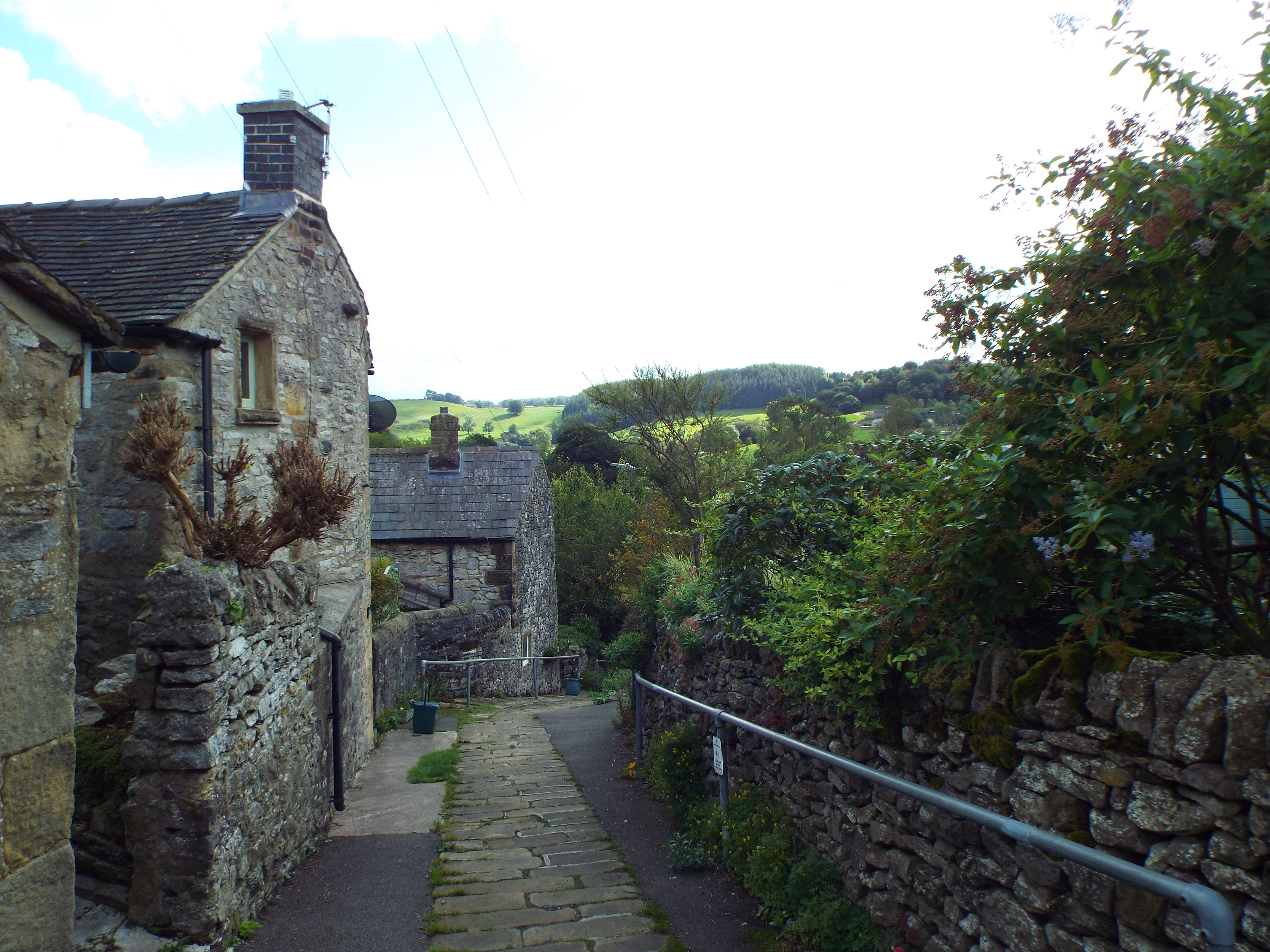
.jpg)
.jpg)


.jpg)
.JPG)


%20and%20Florence%20as%20JPEG.JPG)
.JPG%20as%20JPEG.JPG)
%20as%20JPEG.JPG)
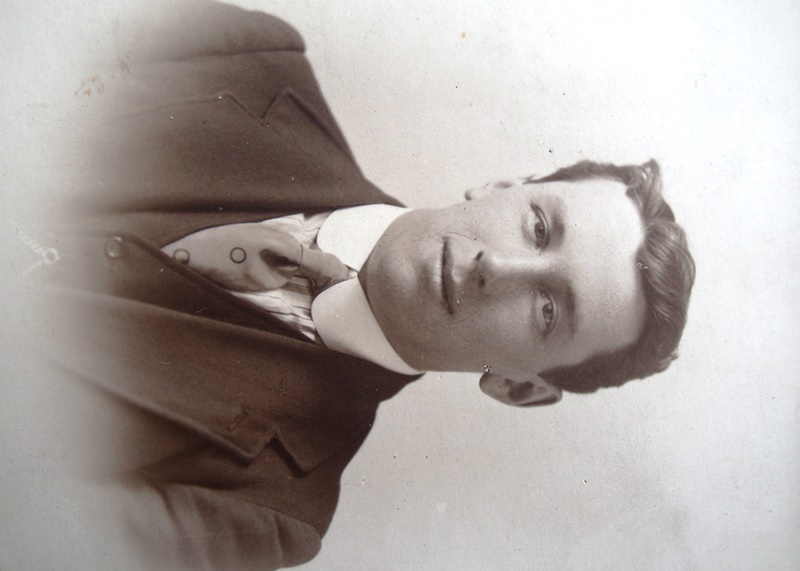
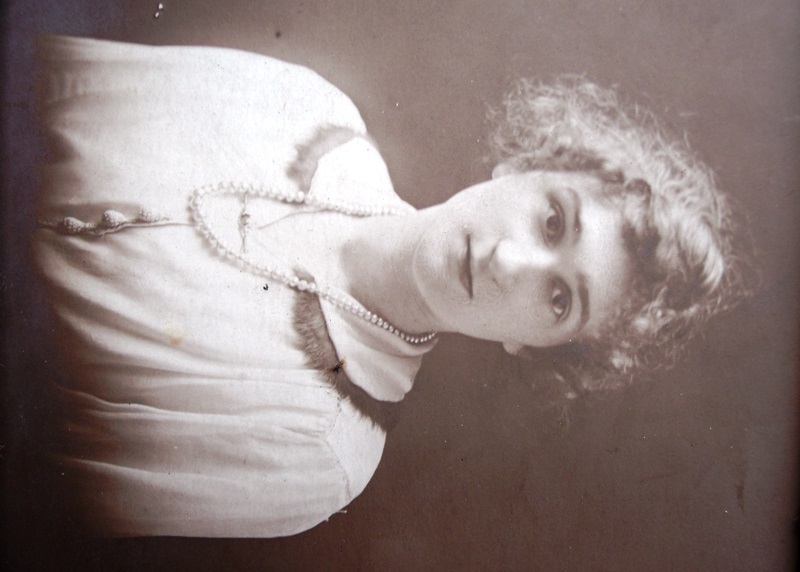

.JPG%20as%20JPEG.JPG)


.JPG)